

Our Workforce Foundation - The Columbus Library
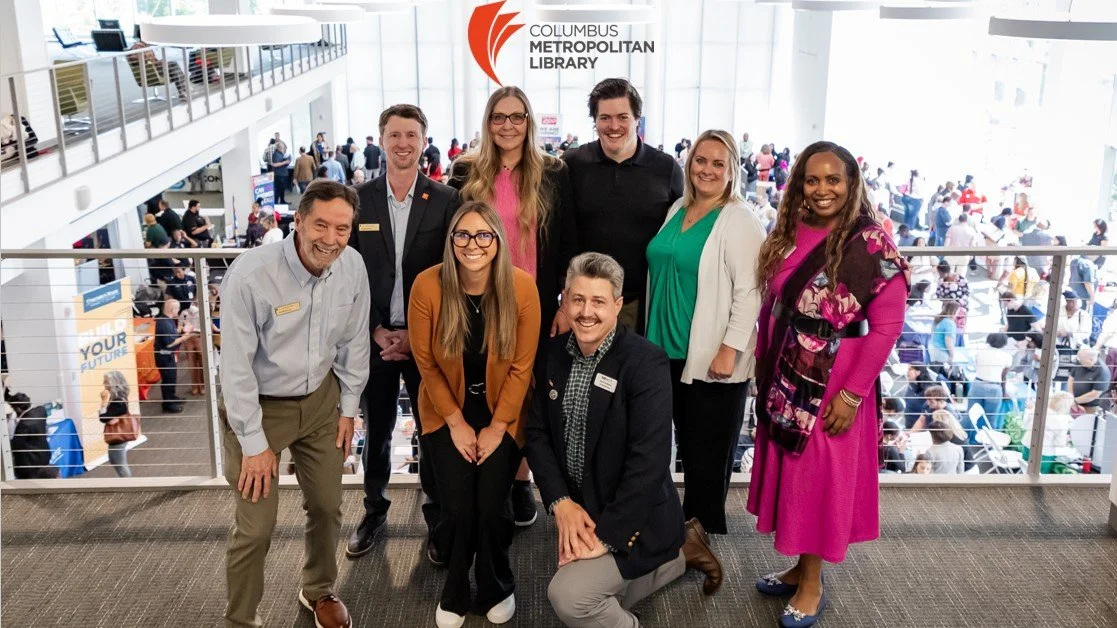
“We are trying to change what feels possible” – Lauren Hagan - Chief Executive Officer at Columbus Metropolitan Library
Every September, something quietly extraordinary happens at the Columbus Metropolitan Library.
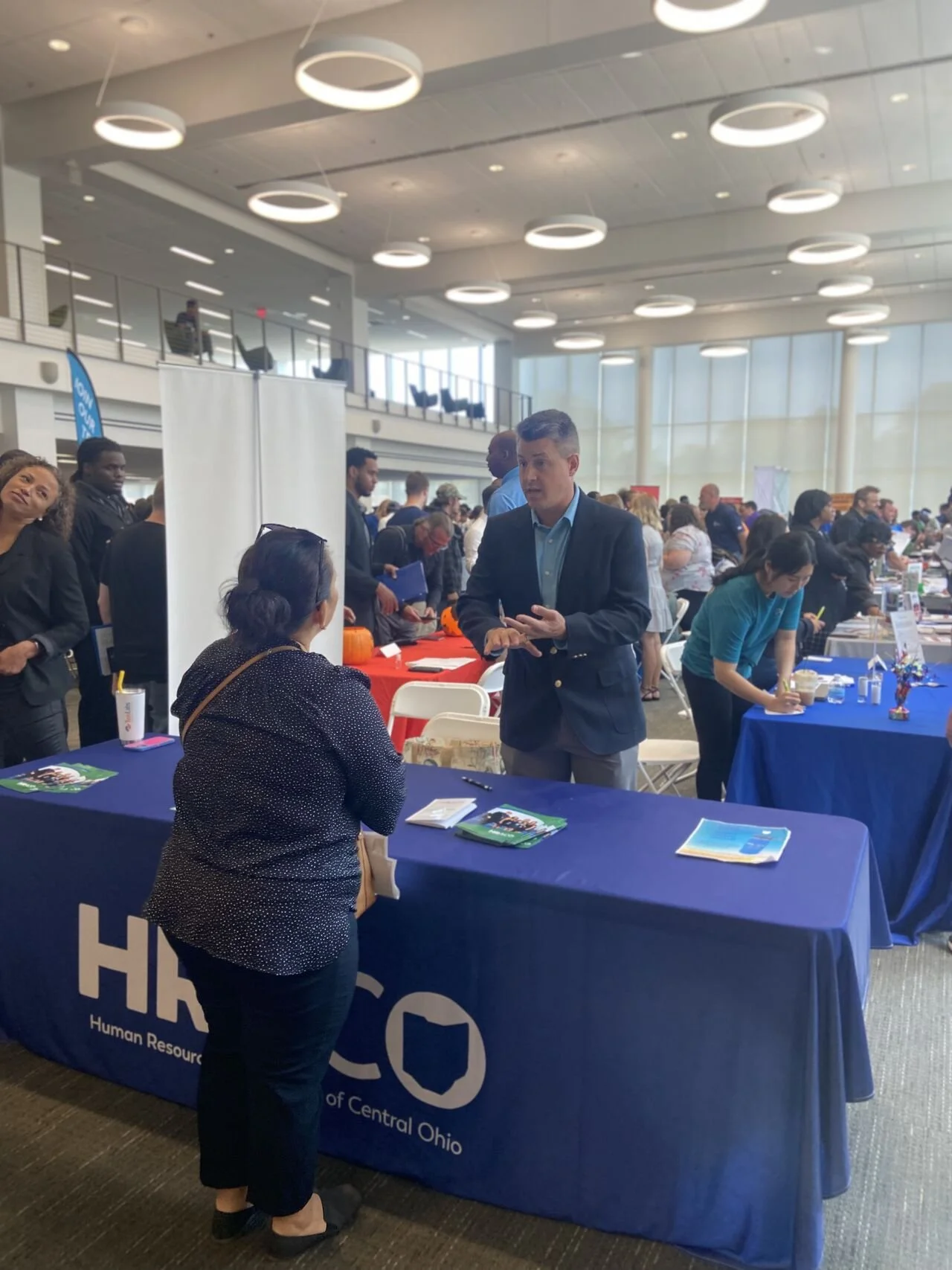
Thousands of people walk through the doors of a trusted institution, looking for something most of us take for granted: a next step. Sixty-plus employers and community organizations show up to meet them. HR professionals volunteer to run career workshops, review résumés, and help job seekers navigate applicant tracking systems that can make or break a first impression. Free professional headshots are provided because the barrier between a person and an opportunity can be as simple as not having a photo that reflects how capable they actually are.
I've attended that event for the last three years as a volunteer with the Human Resources Association of Central Ohio (HRACO). Each time, I leave with what I can only describe as a full cup, moved by the resilience of the people in that room and the quiet dedication of the team that makes it possible.
The 3C framework began to become clear at that fair, because it was there that I realized the pipeline doesn't start with a defense contract, a university partnership, or a capital investment. It starts with access. And in Central Ohio, access has an address: 96 S. Grant Avenue.
Community Workforce Foundation Built on Legacy
Long before I understood workforce strategy, I believed in the power of the library.
Growing up, the library was the place where you earned points for a personal pan pizza. It was an adventure, a reward, a ritual. In college, it became something different, a place to isolate, focus, and learn. A space that held meaning precisely because it asked nothing of you except to show up and work. After college, I started visiting libraries around the world the way some people seek out cathedrals, as sanctuaries. When I lived in Australia, far from home and still figuring out who I was becoming, the library was a familiar place that held that same quiet and comfort that gave implicit permission to exist and think. It offered a sense that whatever you were working through, this was an acceptable place to be in that moment. In a foreign country, the library didn't ask me to explain myself, and nobody judged my accent or asked me about the US president. It just let me in. I've sat in libraries wrestling with whether the LSAT was the right path. I've printed résumés when my printer was on the fritz, I’ve answered pressing emails when the Wi-Fi went out at home, and I've even faxed signed job offer letters. I’ve been in countless library meeting rooms for grassroots startup work and led Accelerator programs for entrepreneurs. The library has been, at every stage of my life, exactly what I needed it to be.
And now I take my children there. Not because I've planned a curriculum or mapped a career pathway for them. But because I hope they find the same thing I did, a place that belongs to them, that asks nothing of them, and that quietly expands what they believe is possible.
What struck me in my conversation with Lauren Hagan was learning that her relationship with the library runs deep, too. Before our interview, I shared the Carnegie quote about public libraries mentioned below when explaining how Libraries are the inspiration behind this 3C initiative. Lauren started our conversation by sharing that she used the same quote in her interview for the CEO position. Then we shared a laugh as she mentioned her own memory of earning points for a personal pan pizza through the Summer Reading Club. We hadn't planned that moment of recognition; it was simply two people who had both found something real in the same place, our local library.
As Andrew Carnegie put it, "A library outranks any other one thing a community can do to benefit its people. It is a never-failing spring in the desert." Between 1886 and 1919, Carnegie funded 2,509 libraries globally -1,681 in the United States - investing over $40 million to create what he called "ladders" for self-education. He believed that access to knowledge was the most democratic gift a society could give its people.
The Columbus Metropolitan Library is part of that Carnegie legacy in the most literal sense. In 1907, Carnegie donated $200,000 for the construction of the Main Library, with one stipulation beyond community operating support: that the words "My treasures are within" be etched into the front of the building, where they remain today. The funds were secured by head librarian John J. Pugh, who traveled to New York to make the case directly to Carnegie. Pugh would go on to serve CML for 65 years, still the longest-tenured employee in the library's history, a testament to the kind of institutional loyalty that only mission-driven organizations inspire.
That building and the promise it represents have been the anchor of Central Ohio's knowledge infrastructure ever since. It is woven into the fabric of our community, a foundational building block on which a successful and sustainable workforce has been built, generation after generation.
Reframing the Library
R. David Lankes, one of the leading scholars in library science, put it plainly: "Bad libraries build collections, good libraries build services, great libraries build communities."
When most executives think about workforce infrastructure, they think about community colleges, apprenticeship programs, and employer partnerships. Libraries rarely make that list, and that's a strategic blind spot.
Columbus Metropolitan Library is one of the most active workforce development platforms in Central Ohio, serving hundreds of thousands of residents across every stage of life, early learners discovering a love of science, job seekers navigating a changing market, career changers acquiring new skills, and community members who need a trusted place to figure out what comes next.
The CML is not alone. Columbus is also home to OCLC, the Online Computer Library Center, a globally significant nonprofit headquartered in Dublin, Ohio, that provides the technology infrastructure connecting libraries in over 100 countries. When we talk about Ohio's quiet superpowers, the fact that the world's libraries run on technology built here rarely makes the list. OCLC is a 3C institution in every sense: capital invested in knowledge access, community anchored in Central Ohio, and collaboration extended to libraries and learners worldwide.
The numbers behind CML bear all of this out. The system serves 675,000 cardholders across 23 locations in Franklin County, totaling roughly 600,000 square feet of community space, staffed by more than 800 dedicated employees. In 2024 alone, CML recorded 13.8 million circulations, 5.5 million in-person visits, and 11.6 million web visits. It serves 72.2% of Franklin County's population across 10 school districts, providing 79,000 visits to School Help Centers and feeding 108,000 children free summer lunches or after-school snacks.
The recognition is equally remarkable. Hennen's American Public Library Ratings ranked CML the top library system in the nation three times, in 1999, 2005, and 2008, and CML placed in the top four every year since the ratings were first published. In 2010, Library Journal named CML its Library of the Year. In 2011, CML received the National Medal from the Institute of Museum and Library Services, the highest honor for libraries and museums in the country. In 2024, Moody's upgraded CML's debt rating to Aa1. And in 2025, CML received the American Library Association's "Library of the Future" award in recognition of its AI Task Force — a signal that under Lauren Hagan's leadership, CML isn't just honoring its legacy. It's actively building toward what comes next.
Lauren frames her institution's purpose with quiet clarity: "The library is a place that empowers people to change or enhance their lives. That happens through workforce support, technology access, community programs, and through reading, which builds empathy and helps us understand one another. People do that work for themselves. We are there to help them navigate it."
Ohio leads the nation in library metrics, reflecting a century-long investment in public knowledge infrastructure. We deserve recognition for our communities that provide universal access to learning, creating compounding returns for all.
The 3Cs of The Library:
Capital: Investing in Access Before Urgency Demands It
The 3C framework argues that the most consequential capital investments are the ones made before the market demands them. Ohio's greatest workforce successes, the industrial apprenticeship systems, Battelle's applied research model, and aerospace talent pipelines built around Wright-Patterson, were built by leaders willing to invest in capability before it was urgently needed.
The public library is that investment made permanent and universal.
Look no further than what just happened in Linden. On February 6, 2026, just weeks ago, CML cut the ribbon on a fully modernized, two-story Linden Branch, more than doubling the facility from 12,700 to 27,000 square feet. The new branch includes three meeting rooms, ten study rooms, expanded technology resources, a dedicated children's area, a tween space, and a tech-ready teen area designed to grow alongside the community for years to come. The Nationwide Foundation committed $1 million to make it happen, recognizing, as their president, Chad Jester, described, libraries' role as "an important community anchor that encourages growth, development, and lifelong learning."
The Linden Branch is part of CML's broader Aspirational Building Program, which has also delivered new or renovated branches in Marion-Franklin, Barnett, and Canal Winchester, with Reynoldsburg currently under construction. This is capital being deployed ahead of our community's needs, in neighborhoods that have historically been underserved. Ralph Carter, founder of We Are Linden, framed it perfectly: “This investment helps the neighborhood's children realize they are 'opportunity youth, not at-risk youth."
The message is clear: this effort connects directly to the workforce pipeline conversation Ohio's executive leaders should be having.
CML's LifeSkills platform, STEM programming, digital literacy resources, and job and career services weren't created in response to employer requests. They exist because the library was built on a concept that is understood and ingrained, ensuring its longevity long before workforce conversations became urgent. Equitable access to knowledge is the foundation of a community and the very basis of any capable workforce.
The Job and Resource Fair is the most visible expression of that commitment. Over 2,000 attendees. 178 free professional headshots. More than 100 job seekers are sitting through HRACO-led training sessions on résumé writing and navigating applicant tracking systems. These aren't metrics, they're people. Each one of them represents a family whose stability may hinge on what happened in that building on a Thursday in September.
Lauren captures it: “Every time I walk through that career fair, it warms my heart. More than 2,000 people showing up for themselves and their families. If we help one family gain confidence and a livelihood in our community, that is really what it is all about.”
Community: The Neurological Catalyst
"Libraries store the energy that fuels the imagination. They open up windows to the world and inspire us to explore and achieve, and contribute to improving our quality of life." - Sidney Sheldon.
One of the recurring themes in the 3C series is that the communities winning the workforce competition are more than business-friendly; they're life-ready. Housing, childcare, healthcare access, educational infrastructure, and community trust all determine whether innovation sticks or relocates.
The public library sits at the center of it all.
For early-career engineers relocating to Columbus for roles at VISTA Space Park or Anduril's Arsenal-1, a world-class library system is part of what makes a city feel like home. For the child of a manufacturing worker who develops a passion for physics in a CML STEM program, it's a career path the family never imagined accessible. For the mid-career professional displaced by automation who needs to reskill quickly and affordably, it's accessibility to adaptability, it’s survival, perhaps salvation, that provides a glimmer of hope and the strength to keep fighting one more day.
Ohio's leadership in library metrics signals to the world that Ohio invests in its people. That signal matters when companies are deciding where to locate, where to hire, and where to build the next generation of their workforce.
Lauren outlines this ideal perfectly: “The programs I am most proud of are the ones reaching kids and families who do not yet know the door is open for them. Teens Create gives young people hands-on experience with music production, graphic design, and technology after school, for free, at their neighborhood branch. Our Digital Skills Hub helps adults build skills and confidence, and eligible participants can earn a Chromebook. We are not just offering resources. We are trying to change what feels possible.
Collaboration: The Library Frontier – The Cosmic Horizon Awaits
The partnership between CML and The Human Resource Association of Central Ohio (HRACO) is, in many ways, the 3C model in its most human form. It grew organically, without governance, from a shared belief that HR professionals have the expertise job seekers need and that the library is the right place to deliver it.
That model is replicable, and perhaps it’s the most impactful action volunteers can take, as it points toward something larger. It’s the very essence of community.
As Ohio accelerates its investment in aerospace and defense, advanced manufacturing, healthcare innovation, and commercial space infrastructure, the workforce pipeline challenge becomes more urgent and more complex. The roles being created at Arsenal-1, at VISTA Space Park, and at NASA Glenn's expanding research programs, many of them don't yet exist in traditional talent pools. They must be built, and the building starts earlier than most realize.
It starts with a child who gets curious about how rockets work. It starts with a teenager who finds a book about materials science. It starts with a first-generation college student who walks into a library to figure out how to write a résumé. It starts with the community institutions willing to meet people where they are, long before the labor market tells them they should.
As Lauren puts it, “The HRACO partnership works because it is rooted in a shared belief that people deserve access to expertise, not just resources. That model can grow. We would welcome deeper partnerships with employers in aerospace, manufacturing, and healthcare, any sector that understands its future workforce is walking through our doors right now.”
The Question Behind the Question
The last two series discussed the aerospace and defense sector, Anduril's Arsenal-1, VISTA Space Park, Starlab's 2029 launch timeline, and the 24-month window Ohio has to align workforce infrastructure with commercial space opportunity. These conversations assume that the talent pipeline already exists, and the challenge is to connect it to opportunities faster.
The harsh reality is that pipelines must be built; it’s not included in the capital. The timeline for building them often extends past the quarterly planning cycles by which shareholders evaluate investment metrics. The systems engineer who will staff Arsenal-1 in 2030 is, in many cases, a high school student today. The materials scientist who will conduct microgravity research at VISTA may be a middle schooler who hasn't yet encountered a single experience that tells them space is a place they belong.
Public libraries are where that encounter can happen, affordably, equitably, and at scale. Which is why underinvesting in them goes well beyond just being a cultural loss; it ripples, causing workforce failures in this generation and the next.
In Lauren’s words, “Ohio has been a national leader in supporting public libraries, and that is not an accident. It reflects a long-term belief that equitable access to knowledge is the foundation of everything else. We were honored to receive the 2025 Library of the Future Award for our AI work, but that is only a beginning. Demand is growing, the pace of change is accelerating, and the community is counting on us to keep pace. We have to keep going.”
Ask of Ohio's Leaders:
Companies in aerospace, defense, advanced manufacturing, and healthcare are asking the right questions about talent pipelines, security clearance development, and university partnerships. Those are necessary conversations.
But the ecosystem that produces the talent those pipelines depend on is broader than any single sector can sustain on its own. It includes public schools, community colleges, workforce development organizations, and yes, public libraries.
Ohio executive leaders, I encourage you to sit with the thought Lauren shared about her team’s mission: “We are trying to change what feels possible”. Tomorrow’s possibilities are planted today, and every aerospace engineer, every materials scientist, and every systems integrator needed to staff Arsenal-1 and VISTA Space Park over the next decade requires their belief that those careers are available to them to start somewhere. For many of them, these ideas were planted at the library.
If you are a CEO, CFO, or workforce leader in Ohio, I'd encourage you to think about the Columbus Metropolitan Library not as a community amenity but as strategic infrastructure. Sponsor a STEM program. Bring your company to the Job and Resource Fair as an employer, not just a beneficiary of its outputs. Support the public funding mechanisms that keep access universal. And when you're thinking about where the next generation of Ohio's workforce comes from, remember that it comes from communities. Communities are only as strong as the institutions willing to invest in everyone within them.
Ohio has always been at its best when leaders choose to build, and some of the most important building happens in the buildings that are open to everyone, every day, for free.
Albert Einstein once said, “The only thing you absolutely have to know is the location of the library”. For Ohio's next generation of engineers, scientists, and workforce leaders, let's make sure they know exactly where it is, and that when they arrive, the resources waiting for them are worthy of what we're asking them to build.
Lauren Hagan is the Chief Executive Officer of the Columbus Metropolitan Library, one of the highest-performing public library systems in the United States.
Derek Galloway is an AVP at HUB International, serves on the executive board of HRACO as VP of Membership— the largest SHRM-affiliated HR association in Ohio, and is a past State President of the National Association of Benefits and Insurance Professionals – winner of the 2023 Vanguard Award.
Derek is a collaborative partner with Ohio State, StarLab, and Voyager Technologies in the build-out of Ohio's commercial space ecosystem and serves as Columbus Co-Host for the C-suite Executive Roundtable.
Leading Across the 3Cs explores how Ohio's CEOs, CFOs, and workforce leaders are aligning Capital, Community, and Collaboration to build the state's next industrial chapter.
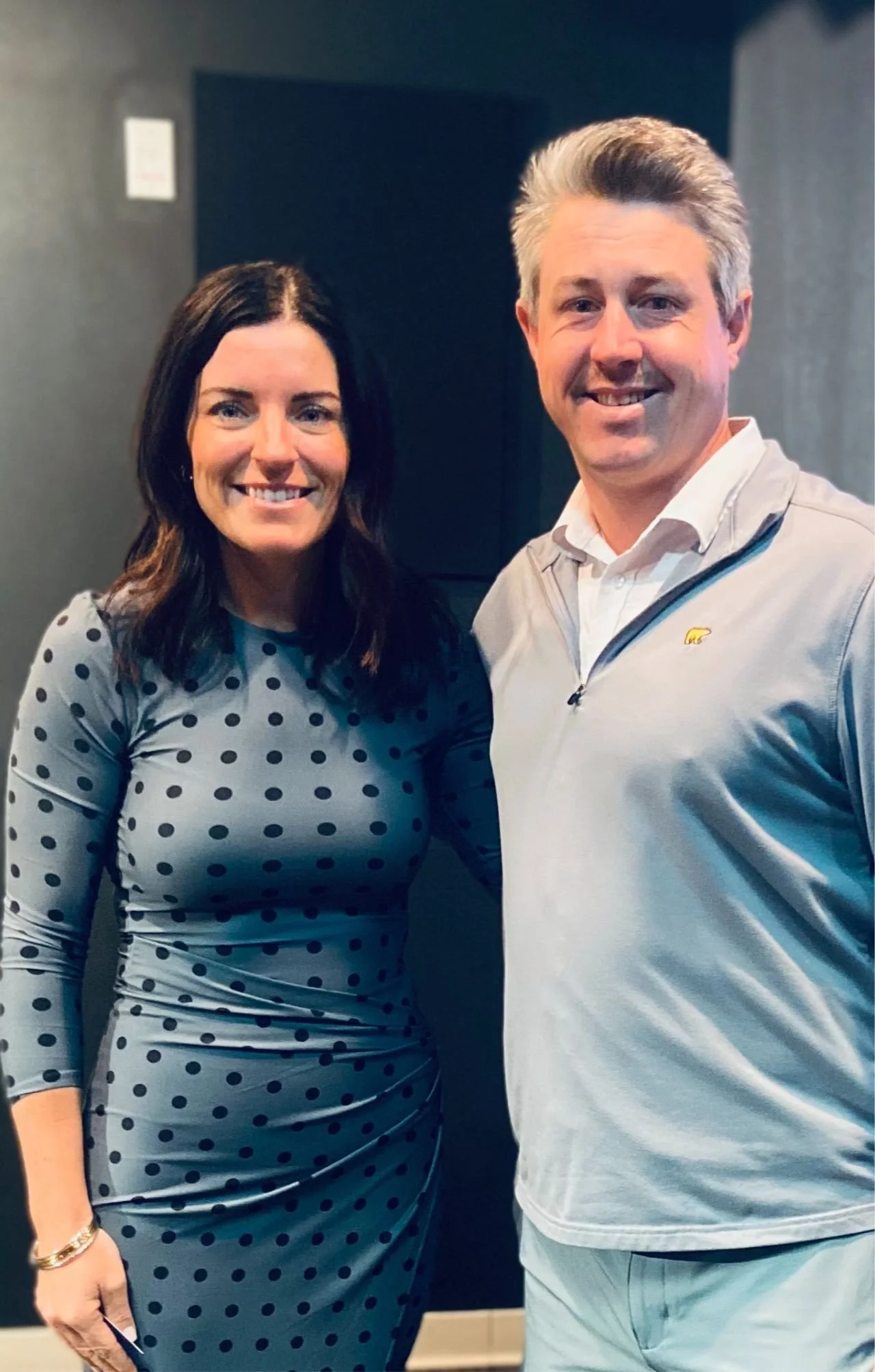
Derek and Lauren at CEO Insights in 2025