

The Workforce Engine Spark Plug – ROTO Design
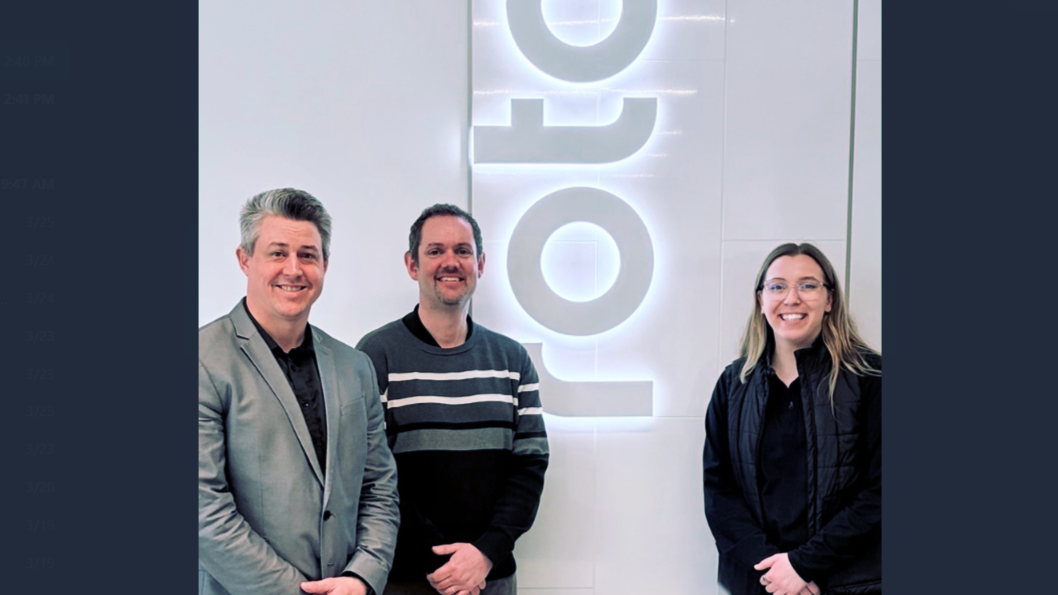
From a school field trip to NASA Glenn and Starlab. Roto ignites STEM careers, redirecting the workforce toward the stars.
The year is 2030. An astronaut runs final checks aboard the crew module bound for Starlab. Low Earth orbit. First mission. The training has been years in the making, simulations, certifications, the accumulated weight of a discipline chosen early and pursued relentlessly, driven by a dream born twenty years ago. It was a brisk Friday morning in the fall of 2010 in Columbus, Ohio, when this astronaut was a 10-year-old child on a school field trip to COSI. A spark ignited a purpose inside them as they walked into the Space exhibit on Level 1. They made a silent promise when they found themself face-to-face with a replica of John Glenn's Friendship 7, the same capsule that carried an Ohioan into orbit back in 1962, the same Ohioan who would later become a U.S. Senator responsible for inspiring a new generation of space explorers. As they stood next to a full-size Apollo Lunar Module, its spindly legs impossibly real, the word "UNITED STATES" stenciled across its side. They reached out, not quite touching it, and made a silent promise.
Some of us wish on shooting stars, while the ambitious few shoot for the stars. This one shot for the stars and landed on Starlab.
Einstein's most famous equation offers the best metaphor for what happened in that room: a small amount of matter, one child, one exhibit, one silent promise, releasing an extraordinary amount of energy. That is the only way to measure the distance between an inspirational spark and a career set in motion.
Currently in California, Roto is helping to build what may be the most ambitious space experience ever built for public audiences: the Samuel Oschin Air and Space Center at the California Science Center in Los Angeles. A $450 million, 200,000-square-foot expansion. Space Shuttle Endeavour displayed in full vertical launch configuration, 20 stories tall, the only complete, authentic Space Shuttle system display in the world. Roto is one of several exhibit fabrication partners for approximately 36,500 square feet of immersive aviation and space galleries, building, right now, the experience that will light the spark for the next generation of engineers, scientists, and astronauts.
Someone standing in that LA gallery will feel what the child in Columbus felt. The universe will be forever changed in that child’s mind. What happens next depends on whether the workforce infrastructure supports them in reaching their goals.
The Seed: Columbus, COSI, and an Idea That Changed Everything
Roto’s existence was created in a similar way to its products. In 1964, a proposal by Sanford "Sandy" Hallock and the Franklin County Historical Society gave birth to the Center of Science and Industry, COSI, one of the most ambitious interactive science institutions in the country. What began in Memorial Hall on East Broad Street grew into a nationally recognized force for hands-on learning, eventually relocating in 1999 to a striking 320,000-square-foot facility along the Scioto River, designed by internationally renowned architect Arata Isozaki. For decades, COSI pioneered the idea that science wasn't something you observed; it was something you experienced.
The team that built some of COSI's most beloved exhibits, Ocean, Progress, Adventure, discovered something in the process that no job description had promised them. Passion, it turns out, often follows effort. Joseph Wisne had spent seven years at COSI as Vice President of Exhibits, leading a small, closely-knit creative group that had quietly developed a rare convergence of skills, design, engineering, fabrication, and storytelling that the industry had not yet recognized as a discipline of its own. In 2004, Wisne and the founding team brought Roto to Dublin, Ohio, with a clear purpose: to bring creative design to unique interactive experiences and to integrate them with architecture and custom fabrication in pioneering ways, creating installations built for multigenerational audiences. What began as the work of building exhibits for others had become, through the effort itself, a mission worth offering to the world. More than 20 years later, Roto is the largest design-build firm serving the museum and attractions market in North America, with more than 300 projects spanning the Smithsonian's National Museum of American History, National Museum of Military Vehicles, Equal Justice Initiative, the Columbus Zoo, the Great Lakes Science Center, and institutions across four continents.
The mission hasn't changed since those early COSI days. Roto states it plainly: We create genuine human connections. Not just fun. Not just STEM learning. Something deeper, moments that linger, that can impact the trajectory of a life.
In an era when AI and technology are increasingly cited as drivers of social isolation, that mission carries an urgency that goes well beyond the museum industry. Roto isn't simply building physical experiences that stand in contrast to the digital world; they're actively shaping the intellectual framework for how cultural institutions should respond to it. Their own published thinking on the subject, A Vista of Opportunity: How Museums Can Thrive in the Age of AI, argues that what no algorithm can replicate is precisely what Roto is in the business of creating: the irreplaceable experience of being physically present, genuinely curious, and authentically connected to other humans in a shared space. At a moment when screens mediate nearly every interaction, that argument is not nostalgic. It is strategic.
Community: The 3Cs Model Hiding in Plain Sight
Most people in Ohio have experienced a Roto exhibit without knowing it. That invisibility is, in many ways, the point; the experience should feel organic and inevitable, not designed. This happens when extreme craftsmanship and passion carry over into each exhibit, and, considering the scale of production involved in the rigorous building process, it is, in itself, a remarkable model of community investment.
Roto's student evaluation program is among the most authentic examples of the 3Cs framework in practice. Throughout the development of every exhibit, Roto invites students from local schools, , to come in and test working prototypes. These aren't focus groups. Students interact with actual exhibits under development, then provide feedback that shapes the final experience. In 2024 alone, more than 1,000 students from over 10 central Ohio schools participated.
The feedback is taken seriously. When a third grader visited and tested a sailboat simulator, he noted that the button to turn on the fan should be moved so that one person can operate it instead of needing two. Roto shared his suggestion with the development team and passed it to the next group of student evaluators.
This might seem like a great PR gesture on the surface; however, it’s much more impactful and deeply rooted in the process. This design philosophy treats children not as passive recipients of inspiration but as active contributors to the product's architecture, creating a feedback loop. In the 3Cs, Community is about genuine collaboration, not just goodwill optics.
The exhibits that emerged from this process for Parkersburg, West Virginia, Discovery World on Market, the Mid-Ohio Valley's first dedicated children's museum, offer a striking parallel to the legacy of Carnegie’s libraries. When Andrew Carnegie funded the construction of public libraries across America at the turn of the twentieth century, the stated purpose was not profit. It was access. The belief that every child, regardless of background, deserved a door into knowledge and possibility. Discovery World, built in a converted 1915 Masonic Temple and opened in April 2023, carries that same spirit. It is Parkersburg's first institution of its kind.
Nearly 600 students from central Ohio schools contributed to its development through Roto's evaluation process before a single family walked through the door.
In the last 3Cs Workforce foundation article, we spoke of opportunity youth - not at-risk youth - as the framing that redefines what a community institution can aspire to be. Discovery World, like the Carnegie library before it, is a place that sees the child first and the circumstance second.
Inspiring Curiosity: The Projects That Change Mental Maps
Before exploring how Roto connects to Ohio's workforce future, it helps to understand the range of what they build, because the breadth is itself the argument.
At the Cincinnati Museum Center, Roto designed and built the Neil Armstrong Space Exploration Gallery, dividing the experience into three areas, each examining a different aspect of humanity's relationship with space. It is an Ohio institution telling an Ohio story, from the Wright Brothers to Neil Armstrong, with the same immersive tools Roto has deployed at the Smithsonian. For a student like Cassidy Brozovich, researching cryogenic systems at NASA Glenn and developing 3D-printed substrates for spaceflight crop production, the line between that gallery and her laboratory is shorter than most people realize.
At Exploration Place in Wichita, Kansas, a city whose aerospace economy mirrors the Ohio story in both its ambitions and its vulnerabilities, Roto built Design Build Fly, a signature STEM gallery built around aircraft design, engineering, and manufacturing. The exhibit asks visitors to engage directly with the physics of flight, including how different wing types produce different aerodynamic outcomes. It is a deceptively simple entry point into one of the most mathematically complex fields in engineering. Roto President and CFO Maurice Twomey, reflecting on our tour, described how a child standing in front of different wing profiles begins to intuit lift and drag without a single equation on the wall. That is Roto's design philosophy made tangible, curiosity provoked before knowledge is demanded.
At the Science Museum of Virginia, Speed became the museum's largest permanent exhibition, capturing visitors through a passion for fast-moving vehicles and phenomena while drawing connections across telecommunications, human civilization, biological growth, and precision machinery, anything where the rate of change matters. It is STEM without borders, showing that physics is not a subject but a lens.
And at the Ohio Statehouse Museum in Columbus, Roto was entrusted in 2018 with something different: the authentic 1802 and 1851 Ohio Constitutions. Custom high-security climate-controlled archival vaults, unique hands-on interactive texture-mapping installations. The kind of immersive civic storytelling that reminds a visitor that inspiration is not exclusively about science, it is about identity, legacy, and the systems that hold a society together. Roto does not just build STEM experiences. They build experiences that make people feel something about where they come from and what they are capable of.
Capital: Investing in Curiosity Before Contact is Made
There is a direct line between a child standing in front of an exhibit that asks them to design a rocket and an engineer standing in front of an actual one. Roto understands that line — and increasingly, the aerospace and defense sector is tracing it backward, looking for the institutions that fire imaginations years before a workforce need becomes visible.
Consider where that workforce will come from. Cassidy Brozovich is a rocket scientist, and she will tell you so without hesitation, because the title still carries a kind of wonder for her that a decade of rigorous engineering work has not diminished. A dual-enrolled PhD and Master's candidate in Mechanical Engineering and Agricultural Engineering at The Ohio State University, Cassidy's research spans the fluid dynamics of root zones in spaceflight crop production systems and the development of 3D-printed artificial substrates for passively controlling water and oxygen distribution in microgravity. She is simultaneously a Pathways Intern at NASA Glenn Research Center, researching cryogenic technologies for future rocket fuel storage and thermal analysis, and the Lead of Student Success and Workforce Development for the OSU Starlab ground location, helping undergraduates find their footing and prepare for careers in the space industry.
She joined the tour at Roto. She walked the same halls, stood in front of the same exhibits, and described the experience as mind-blowing, and this is a woman who models fluid dynamics in space. That reaction is not incidental. It is precisely the point. The exhibits that move a rocket scientist are the same exhibits that move a twelve-year-old who doesn't yet know she wants to be one.
Cassidy has joined the Leading Across the 3Cs initiative as a contributing advisor and collaborator, bringing her firsthand perspective on what it means to stand at the intersection of Ohio State's research infrastructure, NASA Glenn's applied science, and the VISTA Space Park ecosystem that is quietly becoming the terrestrial backbone of commercial space development. Her presence in this series signals where the conversation is heading, from workforce challenge to workforce solution, told from the inside by someone living it.
That is the capital investment most boards have not yet made: investment in the moment of ignition, years before the talent pipeline becomes visible on a workforce planning spreadsheet.
Rachel Escusa, Roto Marketing Director, put it plainly during the tour: many students going to school right now do not realize careers in this type of field exist. They might think of engineering and picture an auto plant. They do not yet know that those same skills can build the world's most immersive experiences, or the systems that will keep humans alive in low Earth orbit. Roto has been fortunate, she noted, to inspire students who came back as interns, and luckier still to hire some of those interns on.
That is a flywheel. And it is the same flywheel the commercial space sector will need to build at far greater scale, in the next decade.
There is no better measure of how far that flywheel has turned than Roto's current assignment. Governor Mike DeWine's Expo 2050 master plan, a $400 million reimagining of the Ohio State Fairgrounds, one of the governor's defining legacy projects, includes Roto as the firm responsible for designing the exhibit experience inside the new Ohio Showcase Building. The 55,000-square-foot structure, slated for completion in time for the 2026 Ohio State Fair, is designed as a dual-purpose landmark: a food hall celebrating Ohio's culinary regions, and an exhibit space anchored by a glass "jewel box" showcasing historic artifacts, built to tell the story of Ohio's people, land, communities, and innovation.
The firm that began by designing COSI exhibits in Columbus has been entrusted by the state of Ohio to author Ohio's story for every visitor who walks through the fairgrounds for decades to come. That is not a vendor relationship. That is a recognition that Roto understands what a genuine human connection in the built environment looks like, and that Ohio's story deserves that standard.
Collaboration: When the Exhibit Becomes the Ecosystem
Roto's workforce model is perhaps the most overlooked dimension of what makes the company a genuine 3Cs institution. It is not simply that Roto creates experiences that inspire young people toward STEM careers elsewhere. It is that Roto itself is a destination. In this place, the intersection of design, engineering, interactive technology, fabrication, and storytelling creates careers that most students have no category for until they encounter them.
Here is the scale of what that means. Over two decades, Roto has completed more than 300 projects across museums, brands, and attractions worldwide, from the Smithsonian's National Museum of American History and Equal Justice Initiative to Times Square, California Academy of Sciences, the Columbus Zoo, and COSI. Across more than 150 museum institutions on multiple continents, Roto's work has quietly, without a logo on the wall, become part of the lived experience of millions of visitors.
The company's professionals include engineers, designers, fabricators, technologists, content developers, and program managers. They come from Ohio State engineering and industrial design programs, trade internship pipelines, and, in the case of Jessica Hughes, who leads Roto’s exhibit evaluation program, fifth-grade classrooms. Roto's relationships with central Ohio schools offer a pathway: STEM initiatives supported by Roto personnel in schools, and student evaluators who flow back through Roto's Dublin facility, some of whom eventually return as interns and others who stay.
And the scale of what gets built inside that studio is not incidental to the argument. Roto's Dublin facility spans 60,000 square feet, including a 40,000-square-foot production studio packed with welding gear, woodworking tools, CNC machines, and paint bays. As Rachel Escusa has noted publicly, "you need a lot of space to build a two-story tornado." That is not hypothetical. Inside that facility right now, something record-scale is taking shape, the kind of engineering and creative problem that draws serious talent from across the country and keeps it here.
In November 2025, Roto opened Prototype: The Experimental Museum in Columbus's Brewery District, a 30,000-square-foot cultural laboratory that functions as the company's live research and development platform. Featuring a 150-foot-wide projection theater powered by six 30,000-lumen projectors, 48 million pixels, and 36 cinematic speakers, Prototype is simultaneously a public experience and an ongoing test environment where Roto's own teams experiment with new interpretive tools, media systems, and storytelling techniques in real time. It is, in the most literal sense, a physical embodiment of the 3Cs: capital invested in creative infrastructure, community invited into the iterative process, and collaboration built into the building's architecture.
The Space Connection: Why This Matters Now
As Starlab targets a 2029 launch from Ohio's commercial space ecosystem, anchored by VISTA Space Park, The Ohio State University, and Voyager Technologies, the question of inspiration is not abstract. The workforce that will staff these facilities must first be curious enough to pursue the education required. That curiosity does not emerge from job postings. It emerges from moments.
Dr. Arun Sharma of the Cedars-Sinai Center for Space Medicine Research said it directly at the Ohio State event on living and working in outer space: awareness is the key, and celebrating the work being done will inspire future generations. Students do not pursue careers they cannot see. When the commercial space industry remains invisible in the lived experience of young people, when no one has ever shown them what it feels like to design something, test it, fail, refine it, and see it work, the pipeline does not fill.
Roto, whether explicitly understood as such or not, is part of the infrastructure that makes the pipeline possible, the child who designed a paper rocket in the Discovery World exhibit in Parkersburg. The student who tested a sailboat simulator in Dublin suggested an engineering improvement. The third grader who visited Roto and, for the first time, went home understanding that engineers build worlds. These are not peripheral contributors to Ohio's space economy. They are seed investors.
The Question That Remains
Roto believes that genuine experiences are seeds and that the return on planting them compounds in ways no portfolio model can replicate, across generations, across communities, across the lives of people who never knew they were part of someone's investment thesis. This is not a conventional company’s answer. It is the answer of a company that understands the most durable capital is the kind you place in a person before they know they need it — and that the yield, when it arrives, looks like a rocket scientist standing in a Dublin, Ohio, fabrication bay, mind blown, ready to help build the next chapter of human presence in space.
That combination, deep creative ambition held inside genuine financial discipline, is rarer than most philanthropists and institutional donors realize. The organizations that fund museums, science centers, children's museums, and civic experiences sometimes encounter a frustrating gap: the vision is bold, but the execution either runs over budget, under-delivers on experience, or both. Roto has built its entire model around closing that gap. The challenge of making something extraordinary within a fixed budget is not a constraint Roto tolerates; it is the thing that makes the work exciting. For foundations, corporate giving programs, and individual donors looking to create lasting community impact, Roto is a partner worth knowing.
As Ohio's commercial space sector moves from vision to production over the next 24 months, that question becomes urgent for every leader in the ecosystem: where is the moment of ignition happening for the workforce you will need in 2040? Who is building the experience that makes a teenager in Parkersburg, or Columbus, or Dayton feel the pull of aerospace engineering for the first time?
The answer to that question is not decided in orbit. It is sparked in Dublin, Ohio.
Roto is proof that masterpieces can be built beautifully within a budget. A craftsmanship discipline that creates inspiration by design and simultaneously inspires Ohio leaders to innovate and build collectively.
Ohio has always been at its best when leaders choose to build.
Let's build together.
Leading Across the 3Cs is a series exploring how Ohio leaders are aligning Capital, Community, and Collaboration to shape the state's workforce future. Previous installments have covered Ohio's aerospace and defense ecosystem, VISTA Space Park, Starlab's three-stage commercial space infrastructure model, and the Columbus Metropolitan Library.
The series is growing. Cassidy Brozovich, NASA Glenn Pathways Intern, OSU doctoral researcher in spaceflight systems, and Lead of Student Success and Workforce Development for the OSU Starlab ground location, has joined as a contributing advisor and collaborator. She brings a firsthand perspective on what it means to navigate the frontier of commercial space development as a young scientist, helping the next generation of students find their footing in an industry that transcends what’s possible in real time. Cassidy's perspective and voice will be essential to this 3C framework's impact and longevity.
Building the experience is only part of the equation. The next conversation in this series turns to how institutions, universities, community colleges, and the organizations that shape their identities, tell the story of what they are building and for whom. That work requires a different kind of design thinking. Ohio has a firm that understands both sides of that challenge: Ologie, a Columbus-based branding and strategy firm dedicated entirely to advancing education, whose work shapes how institutions across the country position themselves for the students, partners, and communities they are trying to reach. If Roto builds the experience that sparks the imagination, Ologie builds the narrative that sustains the journey. The next installment will explore what that looks like when the stakes are Ohio's workforce future.
If you're a philanthropist, foundation, or corporate giving program interested in creating lasting community impact through immersive educational experiences, please contact Roto directly. If your organization is building workforce infrastructure for Ohio's next chapter or looking for partners who can deliver extraordinary results within a budget, the conversation is open.