

The Study of Things That Matter
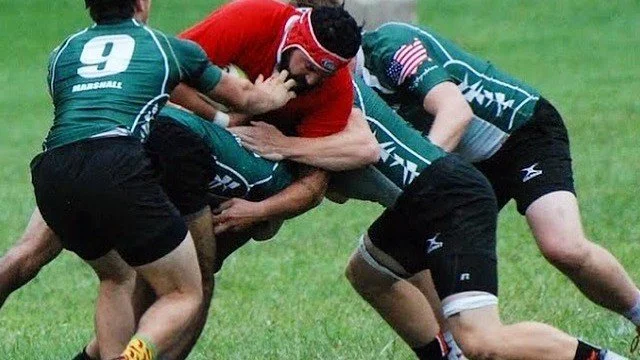
There is a play in rugby union called the two-on-one. An attacking player receives the ball with a single defender between them and the try line, and a teammate running hard in support beside them. The wrong move is to put your head down and try to beat the defender alone. The right move is counterintuitive: engage the defender, draw their commitment, and then at exactly the right moment, release the ball to the player who was never the primary threat.
Executed well, the play creates something from nothing. The defender cannot cover both options. The pass finds space that didn't exist a second ago. And the try is scored not by the player who was marked, but by the one who was trusted.
Fernando Bergás-Coria has been running that play for fifteen years.
I know this because we played rugby together on the same Columbus club side. The language in this piece isn't borrowed from sport. It comes from the pitch we shared.
The Grind
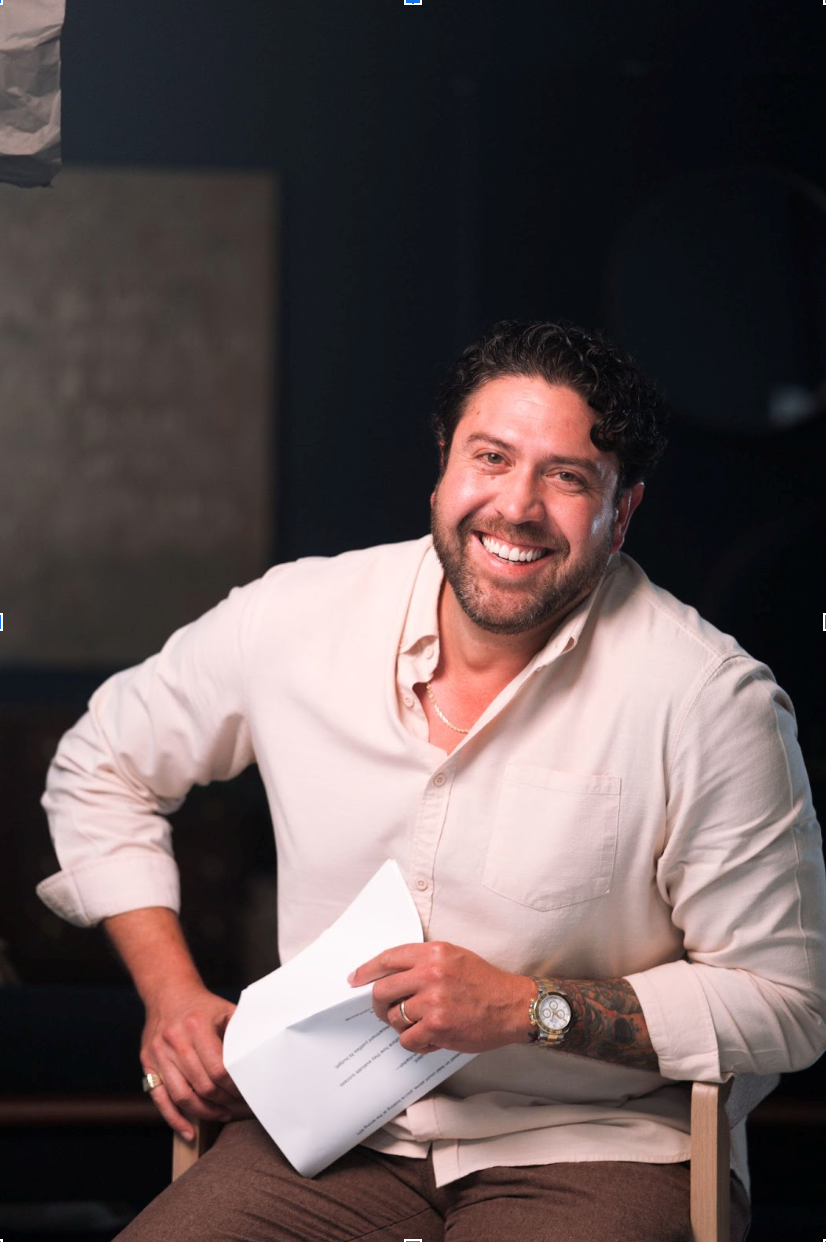
Fernando didn't start at the top. He started where most great careers start, doing the work, learning the terrain, and understanding the field from the inside out.
His early career spanned a legal marketing firm, then enterprise account management at The Shipyard, a Columbus digital agency, where he served as lead contact for $14 million in enterprise accounts and drove $1.5 million in annual growth through Fortune 100 relationships and cross-functional delivery leadership. His description of the shipyard is that it's where you learn to build things that can withstand pressure.
Between The Shipyard and Ologie, Fernando led a small boutique consultancy in Columbus. He describes that chapter with the kind of quiet pride that doesn't need amplification. "I met some of the most talented people I've worked with," he said. "Most of them still work with me today, and I'm really proud of that." It was not a detour. It was the formation of the team he would eventually bring into the building.
That choice, building something small and intentional before ascending to something larger, reflects the same logic that drives the 3Cs framework. You pass backward to go forward. You give up short-term scale to create long-term alignment. Ohio's great builders have always understood this. Battelle, the Wright Brothers, and the Cleveland Clinic each invested before the return was visible. They created space, by passing backward to strategically position the eventual score.
From that boutique, Fernando joined Ologie in 2018 as Director of Integrated Marketing, then moved to Executive Director of Digital and Media, and finally to Chief Digital and Media Officer when Ologie became 100% employee-owned in November 2023. In January 2026, he was named CEO. Seven years and eight months at one organization, ascending through every phase of its evolution, until the team awarded Fernando the CEO armband.
The Weight of the Armband
Fernando is proud of the selection. He said so plainly, not with the calculated humility of a press release, but with the genuine weight of someone who understands what has been entrusted to him.
Leadership, he will tell you, comes at a cost. It is exciting. It is also a burden. The package deal is putting your team first, providing vision, and removing barriers to allow them to thrive.
His approach to leading Ologie, is guided by three principles: bias toward action, transparency, and accountability. The vision for this work is based on three commitments:
Continue to show the way. Not from a distance, not from behind a strategy deck, but close to the work. Fernando's instinct is proximity. He understands the craft because he has done the craft. A captain who cannot read the field from inside the match cannot lead the team through the chaos.
Stay close to the customer. Ologie's name means "the study of things," a philosophy before it is a tagline. Research and deep listening precede every positioning decision. Fernando carries that discipline into the CEO role, staying connected to what universities and purpose-driven organizations are navigating, not what the industry assumes they need.
Purpose through adversity: When a new captain is named, some players on the roster believe they were a better choice for the captaincy. Some may even have a strong argument to make. This creates conflict, and the risk of turnover is high. Not to a competitor, but losing them to contempt, a quiet erosion that happens when talented people feel overlooked rather than redirected. The strongest unite the team towards a unified vision, and the strongest aren’t always the best leaders. Leaders lead and must find a way to unite through adversity.
Fernando's approach is deliberate: help those who wanted the seat to acclimate to the world they now live in. Keep them moving forward. Keep them aligned. The 2007 Los Pumas didn't finish third at the Rugby World Cup because Agustín Pichot was the most gifted player on the field. They did it because he stood at the center of the team's circle before every match and made every player feel essential to the outcome, including those who might have captained a different team. Pichot later said the only reason he remained in rugby governance was his belief that change was needed, and that belief had to be earned every day, not declared once.
Fernando is not dismantling what founder Bev Ryan built over nearly four decades. He is earning the right to point it forward. In John Kotter's framework for leading change, the first act of new leadership is not disruption. It is establishing enough credibility and clarity that people follow the signal when it comes. The mistake most new leaders make is treating that first phase as dead time. It's the scrum bind. Get the bind wrong, and the push collapses, and they lose possession.
Ologie:
Founded in Columbus in 1987 by Bev Ryan on a Macintosh One, Ologie has grown into one of the most respected higher education branding and marketing agencies in the country. More than 80 people across 13 states and Canada, 100% employee-owned, and fiercely independent. As Fernando frames it directly: national agency, national impact, Midwest roots. The mission is not geographic. It is purposeful. Ologie connects institutions with their best-fit audiences, wherever those institutions are and wherever those audiences need to be found.
The tagline "The agency for brands on a mission" is an operating principle, not a marketing line. Ologie works with institutions whose missions matter: higher education, healthcare, arts and culture, and nonprofits. The work is not about making things look better. It is about surfacing what is already true and giving it a voice powerful enough to move people.
The client list reflects the national reach: Carnegie Mellon University, Texas A&M, Vanderbilt, Purdue, Stanford, Fordham University, Amherst College, Rowan University, UC Davis, William Paterson University, Little League International, and the Smithsonian's National Air and Space Museum, among dozens of colleges and universities whose reputations they have helped define.
The University of Pittsburgh engagement illustrates the approach. When Pitt wanted to launch a national reputation campaign on a constrained budget, Ologie built the Forge Ahead platform, rooted in the institution's own history of reinvention, and deployed it across five northeastern cities in more than 300 individual assets, generating over 71 million impressions in two months. Undergraduate applications skyrocketed. Graduate enrollment increased for the first time in years. The campaign's thesis: progress never comes from standing still.
There is no coincidence that Fernando's thesis is the same.
The 3Cs of Ologie
The three pillars, Capital, Community, and Collaboration, at Ologie are structural components of its success.
Capital: The Backward Pass
In rugby, you can only pass the ball laterally or backward. Never forward. It is one of the sport's most counterintuitive rules, and one of its most important. The player with the ball must trust a teammate behind them to receive it, run onto it, and advance what the last phase created. The pass requires belief before execution.
When Bev Ryan and Bill Faust transferred 100% of Ologie's stock into an employee ESOP in 2023, they made a rare capital decision most agency founders never consider. They gave up a conventional exit to invest in the people already doing the work. No outside buyers. No private equity. Ownership passed to the team. That decision is their legacy, and it belongs to them.
Fernando is the one carrying it forward. The alignment Bev and Bill created is now structural, and it is his to steward. Every employee-owner at Ologie has skin in the outcome. That changes how decisions get made, how clients get served, and how the culture sustains itself when pressure arrives. Capital deployed as belief doesn't expire when leadership changes. It compounds if the next captain protects it.
For the universities and colleges Ologie serves, the parallel is direct. The institutions that invest in brand and reputation infrastructure ahead of enrollment pressure, rather than reacting to a crisis, are the ones that retain competitive advantage when demographic cliffs and public skepticism collide. You invest before the contract requires it. A backward pass, executed on trust.
Community: The Ruck
In rugby, a ruck forms after a tackle. When a player goes to the ground, teammates bind over the ball immediately to protect what was just gained. The ball is on the ground, the play has stopped, and everyone is fighting for possession. You don't run for glory, you do it to protect your teammate and possession. If you don't ruck, everything the last phase built gets stripped away, and you put your teammate at risk.
Community at Ologie is a rucking commitment. Internally, it is the culture Bev Ryan built over nearly forty years, values practiced in the room, not posted on a wall. Ologie's people return across institutions and careers, following client relationships that transcend any single engagement. That loyalty is respected and earned by consistently doing the necessary, unglorified work when no one is watching.
Externally, Ologie's community is the ecosystem it serves. Higher education is the infrastructure through which regions produce the engineers, clinicians, researchers, and leaders that drive competitiveness. When a university's reputation is strong, it attracts students who become the workforce. When its brand is unclear or undifferentiated, it loses talent to institutions that know how to tell their story. Ologie’s work is a workforce strategy in a different register, and Fernando understands that deeply.
Collaboration: Competing With, Not Against
The scrum is rugby's great alignment ritual. Before the ball is put in, eight forwards bind together with absolute precision and drive as a unified pack. If the bind is loose, the scrum collapses. If one player is marginally out of position, the whole structure fails. Scrums don't work because of talent. They work because of reps. Alignment under pressure is practiced, not improvised.
Fernando brings a specific philosophy to collaboration, one he articulates with the directness of someone who has built across sectors and cultures. He thinks of himself as a connector of people and things. He believes in competing with, not against. He leads as low-maintenance and high-impact.
That last phrase deserves unpacking. Low-maintenance leadership means clarity over complexity, fewer decisions per interaction, and trust given in advance rather than earned through repetition. High-impact leadership means that when he does engage, it moves something. Together, the posture creates the conditions for people around him to do their best work without waiting for permission or managing upward.
For the institutions Ologie serves, that philosophy translates directly. The universities that build cross-functional alignment between enrollment, advancement, academic affairs, and marketing before a crisis arrives are the ones that can execute a Forge Ahead-level campaign when the moment demands it. Collaboration is not a meeting. It is a governance structure, built in the off-season, so that when the scrum engages, the bind holds.
Chaos Is Where Opportunity Lives
Rugby never fully stops. Play is continuous, conditions shift mid-phase, and the game's most decisive moments almost always emerge from disorder. A turnover, a broken tackle, a scrum that collapses and spills the ball into open space. The teams that win aren't the ones who avoid chaos. They're the ones who've prepared so thoroughly that when chaos arrives, they recognize it as an opportunity. Just as one would only compare their financial prowess in a bear market, when the winds are favorable, everybody is making money; it’s only in chaos that the best players can be identified.
The most opportunistic moments happen inside the mess. But you can only see the opportunity if the fundamentals are already automatic. Preparation, teamwork, communication, accountability, and resilience aren't what you reach for when things get hard. They're what you built before the match started, so that when the play breaks down, you're already moving. Collective adaptability is the output. The inputs are reps.
Ohio's great inflection points, the Rust Belt, the offshoring era, and now AI acceleration, demographic cliffs, and the commercial space race, have all been moments of extreme disruption. The leaders who captured opportunity in those windows weren't waiting for stability to return. They were the ones whose preparation was deep enough to read the broken field and run.
The 3Cs framework isn't a comfort strategy. It's a chaos strategy. Capital invested ahead of urgency means you have options when others are scrambling. Community infrastructure means trusted relationships that move quickly when speed matters. Collaboration means you don't have to figure out who to call in the moment. You already know.
Creative agencies live in client chaos, rebrands, enrollment crises, leadership transitions, and accreditation pressures. Fernando's clients call Ologie precisely when the play has broken down, and they can't see the field. The agency's value isn't just craft. It's the capacity to be calm and decisive in the midst of someone else's disruption. A team that has done the reps doesn't panic in chaos. They hunt in it.
The Third Half
Rugby has a tradition called the third half, the gathering after the match, shared by both teams. Win or lose, opponents become guests. Rivals become friends. The game ends, but the relationship continues. It is part of what makes rugby the biggest fraternity in the world.
This isn't incidental. It's structural. The culture of rugby insists that what you share is greater than what you compete for.
Higher education is one of the most competitive markets in the world. Institutions fight for the same students, the same donors, the same rankings. And yet Ologie's most enduring client relationships follow leaders from institution to institution across careers, because what was built between Ologie and its partners transcends any single engagement. That is third-half culture. It is also a 3Cs culture.
Pre-competitive collaboration, institutions co-investing in shared reputation-building and talent pipelines before competing for the same students, is the third half of higher education strategy. You can fight hard on the pitch and still share the beer afterward. What you build together in the third half is often more valuable than what you won in the first eighty minutes.
A Note on Convergence
In the course of bringing this installment of the series together, something happened that the 3Cs platform was built to make possible.
Rachel Escusa, Roto's Marketing Director and a key collaborator on the previous installment of this series, reached out after reviewing the piece to mention that she is a former Ologie employee. She doesn't overlap with Fernando's tenure, but the connection is real. A Columbus exhibition design firm, a higher-education branding agency, and a framework for regional leadership are already finding one another through the network the series is creating.
Roto and Ologie serve adjacent markets. Roto builds physical environments where institutions make their first impression, such as museums, science centers, and university visitor experiences. Ologie builds the narrative infrastructure that gives those spaces meaning before and after the visitor arrives. One creates the experience. The other creates the institutional story that the experience is meant to tell.
That is not a cold call. That is a two-on-one waiting to happen. The pass is already in the air.
The Conversation: Fernando Is Ready to Have
In rugby, the team that wins isn’t always the most talented. It's the one that's figured out how to be excellent together under pressure, and who knows how to harness chaos into opportunity.
Fernando Bergás-Coria spent fifteen years preparing to lead a company that has spent nearly forty years preparing to serve institutions that shape regional and national futures. The ESOP is the backward pass. The culture is the ruck. The leadership bench is the scrum. And the chaos arriving in higher education, demographic pressure, public skepticism, AI disruption, and tightening budgets is precisely the misaligned defense that a prepared team runs into. If your institution is navigating enrollment pressure, reputation differentiation, or the challenge of communicating a mission that the market has not yet fully seen, Ologie has done this work at scale with institutions that looked a great deal like yours before the conversation started.
Ohio has always been at its best when leaders choose to build. Not alone, not in silos, not in reaction, rather together, backed by preparation and earned trust.
Let's build together.
Derek Galloway