A Builder First, a Dealmaker Always
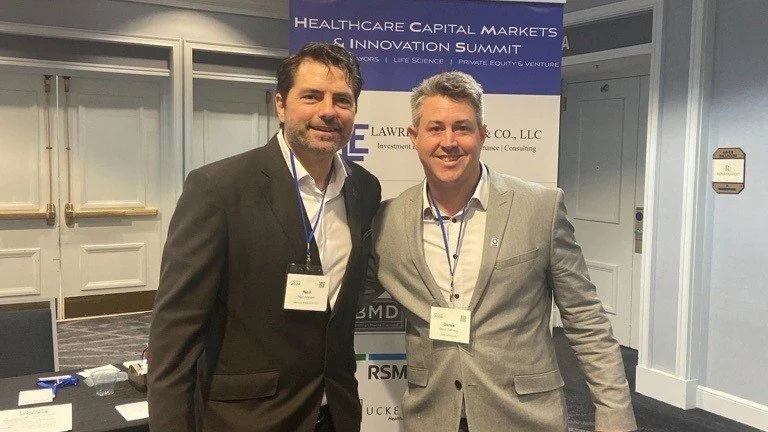
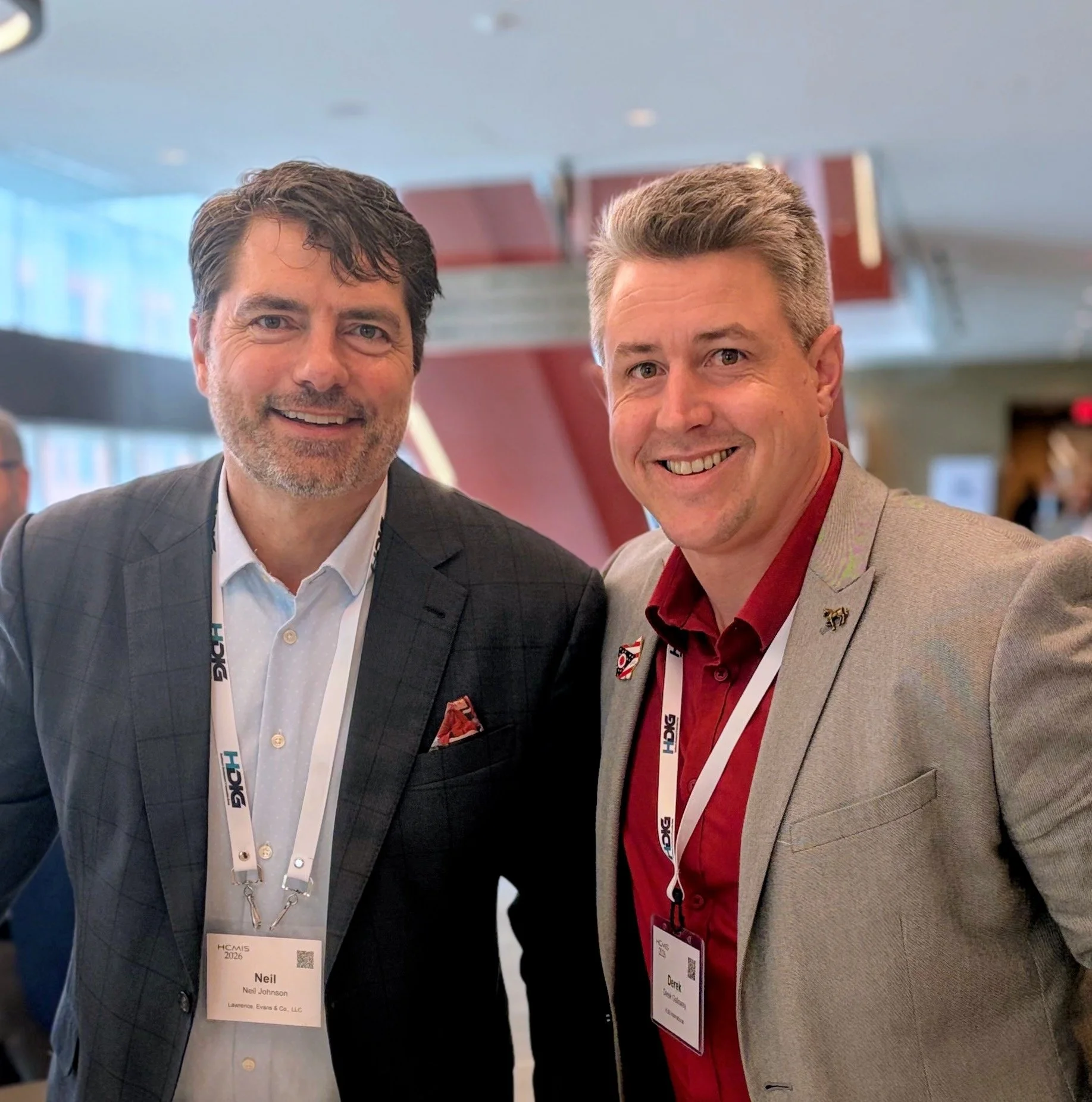
HCMIS 2023
Neil Johnson, the Healthcare Capital Markets & Innovation Summit, and what Columbus taught us about where capital comes from.
Meet the Dealmaker
Jack Nicklaus is to championship golf what Neil Johnson is to middle-market healthcare dealmaking: not just a competitor at the highest level,but the builder of the stage on which others compete.
As Managing Partner of Lawrence, Evans & Co., a boutique healthcare investment banking and M&A advisory firm he has led since 2003, Johnson has quietly completed more than a billion in transactions across healthcare, technology, logistics, and now aerospace and defense (bioastronautics or space health). His clients are typically lower-middle-market companies with $50 million in revenue and $5 million in EBITDA, a segment of the economy that rarely makes headlines but drives the majority of Ohio’s employment.
His credentials are precise: OSU Fisher MBA; Albion College economics and management, where he was a leader on the 1994 NCAA Division III national championship football team; two decades of healthcare investment banking before founding Lawrence, Evans; and was named a 2024 Top 10 Lower Middle Market Healthcare Investment Bank by Axial. Board member of ACG Columbus - education contributor to Harvard Business School.
Co-founder of the Healthcare Development & Innovation Group (HDIG), alongside John Ziegler, a Columbus-based healthcare operations veteran with 25 years of experience, successful software exits, and a background leading the Healthcare Financial Management Association (HFMA). HDIG is a searchable ecosystem database of hospital innovation centers, venture funds, and tech transfer offices, built to make healthcare innovation faster, more targeted, and more accessible to companies navigating it.
Beyond transactions, Neil has built a body of thought leadership that signals where healthcare capital is heading before the market catches up. Lawrence, Evans & Co. has recently published industry papers on Longevity, framing it as the emerging infrastructure of preventative health, and on Food as Medicine FaM, examining how nutrition is being reintegrated into mainstream clinical and investment strategy, aside from other papers on Healthcare Cybersecurity, Telemedicine, and Bioastronautics. These aren’t marketing documents. They are frameworks that help investors, operators, and advisors understand structural shifts in healthcare before those shifts are priced into multiples.
It is the kind of intellectual generosity that compounds and is the reason Neil Johnson hasn’t just participated in markets but has helped shape them.
Yet credentials alone are not what make Neil Johnson consequential to Columbus (referred to as "The Smart Health City"; what does is that he built it because he knew our community needed it, not because anyone asked him to.
What Is HCMIS, and Why Does It Matter?
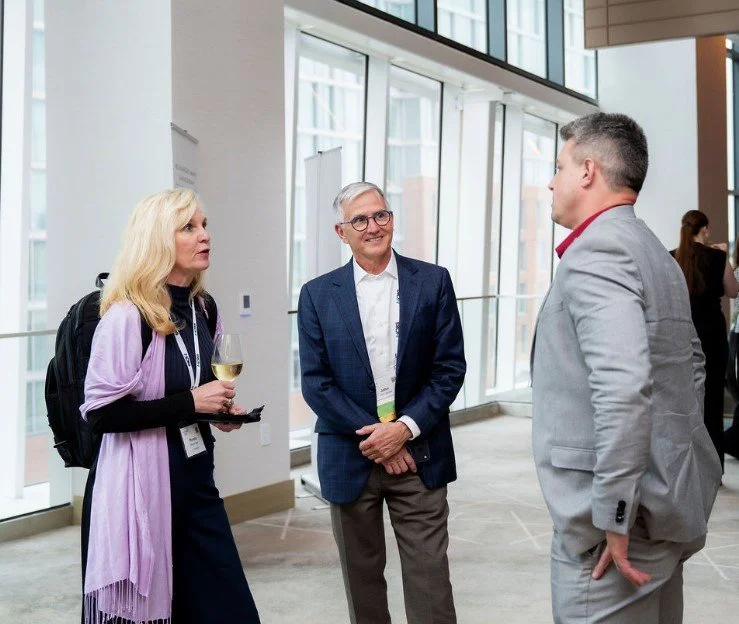
In 2021, Neil Johnson helped support the creation of the Healthcare Capital Markets & Innovation Summit (HCMIS). The premise was simple and radical at the same time: put every side of the healthcare deal ecosystem in the same room. payors, providers, advisors, private equity, venture capital, family offices, attorneys, operators, and innovators, intermingled, sharing conversations.
Most healthcare conferences don’t work this way. They are curated for one audience, and the value they deliver stays largely within that lane. Neil’s insight was that the deals happening in healthcare in Columbus and across the country weren’t being constrained by a lack of interest from any single constituency. They were being slowed by the absence of structured moments when the right people on different sides of a transaction could find each other before a deal was formally on the table.
By the numbers: 400+ attendees annually; hundreds of millions in transactions traced to summit relationships; 6th annual event: May 26–28, 2026
The nonprofit fundraiser attached to HCMIS connects the summit’s energy to community impact, signaling that the capital being convened here has obligations beyond the closing table. HCMIS 2026 also introduces a new dedicated Emerging Company and Startup section, opening the third floor of the Hilton Columbus Downtown to growth-stage healthcare companies and culminating in a Pitch Competition with awards valued at up to $100,000. The centerpiece is the Blue Jacket Award, designed by Pantheon Limited, a Columbus-based luxury apparel company owned by Neil’s stepson Ethan Weisman. Pantheon dressed 20+ top NFL Draft candidates at this year’s Draft including First Round picks David Bailey (#2) and Jeremiyah Love (#3) This kind of detail that tells you something about how this family builds: with craftsmanship, with visibility, and with an eye on stages that matter.
The timing of each summit is intentional. HCMIS is held in Columbus during the Memorial Tournament window, the PGA Tour event at Muirfield Village in Dublin, Ohio, that draws corporate sponsors, executives, and guests from across the country to Central Ohio every spring. The Memorial has long served as one of Columbus’s most effective unofficial business development events. Neil made it official by building HCMIS to capture that energy and direct it toward healthcare dealmaking. The combination produces something unusual: the focused intensity of a targeted industry conference layered atop a city already primed and in a hosting mindset.
“Other conferences usually silo the different sides of the healthcare industry. At HCMIS, everyone is in the same room, and that’s where the value of dealmaking & innovation happens.” - Neil Johnson
HCMIS is where I crossed paths with one of the most impactful mentors of my life. John Ziegler connected us; coffee followed. Two people from industrial towns who had both come to Columbus to make their mark found they had more in common than expected. I’ll be forever grateful to Christine Aucreman, CPA, CHFP, FHFMA, then VP of Enterprise Performance Management at Trinity Health, now Systems VP of Revenue Strategy and Operations at City of Hope, because she entered my life during one of its rainiest seasons, and instead of walking away, she leaned in. To borrow from Simon Sinek, she sat in the mud with me. She introduced me to Working Genius, handed me the right books at the right moments, and reminded me who I was when I needed it most.
That kind of investment doesn’t come from a directory. It comes from a room where people show up for each other, and there’s no better place to do that than in Columbus, Ohio.
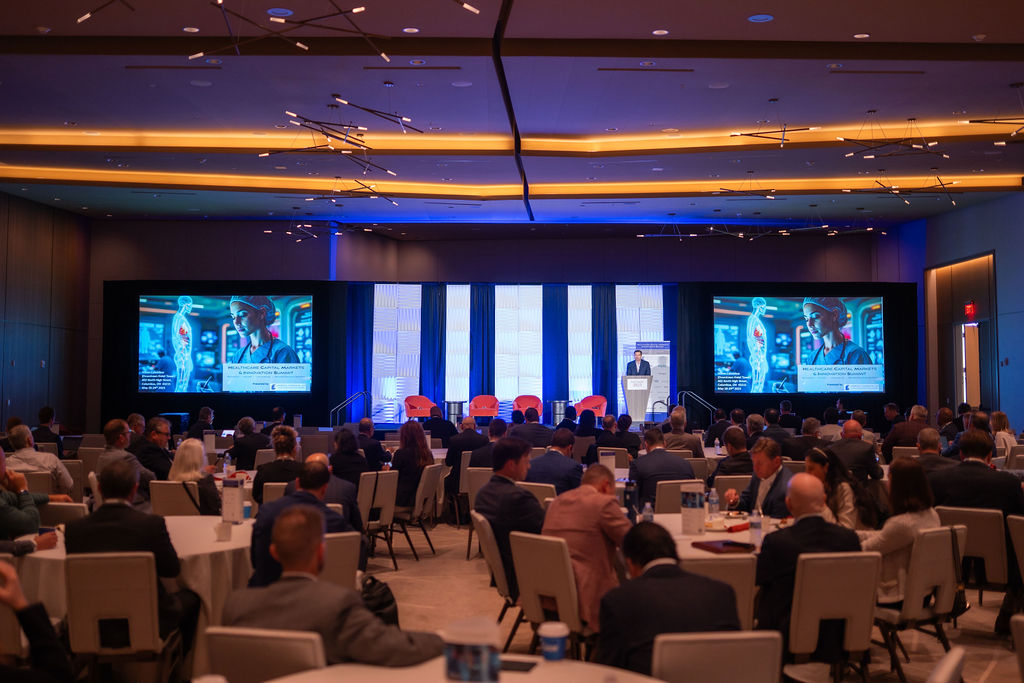
HCMIS 2025
Columbus: The Biggest Small Town in America
There is a phrase that Columbus residents use with a mixture of affection and competitive pride: The Biggest Small Town in America. It describes something real. Columbus is the 14th largest city in the United States, within 500 miles of 50% of the U.S. population, home to one of the largest universities in the country, and the capital of a state that has produced eight presidents. And yet it maintains a relational density, a tendency for consequential introductions to occur in unexpected contexts, that most cities this size lose along the way.
That culture shows up in its institutions. Columbus understands orchestration. You see it on Saturdays with The Ohio State University Marching Band (#TBDBITL), hundreds of individuals moving with precision, forming something recognizable only when viewed together. The city operates the same way. Individually, we are builders. Together, we become a system.
Innovate New Albany hosts Tiger Talks, accessible, high-quality learning events that bring investors, founders, operators, and community members into the same room without the velvet-rope dynamics that can make coastal tech ecosystems feel exclusionary. That is the vision Neil Collins has spent years executing at Innovate New Albany: a community incubator built on the belief that innovation belongs to everyone willing to show up for it. It is the kind of civic bet that compounds quietly; the more people understand what is being built here, the more people want to build here.
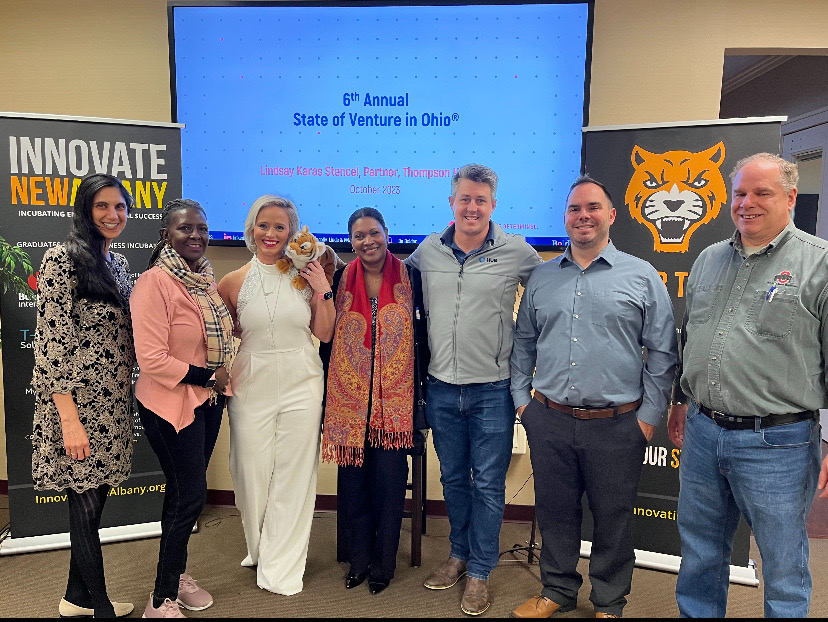
6th Annual VC Update (2023)
It is inside that ecosystem that Lindsay Karas Stencel built one of her platforms, and she has since become one of the most important connective figures in Columbus’s startup and venture capital story.
Lindsay is a Partner at Thompson Hine, one of the country’s leading business law firms, where she focuses on venture capital fund formation, early-stage company financing, private equity, and new ventures. Her career spans leading the most active seed fund in New York State, co-founding both a women-focused and an LGBTQ+-focused venture capital firm, overseeing more than 1,000 startup financings on both the investor and company sides, and structuring M&A exits for portfolio companies acquired by Fortune 25 companies. She teaches at OSU’s Moritz College of Law as an adjunct professor and has been named to the Columbus CEO Future 50 list.
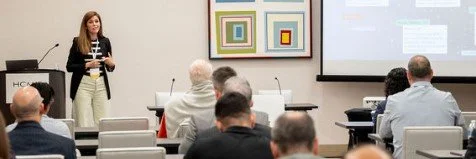
But what Lindsay built in Columbus is not reducible to a list of credentials. At her annual State of Venture in Ohio presentations, held at Innovate New Albany, which attracts a room full of founders, investors, and operators, she delivered something the ecosystem had been missing: honest, data-grounded, publicly accessible intelligence about where Columbus stood relative to the national VC landscape. Not a booster’s pitch. A practitioner’s assessment. In a field that remains disproportionately male and coastal in its power centers, Lindsay showed up consistently, with receipts, and told the truth about what the numbers meant and where the gaps were.
That consistency, year after year, in a room that kept getting larger, is what made her one of the most trusted voices in the Columbus ecosystem. She has presented at Rev1 Ventures’ Capital Access Learning Lab, contributed to SEA Change programming, and shaped the thinking of founders and investors across the city’s innovation infrastructure. It is the kind of presence that makes an ecosystem coherent. And it is what made her encouragement, when it came, carry real weight.
The numbers behind Columbus’s momentum reflect what she was tracking. Drive Capital, founded in Columbus in 2013 by ex-Sequoia investors Mark Kvamme and Chris Olsen, proved that venture returns did not require a coastal zip code. CoverMyMeds became Central Ohio’s first billion-dollar exit when McKesson acquired it in 2017. Root Insurance marked Ohio’s largest-ever IPO in 2020. Between 2017 and 2021, venture investors deployed more than a billion into Columbus healthcare and insurance startups. The O.H.I.O. Fund raised 40 million from 114 in-state investors in its first year on the explicit thesis that Ohio’s capital should serve Ohio’s growth.
And yet Columbus has always known, with clear-eyed honesty, that momentum is not the same as maturity. Startup density has historically trailed national benchmarks. Early-stage companies have struggled to access sufficient follow-on capital during downturns. The ecosystem’s greatest strength, its collaborative, accessible culture, is also its recurring challenge: a city still building the infrastructure to see its best ideas through to scale.
That gap is precisely where Neil Johnson has spent 23 years working — and where Lindsay’s platform ensured the people doing the building could see the full picture.
“Columbus has been a real incubator for healthcare innovation and creativity. We know Ohio is considered a fly-over state — but the amount of activity here should be in the same discussion as Boston, Nashville, or cities in California.” -Neil Johnson
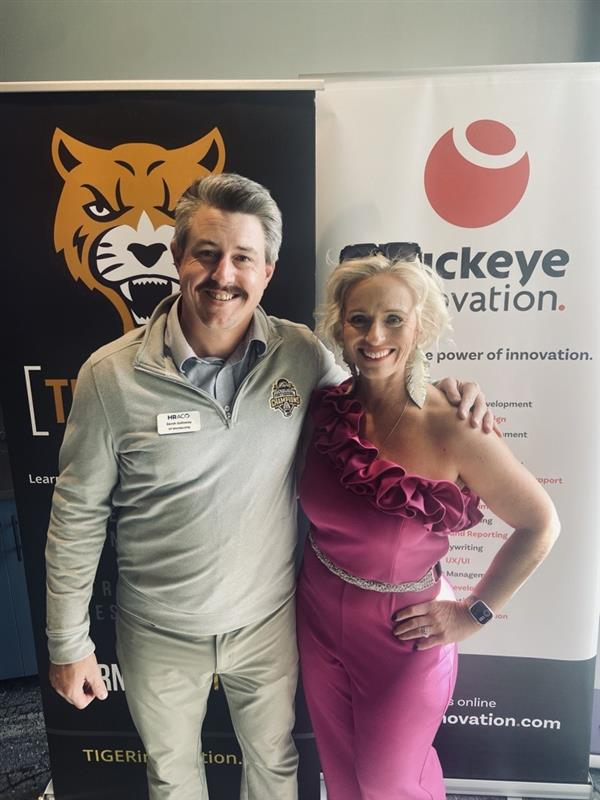
8th Annual VC update - 2025
How I Got to the Room
My first real glimpse of what a mature startup ecosystem looks like from the inside came from Seattle.
Earlier in my career, I worked at Zulily, the Seattle-based flash-sale e-commerce company founded in 2009 that scaled rapidly and exited at a multi-billion-dollar valuation. Liberty Interactive acquired the company for $2.4 billion. From the inside, that kind of trajectory doesn’t feel like a headline; it feels like infrastructure. What made it possible wasn’t just the product or the timing. It was Seattle: a city that had built the relational and capital scaffolding through Amazon alumni, Maveron, Andreessen Horowitz, and a generation of founders who had done this before, allowing companies to move fast, stay funded, and find the right advisors at the right moment. (I worked out of Zulily’s Columbus office, an early signal, in retrospect, that the Heartland was already part of the story.) What I was watching wasn’t luck. It was an ecosystem that had earned its confidence through compounding cycles of investment and reinvestment in each other.
I brought that benchmark home to Columbus.
In 2017, I bootstrapped an early-stage venture of my own, using Ohio State students as my core workforce, building lean, building local, and figuring out, as I went, what it took to turn an idea into a company in this city. That year, I found my way to Innovate New Albany’s office hours, where Lindsay Karas Stencel was making herself available to founders working through exactly the kinds of early-stage challenges I was navigating. She was sharp, practical, and generous with her time. She helped me think more clearly about capital structure, value creation, and what questions I wasn’t yet asking.
Over the next two years, I stayed in the ecosystem — participating in Columbus Startup Week and the SEA Change program in 2017, 2018, and 2019. Those weren’t networking events. They were working environments: rooms full of people building things, comparing notes, and investing in each other’s trajectories without any formal obligation to do so. Columbus does this well. It is one of the things the city has always done well.
From there, my path led me into one of the companies anchoring Columbus’s VC moment, Beam Benefits, the Columbus-based digital-first dental and employee benefits insurtech that Drive Capital backed from its first Series A and that ultimately raised over $200 million in total funding, with Nationwide coming in as a strategic investor during the Series E. I worked inside the kind of venture-funded growth environment I had only observed from a distance at Zulily, where capital alignment, product velocity, and company culture were genuinely working together to build something consequential in the Heartland.
When that chapter closed, I had a conviction and a city. Columbus was built on insurance. A hundred years ago, the Leveque Tower rose as a symbol of this industry’s confidence in this community. I joined HUB International with a specific ambition: to establish it as the insurance presence in Columbus. The city is a hub, geographically, industrially, and relationally. The name was already the thesis. Through a partnership built with that VC-backed network, I set out to make HUB International the Global Insurance HUB, not as branding, but as a genuine reflection of what Columbus could become in the insurance and benefits space. Our community collaborates. It finds ways to innovate. Tomorrow improves through individuals’ collective efforts, which are more impactful when goals align.
So, after four years of launching Beam across four time zones, I found myself focused back on Ohio, headed to a trusted mentor to watch her present her State of Venture.
But the seeds Lindsay Karas Stencel had planted went deeper than an introduction. Over years of conversations and coffee, she gave me a framework for understanding Columbus that I hadn’t found anywhere else.
She described how capital deployment here had historically operated like a Petri dish—amoeba eating amoeba. Scarcity thinking. Zero-sum competition for a limited pool of early-stage dollars, where the same insular networks recycled capital through the same circles, and founders outside those circles rarely found their way in. She had seen it from both sides of the table, and she named it without flinching.
But she also named the antidote. What Columbus needed, what any ecosystem needs to mature past that stage, was a community approach built on abundance. Recycled equity from well-timed exits flowing back into early-stage bets. Experience moving in the right direction: operators and investors who had built and sold, returning not just with capital, but with pattern recognition, hard-won judgment, and the willingness to pull the next generation forward. Compounding results, not extracted ones.
The workforce metaphor I had been developing, the idea that people are the highest-leverage variable in any capital deployment, and that alignment and empathy drive performance in ways financial engineering alone cannot, was born in direct response to what Lindsay described.
If capital without community is a Petri dish, then Capital, Community, and Collaboration are the conditions for an ecosystem to grow. The 3Cs didn’t come from a whiteboard. They came from lived experience, and from people who understood what Columbus could become before the rest of us did.
That is where the next chapter began.
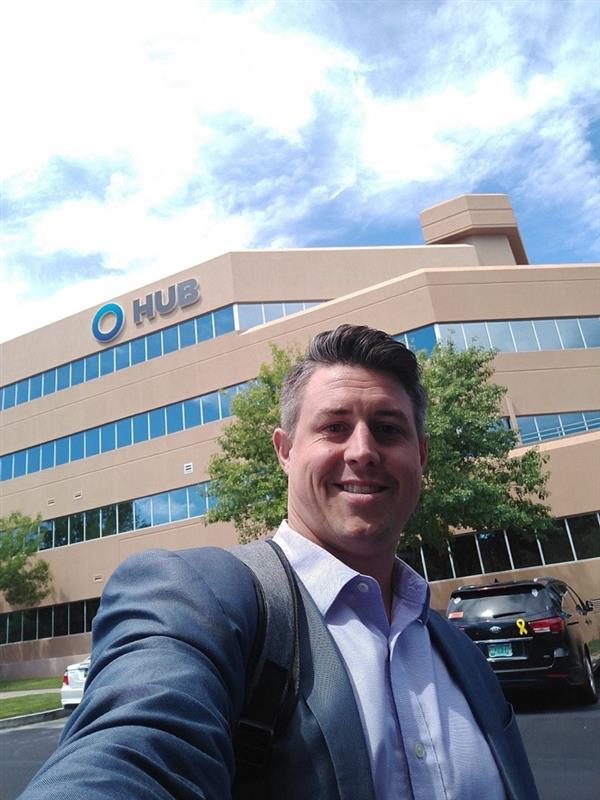
First Trip to New Mexico 2019
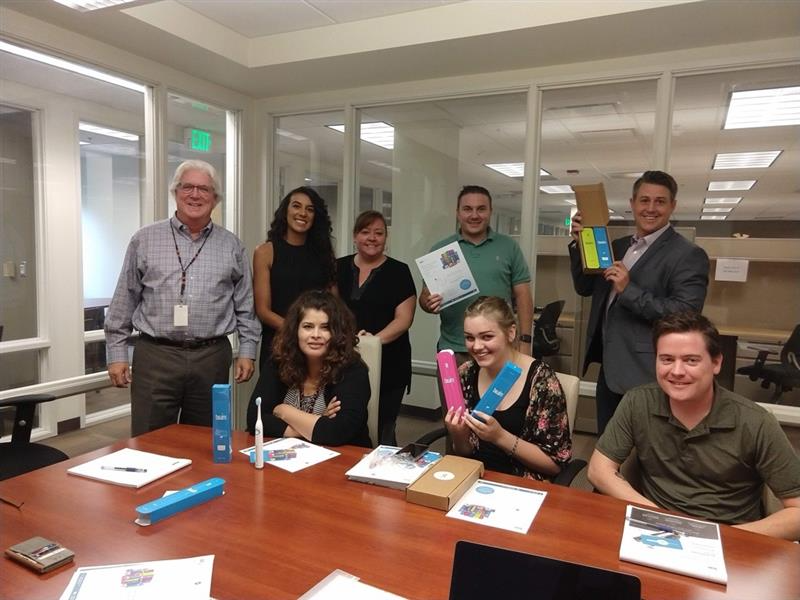
Meeting the Albuquerque, New Mexico, HUB Team, 2019
What the Room Produced
Neil invited me to HCMIS. I went expecting a conference. What I found was something closer to a laboratory.
The conversations I had there, across panels on private equity dynamics, AI in healthcare, and the structural forces shaping M&A, sharpened something I had been developing for years: a framework for thinking about workforce and organizational performance as the highest-leverage variable in any deal or growth context. The idea that when an organization is acquired or restructured, the workforce is simultaneously the engine, the most valuable asset, and the most consistently underinvested lever available. That empathy and alignment drive engagement, engagement drives production, and production drives the financial outcome.
In that room, watching dealmakers from both sides of the transaction table frame these questions with rigor and real stakes, the language finally arrived. The 3Cs - Capital, Community, Collaboration- are not just a framework for thinking about Ohio’s competitive position. They describe what Neil Johnson has been doing, one room at a time, for more than two decades in this city.
Neil introduced me to John Horack, the Neil Armstrong Chair in Aerospace Policy at Ohio State University and a board member of Rev1 Ventures, the seed-stage investor studio that has become one of Columbus’s most active early-stage capital vehicles. The following morning, I found myself seated next to Lou Van Thaer at The Memorial Tournament by Workday Breakfast. A seed Lindsay had planted years earlier quietly took root in that conversation. Lou and I bonded quickly over a shared read of Ohio’s aerospace moment and a shared concern. We had both watched Intel’s Ohio expansion stall before it was publicly acknowledged. I knew Intel’s former Senior Director of Corporate Strategy and had seen the signals up close. Lou had seen them too. The cautionary tale was the same one Lindsay had named: Ohio attracts capital well. What it struggles to sustain is the workforce infrastructure that keeps that capital in place. That morning confirmed the mission. Out of those meetings came the agreement to pursue capital sourcing aligned to Ohio’s aerospace moment, and the conviction that someone needed to document it, amplify it, and make it visible. So I built a Space Hammer — a physical symbol of the idea that space should be an everyday tool in Ohio’s workforce toolbox, not a distant abstraction. I gifted it to John Horack when Lou, Neil, and I were invited to tour OSU’s engineering facilities, focusing on the VISTA Space Park initiative. Those conversations set in motion the aerospace arc of this series.
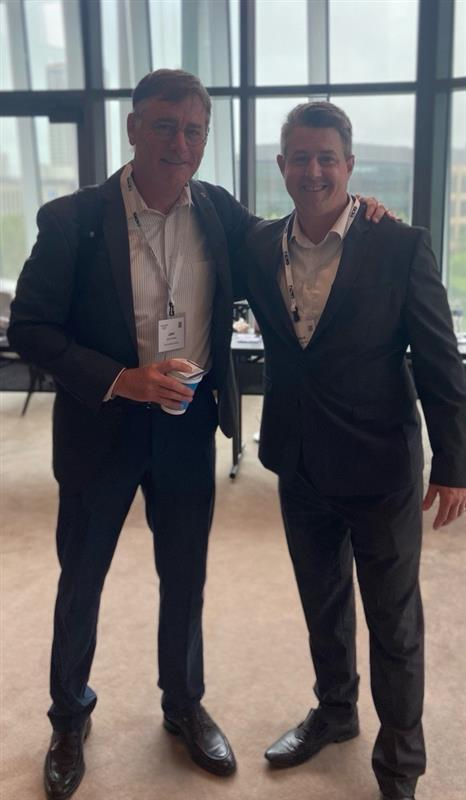
Meeting John Horack 2025
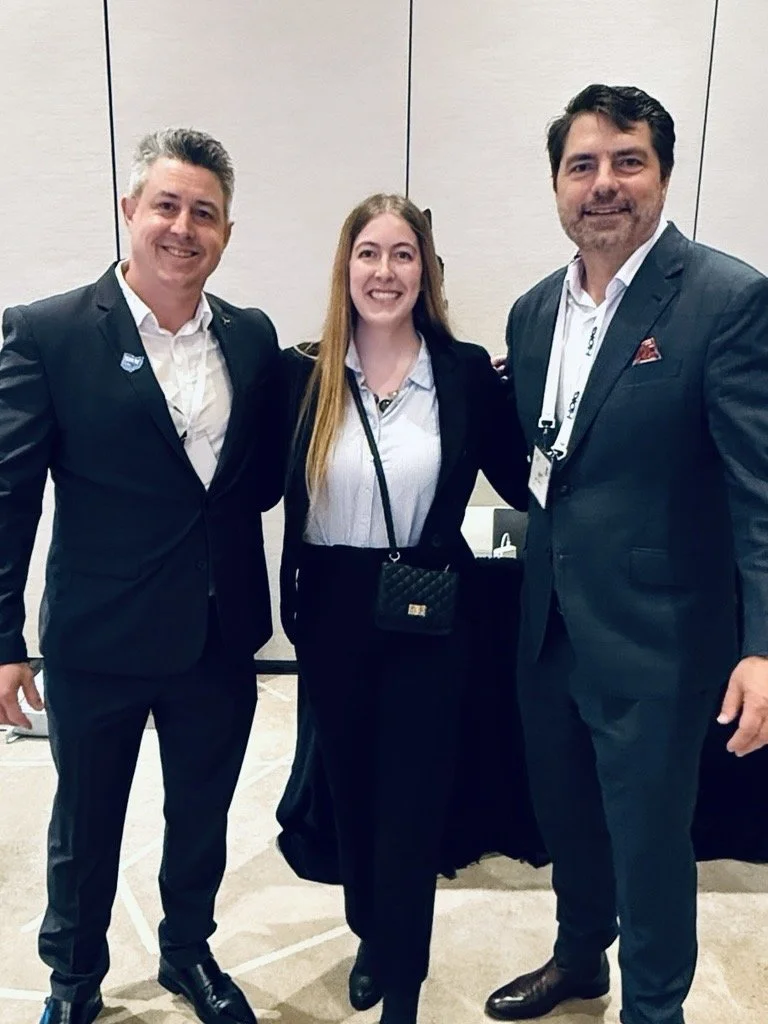
Since that day, Neil and I have been developing what is now taking shape as the 2026 ACG Ohio Aerospace & Defense Investment Summit, a convening built on the HCMIS model, applied to Ohio’s aerospace and defense capital-formation moment.
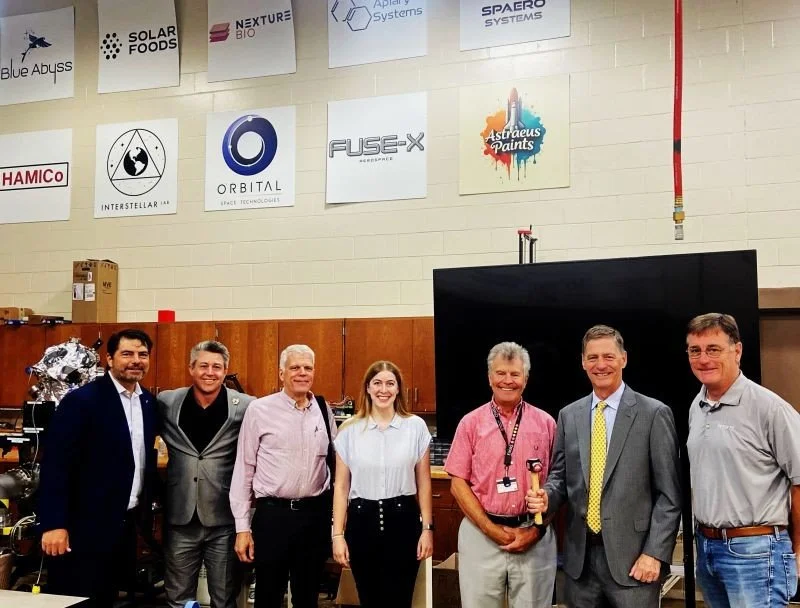
Lou’s holding the Space HAMMER!
The 3Cs are not a theory. They describe what happens when one person decides to build the room the community needs, and keeps showing up to fill it.
Tying the 3Cs Together
Neil Johnson’s work is the most direct expression of the 3Cs framework documented in this series.
• Capital: Lawrence, Evans & Co. has been closing healthcare M&A transactions in the Columbus, Ohio, and National market for 23 years. That tenure represents compounding institutional knowledge, trusted relationships, and a track record that makes Johnson credible to buyers, sellers, and intermediaries who have seen the full cycle of Columbus’s capital development. Nearly $700 million in transactions directly attributable to HCMIS didn’t happen because dealmakers were pitched at. They happened because trust was built first.
• Community: Columbus’s relational infrastructure, from Innovate New Albany’s Tiger Talks to Lindsay Stencel’s State of Venture forums to ACG Columbus’s network of middle-market practitioners, creates the conditions in which introductions are repeatable rather than lucky. Neil’s nonprofit component to HCMIS formalizes the connection between capital activity and community obligation. When he anchors the summit to the Memorial Tournament, he is deliberately activating Columbus’s civic and corporate hosting instincts — turning the city’s hospitality infrastructure into a dealmaking advantage.
• Collaboration: The Aerospace & Defense Investment Summit does not exist because a committee decided Ohio needed one. It exists because Neil built a healthcare convening that proved the model works, and because a chain of relationships that began at HCMIS, Johnson to Horack to Van Thaer to OSU to VISTA, created the conditions for a new collaboration to emerge. Not a stated aspiration. A structural outcome.
What’s Next
The proposed 2026 ACG Ohio Aerospace & Defense Investment Summit, is built on the same conviction Neil brought to HCMIS: that Ohio doesn’t need to be sold. It needs to be convened.
The headwinds are real and accelerating. Ohio’s defense industry generates approximately $69 billion in annual economic activity. JobsOhio has formalized Advanced Aerospace & Defense as a strategic investment priority, with a dedicated Space vertical recognizing the convergence of commercial launch, orbital infrastructure, and defense applications now concentrating in the state. And in March 2026, the Ohio House passed House Bill 292 by a 72-10 margin, legislation to establish the Ohio Defense and Space Commission, a body charged with attracting aerospace investment, coordinating military and manufacturing partners statewide, and administering a new Defense and Aerospace Industries Expansion Program. The bill now awaits the Ohio Senate.
Anduril’s Arsenal-1 is open in Pickaway County, ready to begin assembling autonomous combat systems with 4,000 jobs and $2 billion in economic impact projected over the next decade. VISTA Space Park is leasing space on the Ohio State campus. NASA Glenn and Wright-Patterson Air Force Base are expanding. The capital decisions and workforce decisions shaping Ohio’s aerospace future are being made right now, often by people who don’t yet know each other.
It is precisely that kind of structural alignment, state policy, private capital, and institutional knowledge moving in the same direction, that John Horack of Ohio State described in response to an early conversation about the summit concept. He pointed to the investment-fund potential for companies where spaceflight-related research is central to their future, biotech, pharma, materials, quantum, AI, medicine, and expressed a desire to move from participant to contributor in the work on VISTA and Starlab. His guidance has been a north star for how Neil and I have shaped the summit’s purpose: not just to convene dealmakers, but to accelerate the capital and collaboration that Ohio’s aerospace moment is already demanding.
That problem, people who should know each other, and don’t yet, is one Neil Johnson knows how to solve.
Columbus is, as it has always been, the place where what is built together outlasts what is built alone. The Biggest Small Town in America is still earning that name—one room at a time, one introduction at a time, one decision to show up for each other when it matters most.
Ohio is best when we choose to build.
Let’s build together.