A Century of Care: The Cleveland Clinic and Its Courage to Build with Compassion and Unrelenting Innovation
A Century of Care and The Cleveland Clinic's Courage to Build a Legacy on Compassion and Unrelenting Innovation
On April 29, 2026, The Cleveland Clinic announced the Space Health Center.
It was a brief announcement. Yet its significance is profound: for the first time, one of the world’s top clinical institutions officially committed to pioneering medicine and medical research beyond Earth’s atmosphere. The Space Health Center signals a new era in which the boundaries of clinical care, scientific discovery, and Cleveland Clinic’s mission expand to include the unique frontiers of human health in space.
The institution that pioneered coronary angiography, performed the first coronary artery bypass surgery in the United States, and built the world's most recognized and globally ranked heart care program for nearly three decades - has turned its clinical infrastructure up toward orbit: a mission extension beyond gravitational limitations.
Cleveland Clinic has always followed medicine wherever the hardest problems exist.
In a World War I field hospital located in Rouen, France, in 1917, they shaped a conviction: cooperation under pressure produced outcomes no individual physician could match, and that model deserved to be made permanent. Then, in 1921, they built on that conviction. In 1945, it meant funding a Research Division before knowing what it would discover. In 1948, serotonin. In 1958, seeing inside the living heart for the first time. Through every decade since, the institution has compounded that same instinct into the most clinically rigorous, globally trusted healthcare brand on Earth.
The organization that globalized medicine is now reaching toward the stars, to explore the next frontier of human health in orbit, and to bring whatever it learns back to patients on Earth. For example, research into how microgravity affects bone density has already yielded new insights into osteoporosis, and exercise regimens developed for astronauts recovering from spaceflight are now used to help patients on Earth regain mobility after long periods of bed rest. The bridge between space medicine and terrestrial healthcare is not theoretical. It is already shaping patient care in Cleveland and beyond.
That is not a departure from the Cleveland Clinic's mission. It is the mission, pointed at a new horizon.
I know this because on February 13, 2026, I spent a day with the visionary directing the Cleveland Clinic's orbital launch.
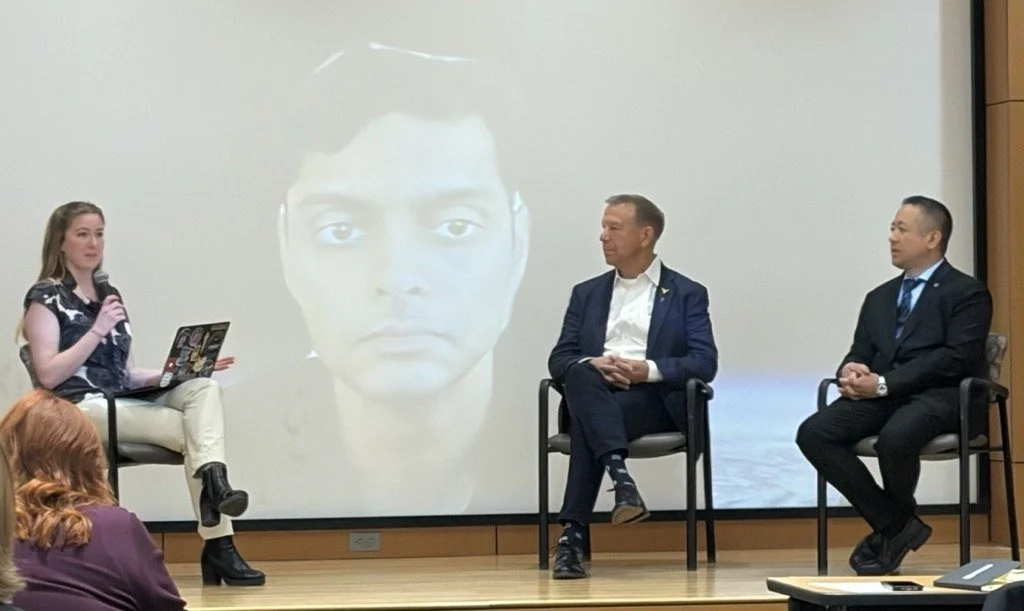
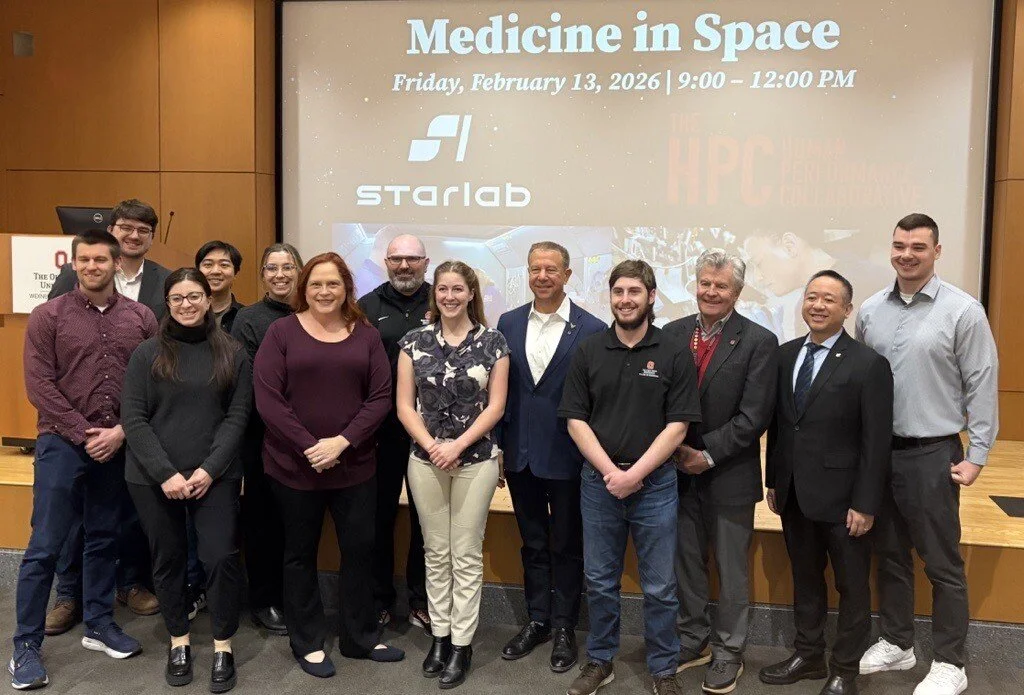
Abby Harrison, Arun Sharma, Tim Kopra, and Dr. Mayuga
February 13, 2026. Columbus, Ohio.
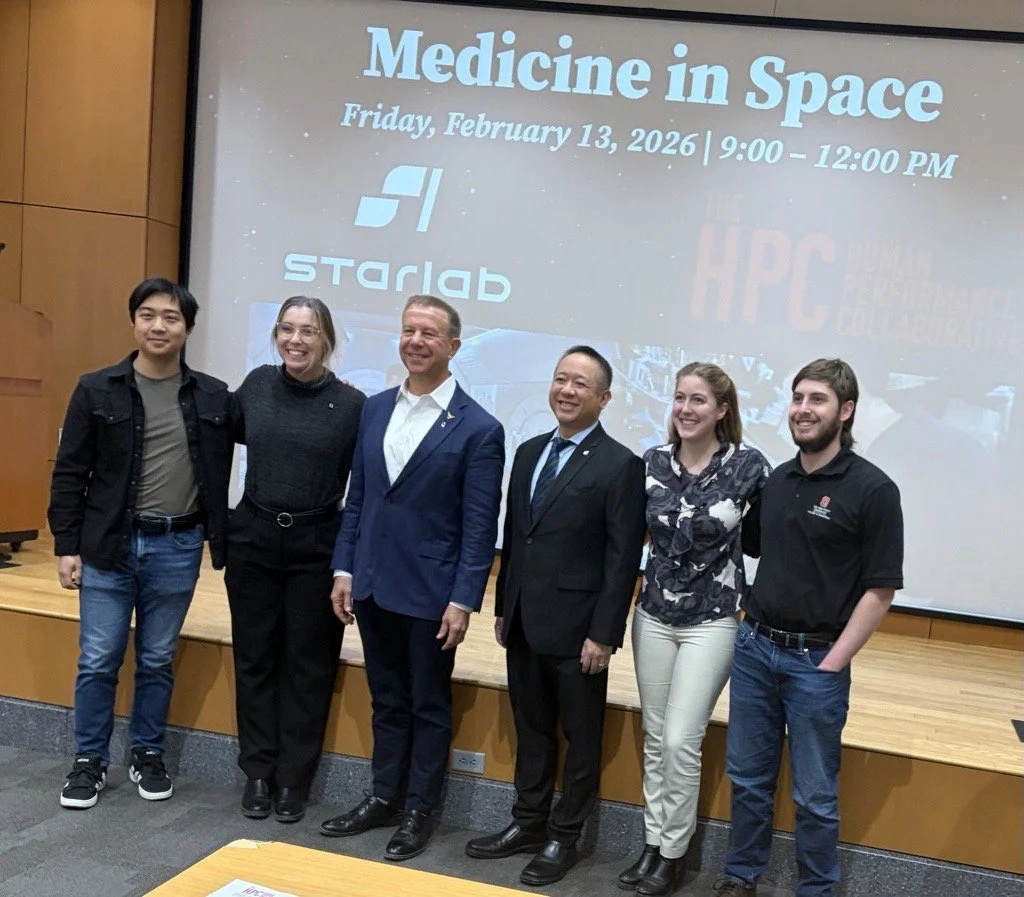
The Medicine in Space workshop that morning was the latest session in the Exploring Bioastronautics Research at Ohio State series, organized jointly by the Human Performance Collaborative and Starlab.
What the room revealed that morning was the shape of what the Cleveland Clinic is moving toward. Dr. Mayuga made clear that the cardiovascular challenges he has spent his career treating on Earth- orthostatic intolerance, syncope, and the heart's struggle to regulate while under gravitational stress- are the same physiological problems every astronaut faces returning from orbit. The clinical bridge isn't theoretical. It's already built. The Space Health Center is the institutional commitment to cross it.
Tim Kopra, Chief Human Exploration Officer of Voyager Technologies and former ISS Commander, delivered the keynote. His message was unambiguous: the next chapter of human spaceflight will be built or broken on the strength of the medical and biological infrastructure supporting it. Commercial space stations don't run on engineering alone. They run on the systems, clinical, educational, and operational execution that keep humans functional in an environment that pushes every biological limit.
After the morning session concluded, Dave Williams, Laura Alvarez, and Abigail Harrison led Dr. Mayuga and me across campus. What I was about to see was where the morning arguments turned physical.
Stop 1: The College of Engineering—the people Dave built it with.
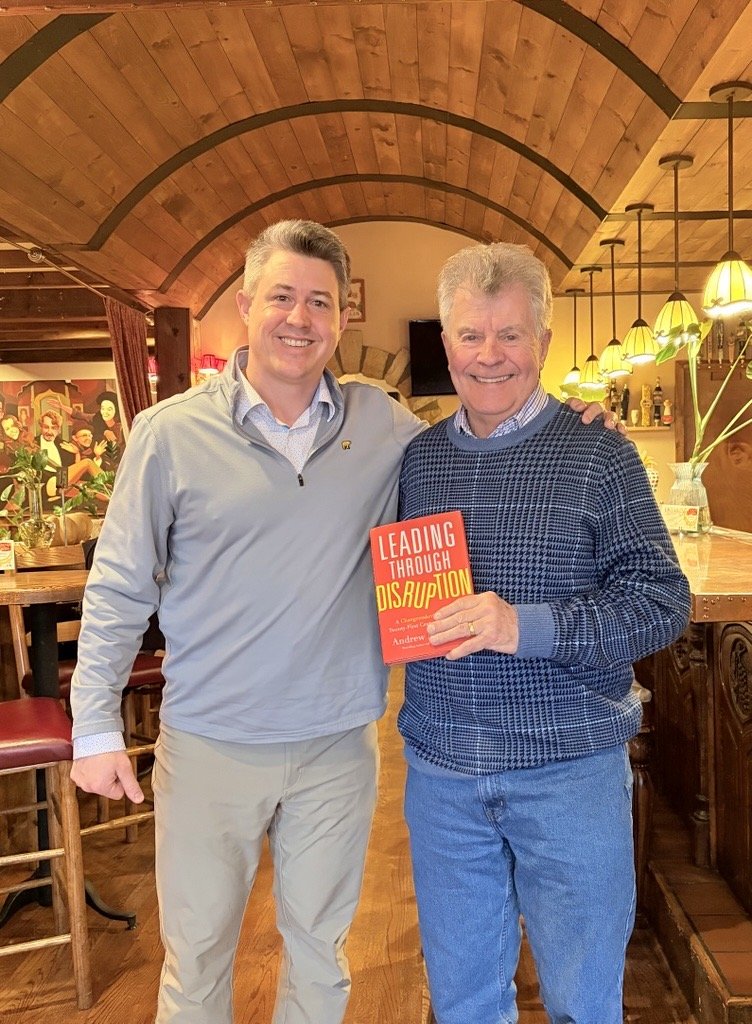
Dave Williams
David B. Williams served as the 22nd Dean of the College of Engineering from 2011 to 2021. During his tenure, the college's annual budget grew by more than 40% to $300 million, with external gifts and donations totaling nearly $500 million. The Medical Product Development Program, launched in 2018 to pair engineering students with companies on two-year sponsored design projects, was established on his watch. So were the fabrication labs, the biomedical manufacturing infrastructure, and the industry partnership culture that would lift OSU's BME graduate program to 36th nationally.
Among his most consequential decisions as Dean was the 2016 recruitment of Dr. John M. Horack as the inaugural holder of the Neil Armstrong Chair in Aerospace Policy. A 30-year NASA veteran who had reached Senior Executive Service at Marshall Space Flight Center, Horack was given a joint appointment linking the College of Engineering and the John Glenn College of Public Affairs. Williams described the hire plainly at the time: Horack's deep connections with NASA and the world's leading space authorities would strengthen Ohio State's role in space research and build stronger partnerships with Wright-Patterson Air Force Base, NASA Glenn, and the Ohio Aerospace Institute. Horack's framing was equally direct: space is among the most interdisciplinary human endeavors, requiring deep connections between the technical and policy communities. That appointment is still compounding. Horack rose to Senior Associate Dean and, in September 2025, to Ohio State's Vice President for Research.
The leadership pipeline Williams built extended well beyond OSU. Jennifer Cowley went on to become President of the University of Texas at Arlington. Matt McNair is Chancellor of the Nevada System of Higher Education. Dorota Brzezinska is Vice Chancellor for Research at the University of Wisconsin-Madison. Rudy Buchheit is Provost at the University of Cincinnati. Williams himself would say these people deserve the credit. He built a team, not a budget. The institutions that grew from that team are the proof.
Laura Alvarez retained a different kind of institutional memory across the same transition. She served as Executive Assistant to the Dean throughout the final years of Williams' tenure, learning how the college operates, who the partners are, and how decisions get made. When Williams moved to build the commercial space enterprise, Alvarez joined the effort, becoming Associate Director for Business Operations and Planning for Starlab and the George Washington Carver Science Park. She is the functional continuity between the institution Williams built and the one he is building next.
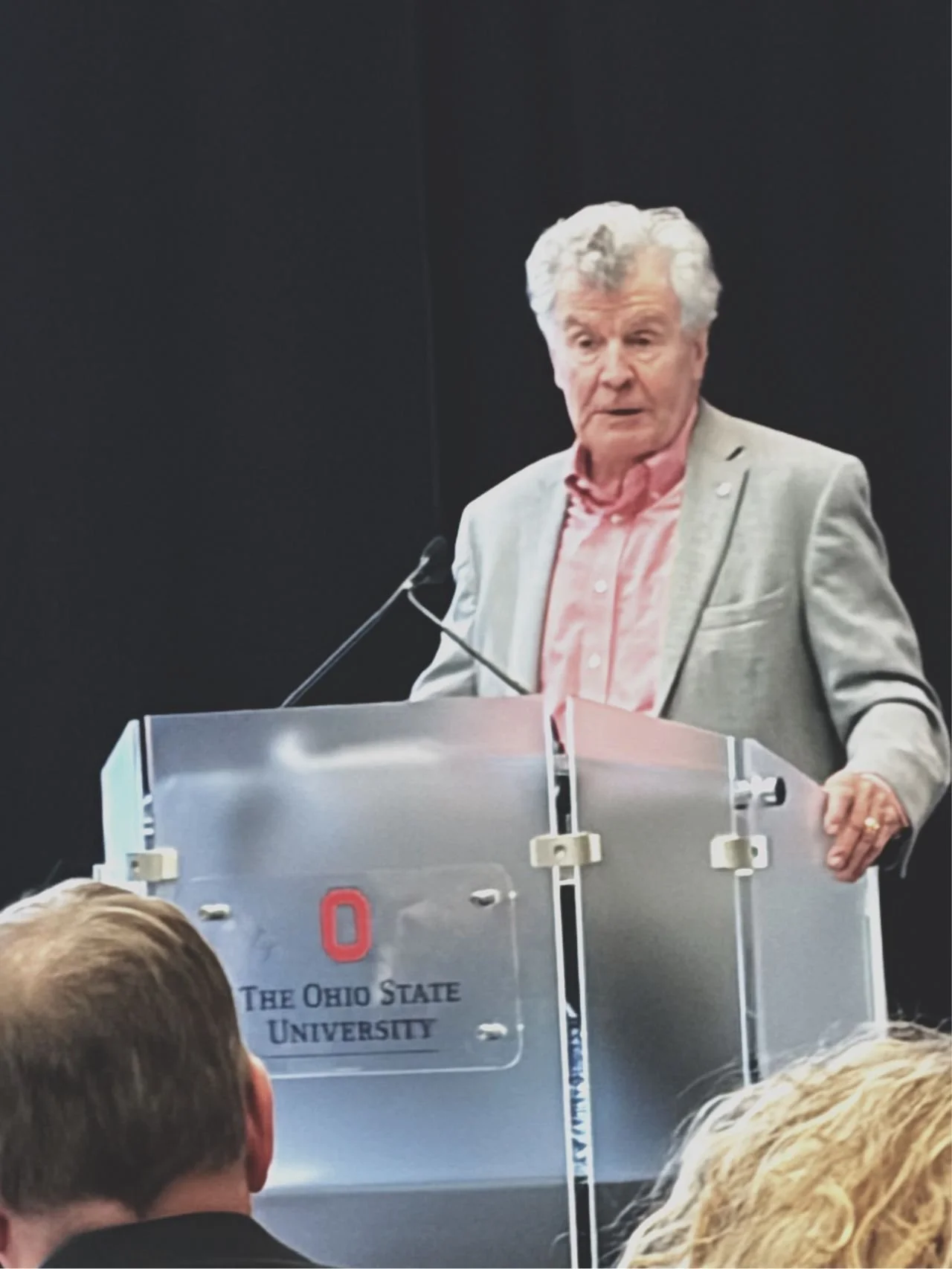
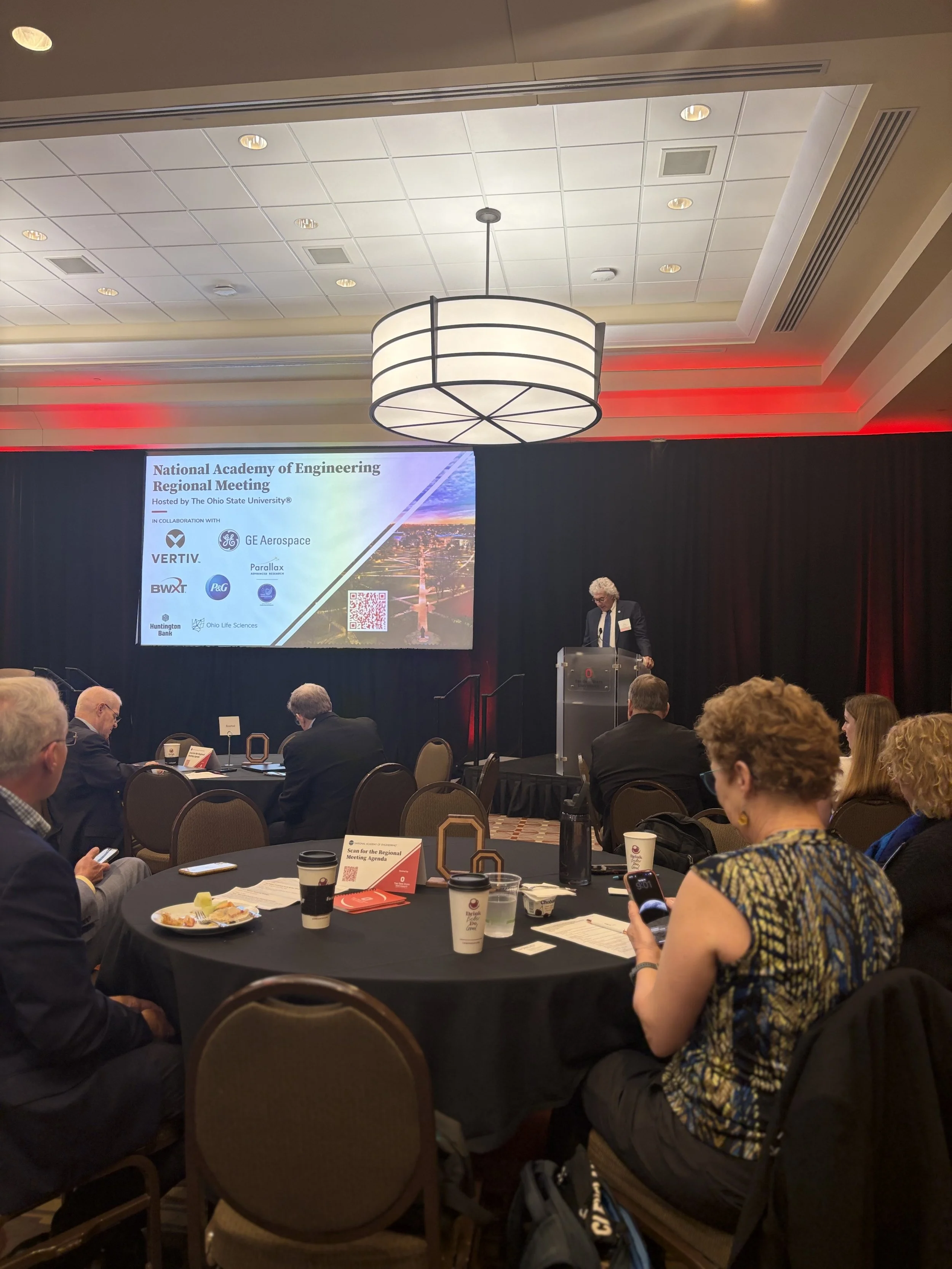
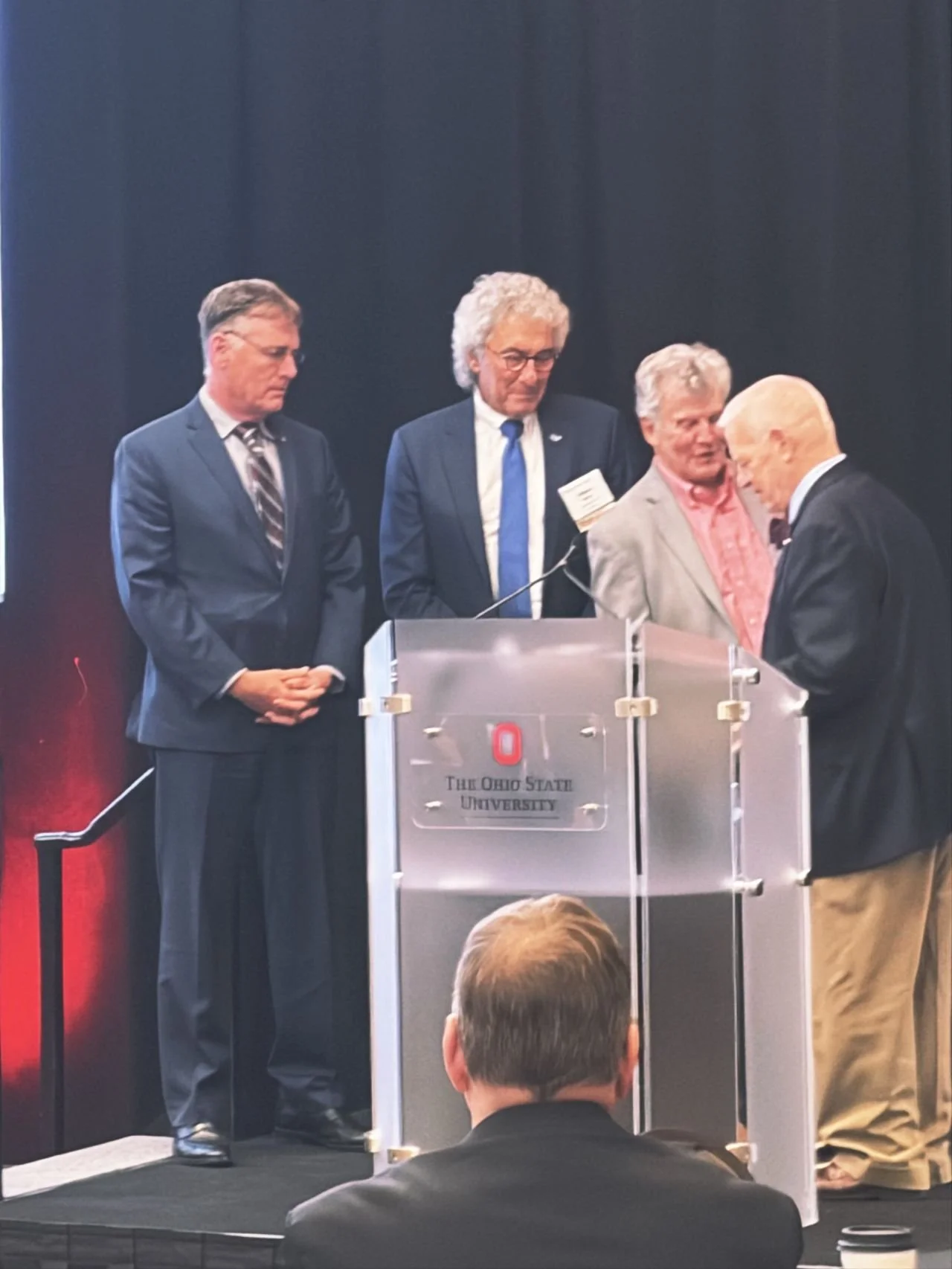
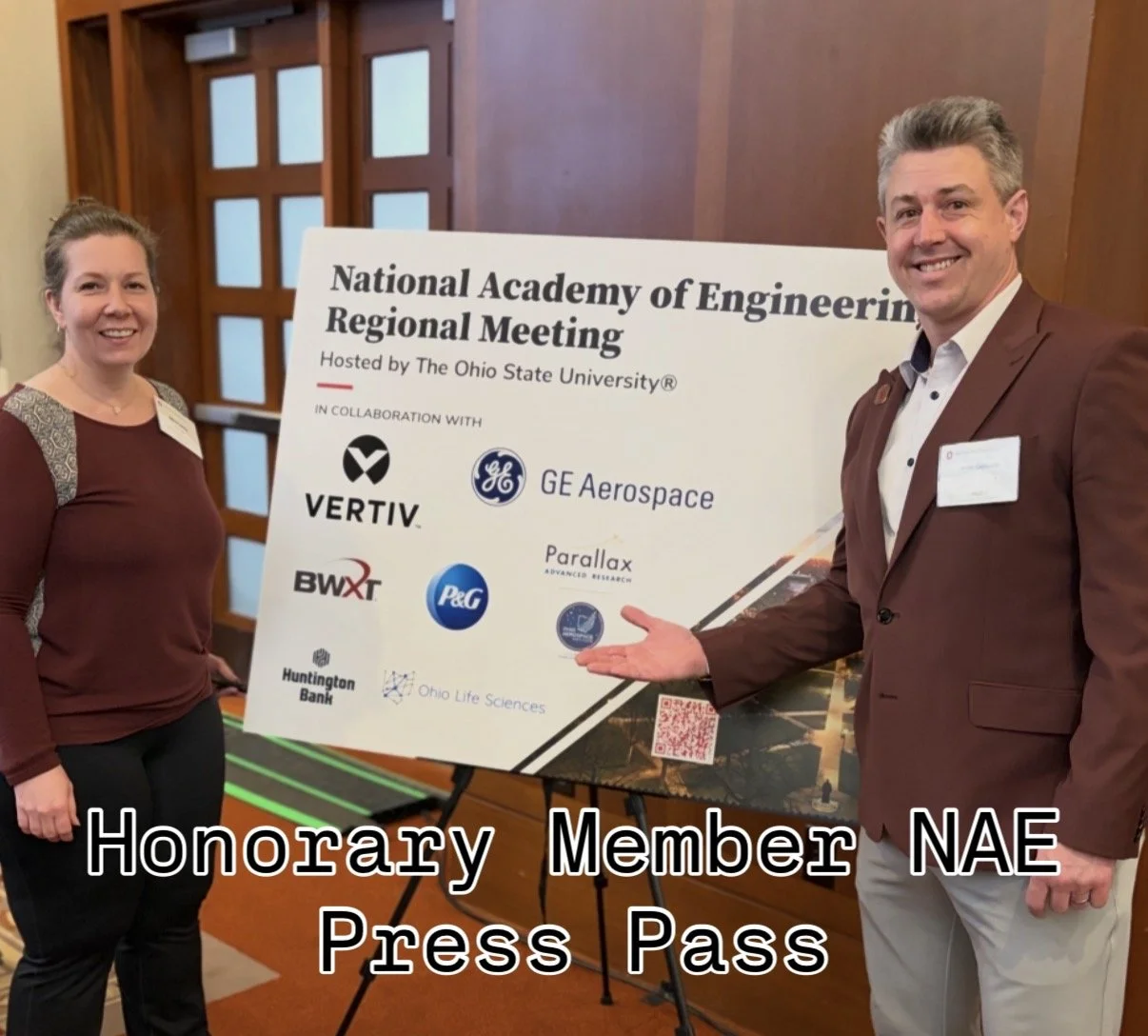
Dave at OSU hosted National Academy of Engineering Regional Meeting in April 2026
Then he stepped down from the deanship and, within Ohio State, took on a new mission as Director of Global University Research and Industry Partnerships at the Voyager Institute for Space, Technology and Advancement (VISTA), an initiative of The Ohio State University. The institution turned toward orbit, putting David in the captain’s seat, and he brought his crew with him.
Walking through those labs, Dr. Mayuga strode like a builder through a construction site. He asked about the imaging equipment, the fabrication tolerances, and the 3D printing capabilities used in surgical device modeling. Then the question that remained with me: whether ultrasound technology could be further adapted for use in space.
A cardiologist building a commercial space medicine center, standing in an engineering fabrication lab, asking about ultrasound in orbit. That's not a curiosity detour. That's how the pattern works.
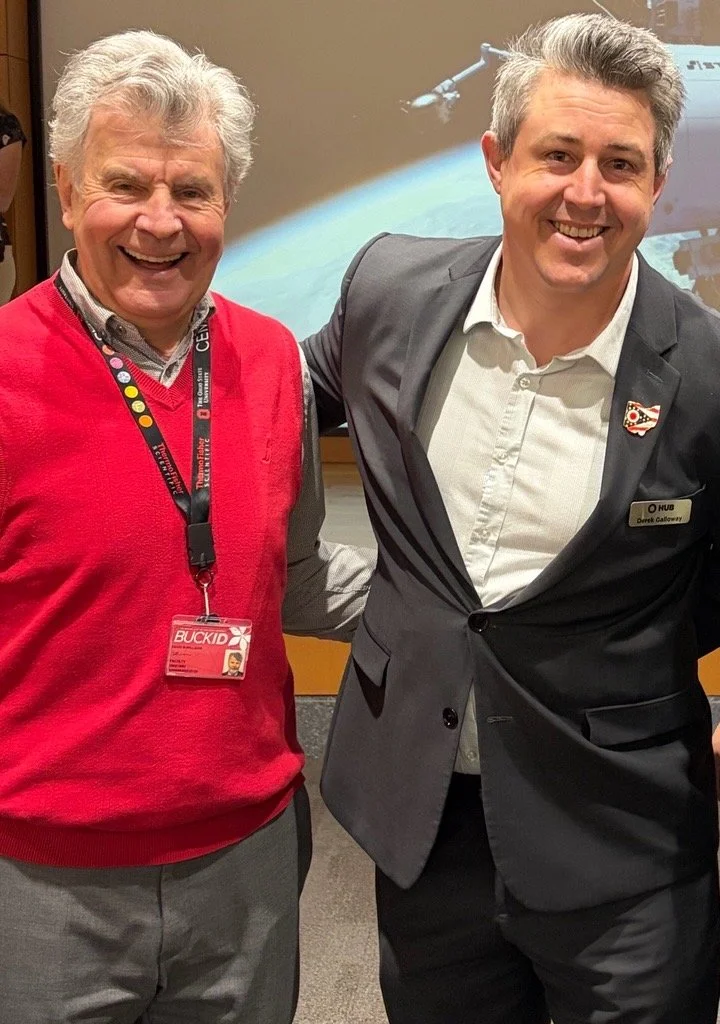
David and I at The Medicine in Space workshop
Stop 2: The Human Performance Collaborative. Where athlete science meets the frontier.
The HPC is OSU's athlete performance research center, using wearable biosensors, sleep science, and real-time physiological monitoring to optimize recovery and performance for Buckeye athletes. It operates the Exploring Bioastronautics Research at Ohio State program, spanning six tracks from training science to space medicine to microbiology. Harrison and Horack both appear on the program's kick-off event roster alongside the HPC's Faculty Director Josh Hagen, confirming that the aerospace policy, space research, and human performance infrastructure at OSU operate as a single connected ecosystem.
Walking through the center, I connected a dot that hadn't been stated in the room. What the HPC has built for elite athletes is a continuous physiological monitoring infrastructure for human performance under extreme stress. The population changes when you move from a swimmer to a spacewalker. The instrumentation logic, the data architecture, and the core research questions are structurally the same.
Ohio is already building the research framework. The athlete science developed in the Human Performance Collaborative, with its emphasis on continuous physiological monitoring and recovery from extreme stress, provides a ready-made platform for tracking and supporting astronaut health in space. Similarly, the engineering innovations and fabrication capabilities pioneered in the College of Engineering, advancing everything from precision biomedical devices to remote diagnostics, will directly translate to the unique demands of space medicine, where adaptability and reliability are critical in a zero-gravity environment. We just haven't pointed this collaborative infrastructure at orbit yet.
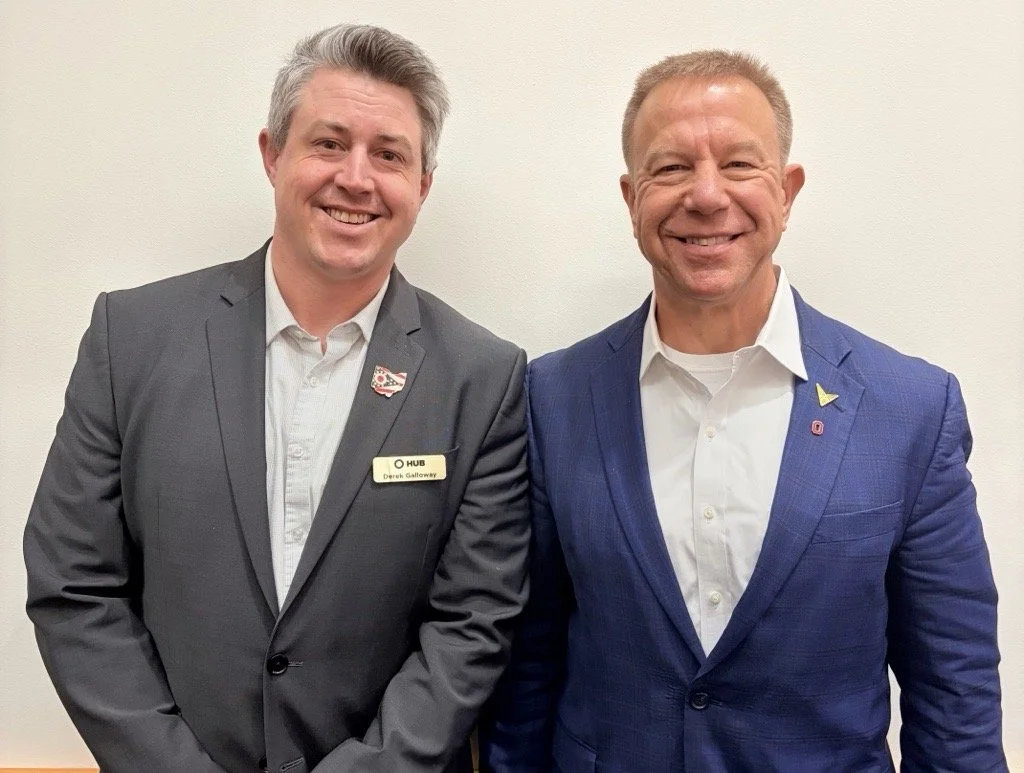
Tim Kopra, Chief Human Exploration Officer of Voyager Technologies and former ISS Commander
Act I. The Original 3C Institution (1917 to 1929)
The Genesis: Military Collaboration as Organizational Blueprint
Frank Bunts graduated from the U.S. Naval Academy before he entered medical school. Institutional cooperation wasn't a philosophy for him. It was core training. When the three surgeons returned to Cleveland from Rouen, they made a revealing first decision: they recruited an internist.
John Phillips was not a surgeon. They recruited him precisely because he couldn't replicate what Crile, Bunts, and Lower already did; what they were building required capabilities they didn't have. That ego-free recognition of complementary skill is the founding act of pre-competitive collaboration, and it happened before the building existed.
“Advances in medicine had made it impossible for the individual physician to undertake complex problems alone.”Dr. George W. Crile, on the founding of Cleveland Clinic, 1921
The Cleveland Clinic has exemplified the 3Cs framework for over a century.
CEO Tom Mihaljevic's 2025 letter to stakeholders echoes that founding principle:
“That has always been our great strength: to envision a better path, then innovate and persevere to make it reality, lighting the way for others. We call it the Cleveland Clinic Way.”Tom Mihaljevic, MD, CEO and President, State of the Clinic 2025
On February 26, 1921, William Mayo, founder of the Mayo Clinic, delivered the keynote at the dedication. The founder of a competing institution flew to Cleveland to endorse this one. That is what pre-competitive collaboration looked like in 1921.
The Proof: Disaster and the Community That Held (1929)
On May 15, 1929, volatile nitrocellulose X-ray films stored in the basement combusted. 123 people died, including founder John Phillips. It remains the worst hospital disaster in American history.
Five days later, the Cleveland Clinic reopened in space donated by the headmistress of a local school. More than 300 patients registered immediately.
The institution didn't survive because it was well-funded. It survived because the community it built didn't let it fail. Its response, revised X-ray film storage standards adopted nationwide, is what institutions do when their mission outlasts their survival: they turn their worst moment into everyone else's protection.
That is Community and Collaboration under maximum pressure. It proved the 3C model wasn't theoretical.
Act II. The Pattern: Infrastructure Before Breakthrough
From 42 patients on opening day, the Cleveland Clinic became something most Ohio institutions only aspire to: a global export. The story of how it got there is not a story about scaling a business. It is a story about a repeating institutional pattern:
Build the infrastructure. Fund the research before you know what it will produce. Let the breakthrough arrive.
The Pattern in Three Moments
1945 Dr. Irvine Page founds Cleveland Clinic's first formal Research Division. He builds the infrastructure three years before the breakthrough arrives.
1948 Page's team isolates serotonin from the blood while studying cardiovascular disease and hypertension. They weren't looking for a neurotransmitter. They found one anyway. That discovery became the biochemical foundation for SSRIs, the most widely prescribed antidepressants in the world.
2026 The American Chemical Society designates Cleveland Clinic a National Historic Chemical Landmark for the 1948 serotonin discovery, announced April 28, 2026. The Space Health Center was announced April 29.
Two announcements in 48 hours. One honoring what the infrastructure-before-breakthrough model produced 78 years ago. The other launching the next iteration of the same model.
“His leadership elevated Cleveland Clinic into a research powerhouse, insisting on meticulous chemistry in service of patient care. His influence is still felt in our guiding principles today: we're asking bold questions, building the tools to answer them, and ensuring the answers make a difference for our patients.”Dr. Serpil Erzurum, Chief Research and Academic Officer, Cleveland Clinic
Dr. Mayuga's mandate for the Space Health Center mirrors this sentiment.
The cardiac breakthroughs of 1958, coronary angiography and then the first coronary artery bypass surgery, extended the pattern further. Sixty-seven years later, the Cleveland Clinic is the world-leading hospital for cardiology. The pattern is patient, and it compounds.
By 2025, that compounding had produced:
83,000 caregivers worldwide
23 hospitals across Ohio, Florida, UAE, UK
15.9M patient encounters annually
>100 home countries of patients served
$479M in research funding in 2025
$28.2B economic impact in Ohio alone (2023)
$1.49B community benefit contribution (2024)
Cleveland didn't lose the Cleveland Clinic to the world. It used the Cleveland Clinic to put Cleveland on the world's map.
“At Cleveland Clinic, we are always looking for ways to redefine the future of medicine through research and leading-edge innovations.”Dr. Lars Svensson, Chief, Sydell and Arnold Miller Heart, Vascular & Thoracic Institute
The Pattern at Work Today: 3C Leadership Across Ohio and Beyond
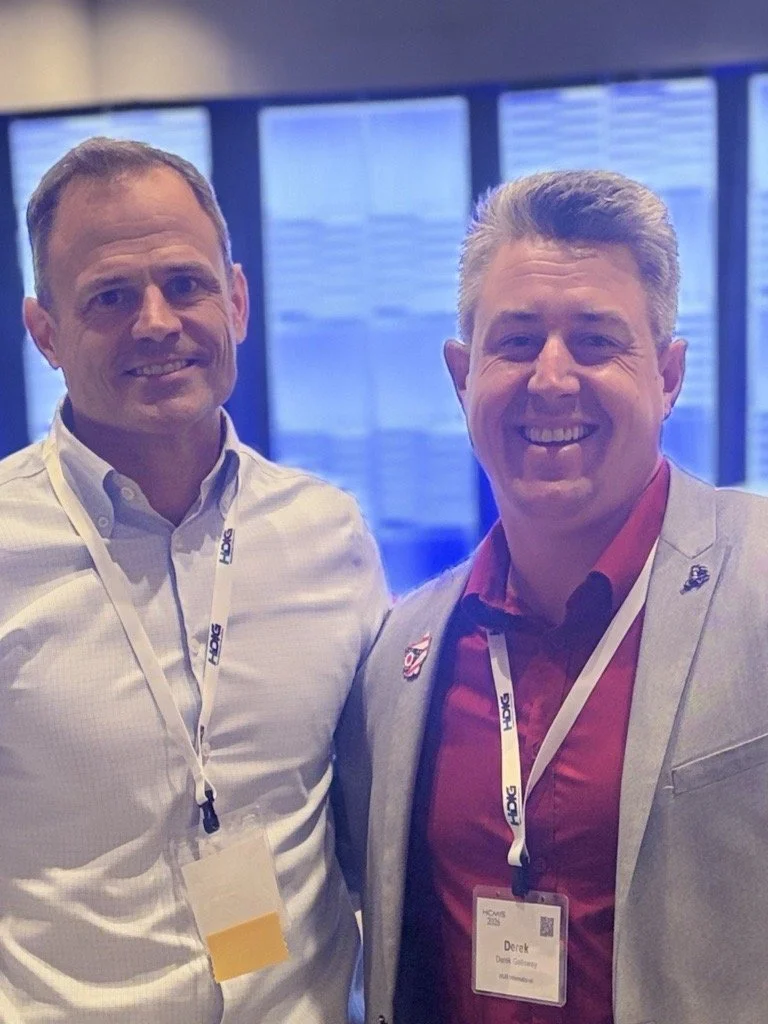
Todd Schwarzinger at HCMIS
Cleveland Clinic doesn't wait for the market to tell it where medicine is going. It builds toward where medicine will need to be, across disciplines, across geographies, and across the limits of what a hospital is supposed to do. Five examples from 2025 alone demonstrate the breadth:
IBM Quantum Computer: Cleveland Clinic operates the world's first quantum computer devoted entirely to healthcare research, upgraded in 2025 with an IBM Heron processor 25 times faster than its predecessor, driving more than a dozen active research projects in molecular simulation and drug discovery. Dr. Page's 1945 instinct expressed at computational scale: invest in the infrastructure before the clinical applications exist.
Oracle Partnership: A 2025 partnership with Oracle to build a platform making primary care easier to access and affordable through AI, data analytics, and exact medicine applications. Ohio has a habit of quietly building the infrastructure that organizes the world's most essential systems. OCLC did it for libraries in Columbus, Oracle for enterprise software. Cleveland Clinic and Oracle are now working together to improve primary care access.
Miami University, Quantum Computing Workforce: A partnership with Miami University in Oxford, Ohio, to develop specialized quantum computing degree programs and research experiences, anchored by a newly named 165,000-square-foot Cleveland Clinic Health Sciences and Wellness facility on campus. A healthcare system co-investing in a university curriculum it doesn't control, in a city three hours from Cleveland, because regional talent pipeline matters more than proprietary advantage.
Ellison Institute of Technology, Oxford: A partnership announced at the 2025 Life Sciences Summit in London combining the Cleveland Clinic's care, research, and innovation alongside the Ellison Institute's mandate to tackle the world's most enduring health challenges through transformative science. Cleveland Clinic is taking its research model global, not as an export, but as a co-investment with a partner whose ambition is consistent with its own.
Cleveland Cavaliers, Global Peak Performance Center: A 25-year partnership extension with the NBA's Cleveland Cavaliers, anchored by the Cleveland Clinic Global Peak Performance Center, under construction with developer Bedrock and opening in 2027, among the world's largest sports training and performance facilities. The physiological monitoring infrastructure that the Cleveland Clinic is building for elite athletes is structurally the same framework that commercial space medicine will require for astronauts in orbit. Cleveland Clinic is already building both ends of that pipeline.
Five examples. Five different partners. Five different geographies. One institutional instinct: build the infrastructure before the demand makes it obvious.
Act III. The Bridge: From Gravity to Microgravity
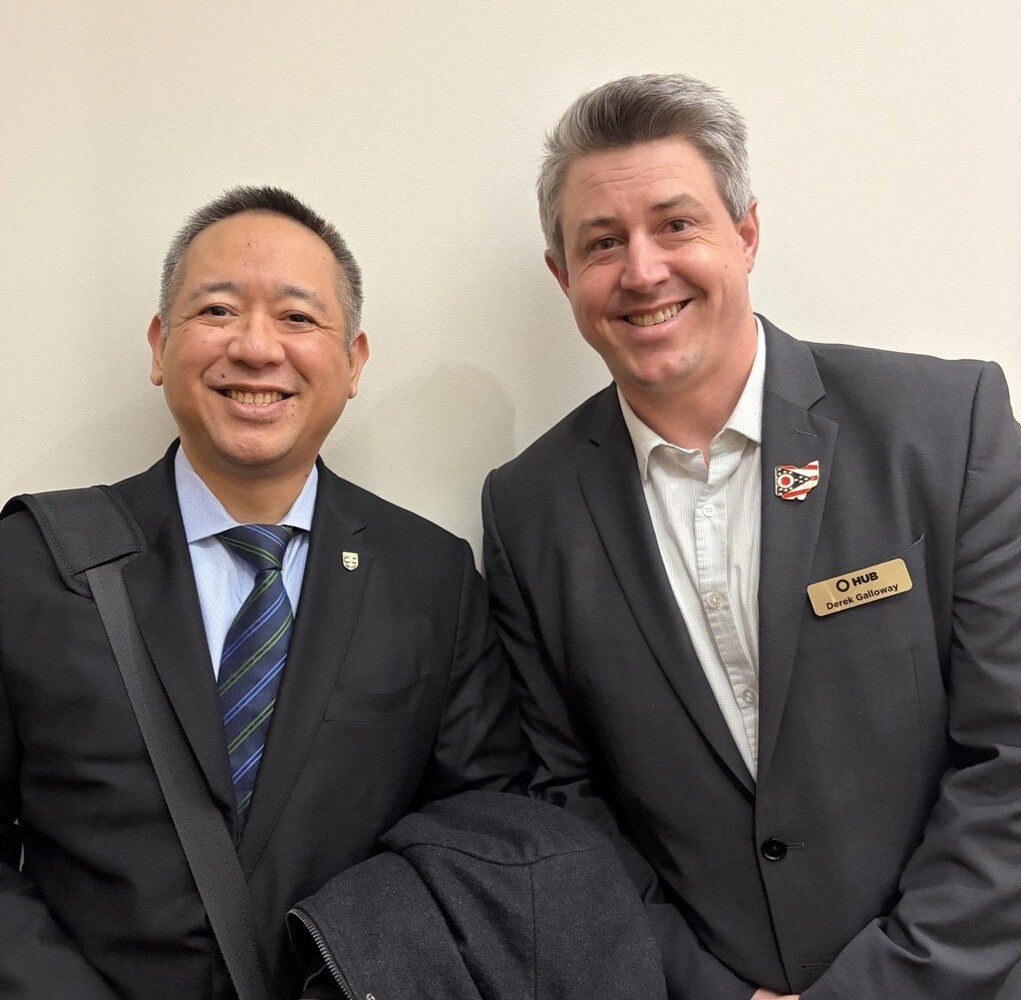
Meeting Dr. Mayuga
Dr. Mayuga's Path Was Never a Detour
National Merit Scholar at Northwestern. James Scholar honors program at the University of Illinois College of Medicine. Residency at the Cleveland Clinic. Fellowship in cardiovascular medicine at UC Davis. Returns to the Cleveland Clinic for electrophysiology. Won the Syncope Award for research and the Excellence in Medical Education Award in 2013. Named to staff in 2014. Fellow of the American College of Physicians, American College of Cardiology, Heart Rhythm Society, American Heart Association, and the Royal College of Physicians in London.
And a member of the American Astronautical Society.
He joined the astronautical society. He saw where his work was going and walked toward it.
Dr. Mayuga directs the Cleveland Clinic's Syncope Center, a clinical specialty focused on orthostatic intolerance: what happens to the cardiovascular system when the body's gravitational conditions change. POTS. Neurogenic hypotension. The heart struggling to regulate blood pressure against gravity's demands. He performs more than 1,000 tilt table tests annually, recreating in a clinical setting the same cardiovascular stress that astronauts experience returning from orbit.
The clinical picture microgravity creates is specific and measurable. In space, the heart undergoes remodeling: it can lose mass, become more spherical, and the left atrium can enlarge. These changes carry real clinical risks, including increased risk of abnormal heart rhythms and arrhythmias. NASA researchers have confirmed that astronauts can experience stagnancy and even reverse blood flow in space. Astronauts have experienced vision loss, lower bone density, blood clots, and muscle loss after months in orbit. The longer the mission, the greater the cumulative risk. A trip to Mars requires nearly three years in space, roughly 1.5 million minutes, compared to Alan Shepard's first flight of just over 15 minutes.
His own February 13 presentation made the clinical bridge explicit: astronauts are at risk of syncope and orthostatic intolerance due to microgravity, whether they are preparing for NASA's Moon-to-Mars program or commercial travel to low Earth orbit. Why does it happen? Is it time-dependent? Can it be prevented? Can it be treated? Dr. Mayuga has spent a decade answering these questions for Earth-based patients. The Space Health Center answers the same questions in orbit.
The origin of the Space Health Center proves the pattern. Dr. Mayuga founded it after responding to a NASA call for input on the Moon-to-Mars objectives. Reading that document, he recognized that his team at the world's number one cardiovascular hospital already had the clinical expertise NASA was looking for. He didn't pitch himself into the space medicine conversation. He answered a call and realized he was already the answer.
“Why not tap into that depth and breadth of our clinical knowledge and experience, and use that to tackle the challenges of space travel?”Dr. Kenneth A. Mayuga
In 2024, before the Space Health Center was publicly announced, he won a competitive grant from the ISS National Laboratory as Principal Investigator. That same year, his team published a hybrid systematic and narrative review in the American Heart Journal Plus on anticoagulation for venous thromboembolism prevention in microgravity, co-authored with NASA Glenn Research Center, Case Western Reserve University, and the International Space University in France, and filed with NASA's Technical Reports Server at Glenn. The paper's headline finding was stark: despite extensive research on clotting risk in space, no published data existed on anticoagulation strategies in microgravity. The gap was now named. The infrastructure to fill it was being built.
Act IV. The Space Health Center: The Pattern Continues (2026)
On April 29, 2026, the Cleveland Clinic announced the Space Health Center, housed within the Heart, Vascular and Thoracic Institute and led by Dr. Mayuga as founding Director. The founding team reflects the same ego-free model of complementary expertise that Cleveland Clinic's founders practiced in 1921. Dr. Bob Koeth focuses on the gut microbiome and its effects on cardiovascular health. Dr. David Zidar focuses on how dysregulation of immuno-hematologic homeostasis can lead to cardiovascular disease. Both are cardiologists, but as Dr. Mayuga has noted, their contributions are far beyond the heart. The center has since expanded to include specialists in Pulmonary Medicine and Women's Health, each drawing on their extensive training to support the mission.
Though still new, the center is already expanding beyond cardiovascular health into lung health, digestive health, and emergency medicine. The center is framed not by commercial ambition but by a physician's ethical mandate. This mandate is grounded in the core medical principles of beneficence, nonmaleficence, justice, and respect for autonomy: prioritizing patient well-being, minimizing harm, ensuring equitable access to care, and respecting individual choice. As the Space Health Center grows, it is committed to explicit ethical review of its innovations, especially as clinical practice extends into the unknowns of space. The center's leadership has established an internal bioethics advisory group to guide research priorities, protect vulnerable populations, and ensure that innovations developed for spaceflight serve patient communities on Earth, aligning each advancement with the enduring values of medical ethics.
“As physicians, we have an ethical mandate to help others and relieve suffering. And that applies wherever people go, even to space.”Dr. Kenneth A. Mayuga
That mandate extends to the research philosophy itself.
“If we can advance medical knowledge utilizing the unique setting of microgravity, or if we can advance our understanding and the management of disease using knowledge gained from spaceflight, then this helps achieve this mandate.”Dr. Kenneth A. Mayuga
The Cleveland Clinic's own website now formally lists five collaborating institutions: NASA Glenn Research Center, the International Space University in France, Cleveland Clinic Research, the Cleveland Clinic Lerner College of Medicine, and Ohio State University in partnership with VISTA and Starlab.
“We are excited to collaborate with Cleveland Clinic in their efforts to engage and prepare the space workforce of tomorrow. Space-based research can profoundly benefit patient health on Earth, and we commend Cleveland Clinic for its efforts in pushing the boundaries of education and innovation in space medicine.”Laurie Provin, Director of Strategic Engagement and STEM Programs, ISS National Laboratory
The Space MedEd Program: The Workforce Signal in Plain Sight
The Space Health Center's most consequential workforce investment is the Space MedEd program, a five-day educational course funded by a competitive ISS National Lab grant, co-directed by Virginia Wotring and Simon Evetts of the International Space University, in collaboration with NASA Glenn. Virginia Wotring is also a co-author on the published manuscript on anticoagulation in microgravity, making her the connective thread between the center's research output and its educational mission.
The first cohort, PhD students, MD students, and postdoctoral researchers in the biological sciences and medicine, completed the course in June 2026. Day 1 keynote lecturers were Jim Free, former NASA Associate Administrator and NASA Glenn director, and Dr. Scott Parazynski, physician astronaut. Day 5 brought Dave Williams and Abigail Harrison back to Cleveland alongside three NASA Glenn researchers and a NASA JSC engineer. Six partner institutions.
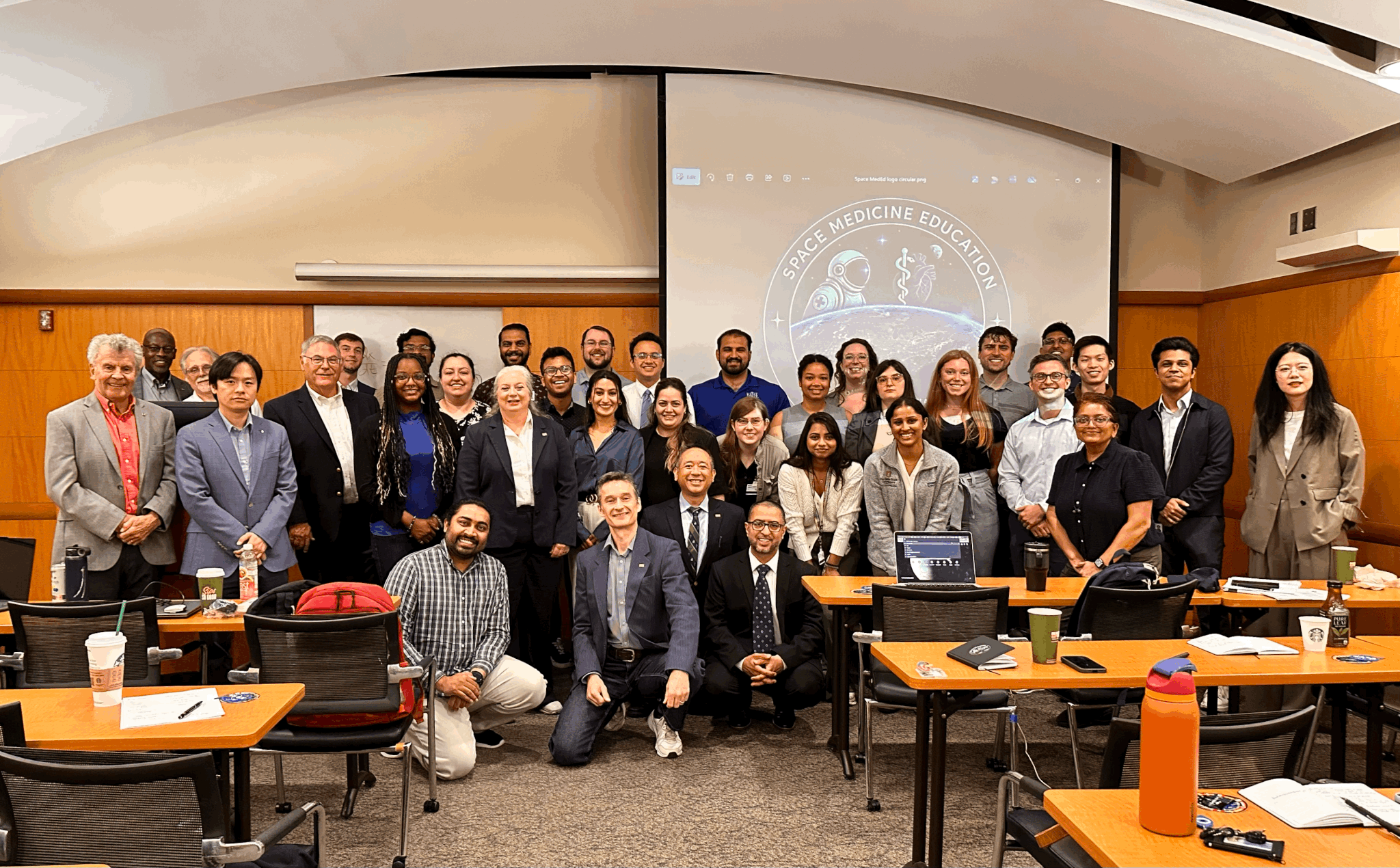
Day 5 and the conclusion of our Space MedEd course here at Cleveland Clinic. What a fantastic week with these wonderful and brilliant PhD students, MD students, and postdocs
“The PhD students, post-docs, and MD students were so bright and inquisitive, and you could just feel their energy in the room. Their enthusiasm has continued even after the course, with many asking to collaborate on further space endeavors and research.”Dr. Kenneth A. Mayuga
That last detail is the proof of concept the series has been building toward. The Space MedEd program didn't just expose students to space medicine. It recruited the next generation of contributors.
Dr. Page built the Research Division in 1945. The serotonin discovery came in 1948. The Space MedEd students who finish the first cohort in June 2026 may not yet know what problem they'll ultimately solve. That's the point.
The 3Cs Applied
Capital:
Dr. Page built the Research Division three years before the serotonin breakthrough. Dr. Mayuga won the ISS grant before the Space Health Center was publicly announced. Dave Williams invested a decade in developing leaders before he understood that the team would anchor a commercial space ecosystem. Cleveland Clinic's 2025 financials, $18.3 billion in operating revenue, a 5% operating margin, $479 million in research funding, and $485 million in philanthropic commitments, reflect an institution with the capital discipline to make this bet repeatedly across a century.
That capital discipline has a commercial dimension too. Cleveland Clinic Ventures, the institution's venture arm, converts research into investable companies. , Partner at Cleveland Clinic Ventures, led the Khosla Ventures partnership that gives the Cleveland Clinic's clinical and research enterprise direct access to one of healthcare's most forward-looking venture platforms, with co-development, co-investment, and joint incubation already underway. Schwarzinger also holds a BA from Miami University, the same institution the Cleveland Clinic is now partnering with on quantum computing workforce development. The threads run deeper than they appear.
Cleveland Clinic Ventures is active at forums like the Healthcare Capital Markets and Innovation Summit, the annual Columbus gathering that brings together 400 or more dealmakers, investors, and innovators to match healthcare capital with health innovation. It's where the institution's research pipeline meets the market.
Abby Harrison and Neil Johnson at HCMIS
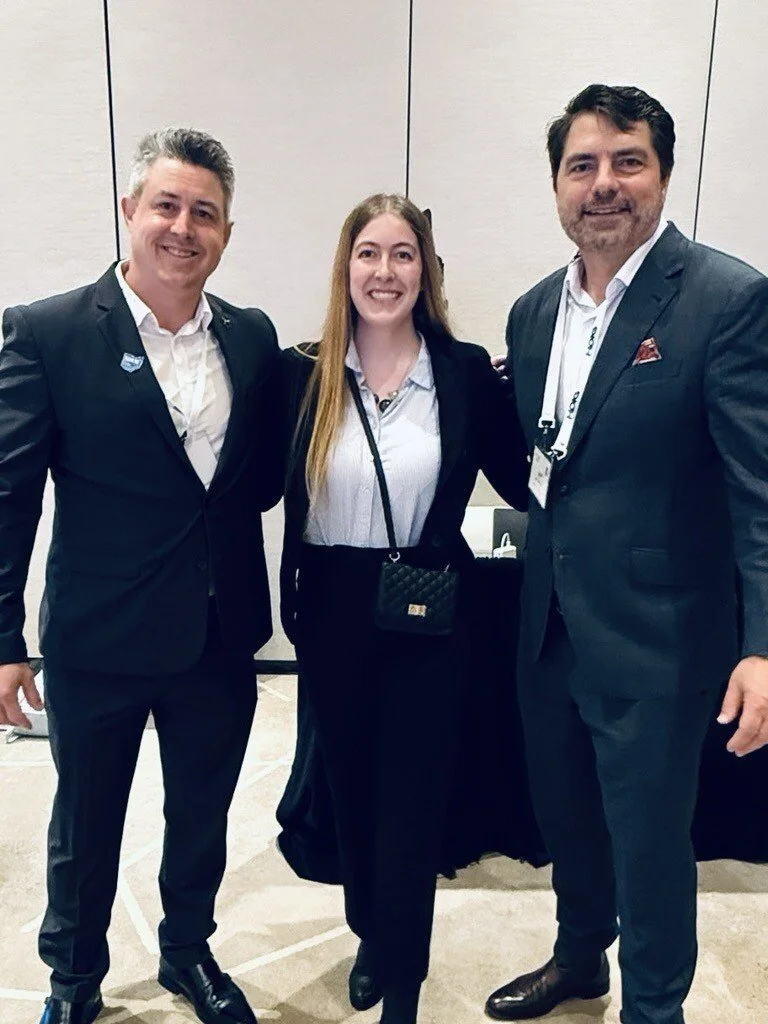
Abby Harrison and Neil Johnson at HCMIS
Community:
Space medicine research doesn't stay in space, and serotonin research did not stay in the cardiovascular lab. The cardiovascular data gained from studying microgravity return to Earth and improve care for patients in Cleveland, Abu Dhabi, London, and Toronto. Cleveland Clinic's $1.49 billion annual community benefit and $28.2 billion Ohio economic impact reflect an institution whose research mission and community mission are the same.
That bidirectional logic is already proven in Dr. Mayuga's own clinic. Exercise therapy originally developed for astronauts returning from long-duration spaceflight is now used at the Cleveland Clinic to help patients with Postural Tachycardia Syndrome, a form of dysautonomia where the autonomic nervous system fails to manage blood flow properly when a person stands. The treatment came from orbit. The patients are in Ohio. The Left Ventricular Assist Device tells the same story in hardware form: a heart pump for patients with heart failure, developed in collaboration with NASA, using the space agency's knowledge of rocket engine fuel fluid dynamics to engineer a device that now sustains human lives on Earth.
“Without the experience that we had from NASA and astronauts, we would've been a step behind. ”Dr. Kenneth A. Mayuga
That mission spans directly into Ohio's employer community. Through Cleveland Clinic Employer Solutions, offering Centers of Excellence partnerships, virtual second opinions, onsite clinics, executive health programs, and a Corporate Medical Director service, the institution brings its clinical infrastructure directly to Ohio employers and their workforces. The same care quality that underpins the institution's global rankings is accessible to companies choosing Cleveland Clinic as a benefits partner: fewer complications, lower readmission rates, higher survivorship, and meaningful employer cost savings through bundled payment models.
The Space MedEd program's final day is community investment in the most literal sense: showing Ohio students what they can become before the industry requires it. From employer health benefits to student career pathways to orbital medicine returning to Earth patients, the Cleveland Clinic's community mission operates at every altitude.
Collaboration:
The Cleveland Clinic's collaboration model doesn't operate through goodwill and conference attendance. It operates through co-investment and shared infrastructure.
The Cleveland Innovation District is the most concrete demonstration of that model at scale in Ohio. It is a $500 million partnership among Cleveland Clinic, the State of Ohio, JobsOhio, Case Western Reserve University, Cleveland State, MetroHealth, and University Hospitals, with two research buildings totaling nearly 300,000 square feet completed in early 2026. The region built it together, with the State of Ohio and JobsOhio as co-investors and accountability partners.
The Space Health Center's collaboration model functions at every scale. The hybrid systematic and narrative review on anticoagulation in microgravity, published in the American Heart Journal Plus in February 2026, lists co-authors from Cleveland Clinic, NASA Glenn, Case Western Reserve University, Blue Abyss, and the International Space University. NASA's Technical Reports Server at Glenn Research Center filed that paper before the Space Health Center was publicly announced. The Space MedEd program adds four institutions across two countries to that same collaboration architecture. Dr. Mayuga's presentations at the ISS Research and Development Conference and the ASCEND 2026 panel alongside Cedars-Sinai and the University of Pittsburgh extend it further still.
“While partnerships and collaborations may change and expand, the overall goal is to all work together to accomplish something greater.”Dr. Kenneth A. Mayuga
That model predates the Space Health Center. Three surgeons and an internist built it on Euclid Avenue in 1921.
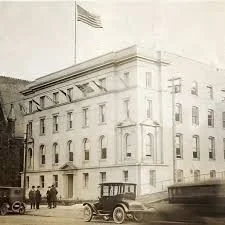
Euclid Avenue
Closing
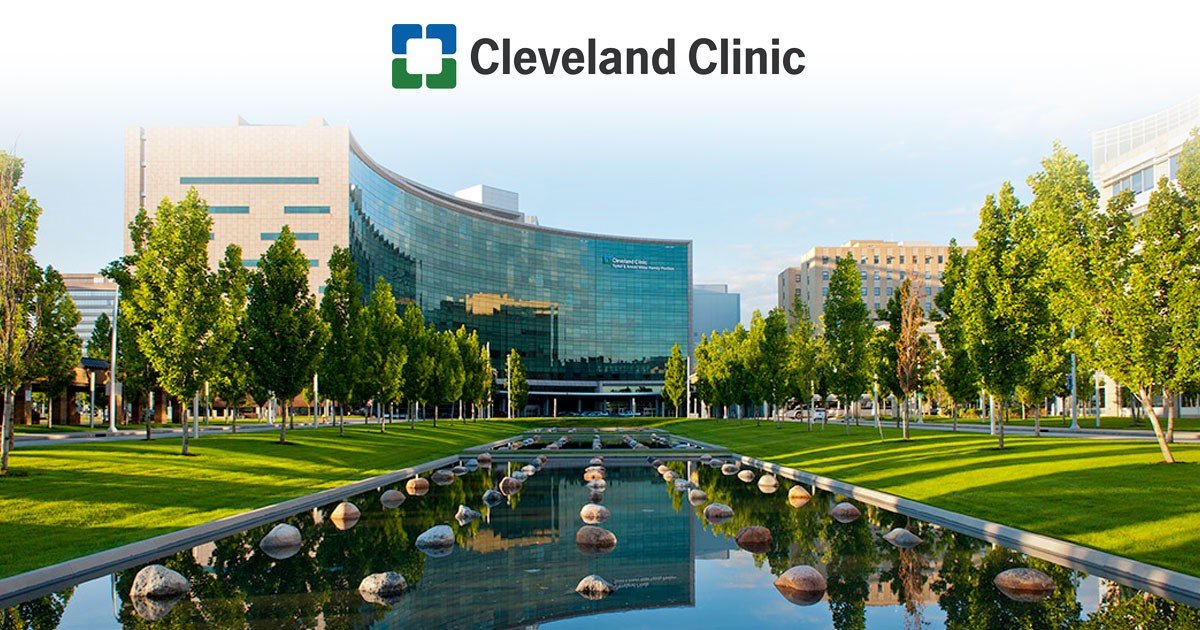
The arc of Cleveland Clinic's history is not a story about a hospital getting bigger.
It is a story about an institution that, in every era, has looked at the hardest problem medicine faces and decided: that's ours to solve, and then build the infrastructure before anyone asked them to.
In 1917, it was the inefficiency of solo practice. In 1929, rebuilding from catastrophe without abandoning the mission. In 1945, a Research Division before knowing what it would discover. In 1948, serotonin while looking for something else entirely. In 1958, seeing inside the living heart for the first time. In 2026, we start learning what happens to the heart when gravity disappears.
“See the potential. Push the limits. Make it happen. That's the art of what's possible.”Cleveland Clinic State of the Clinic 2025, closing words
Dr. George Crile said plainly: advances in medicine had made it impossible for the individual physician to undertake complex problems alone.
A century later, Dr. Kenneth Mayuga is proving that the same principle applies when the physician's patient is preparing to leave the planet.
Ohio has always produced that kind of leader and is best when it chooses to build.
Let's build together.