

Leading Across the 3Cs: Pockets of Isolation
In 1962, the US President made a promise based on his belief in our people, and on July 20, 1969, we fulfilled that dream.
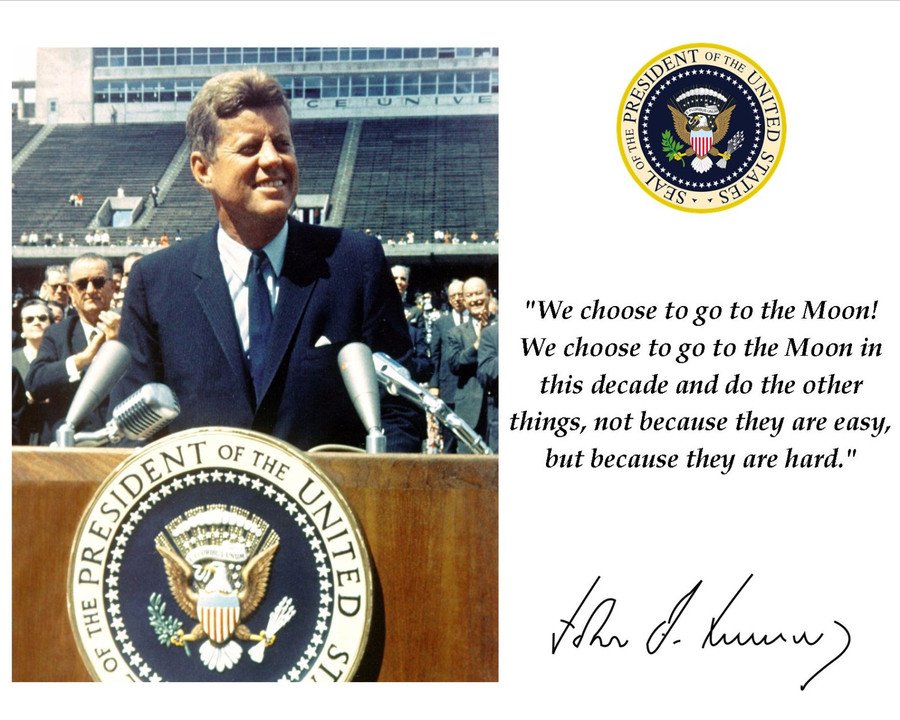
Rice University, September 12, 1962
Then the Cold War ended, and so did the push that drove it. The Soviet Union dissolved in 1991; the threat that had justified three decades of aggressive aerospace and defense investment went with it, and the industry spent most of the 1990s consolidating, drawing down, and waiting for a reason to rebuild.
Fast forward to today. CNBC just named Ohio's workforce rocket the number-one state in the country to do business in. Over Texas and SpaceX. Over Florida and Cape Canaveral. Over Alabama and Huntsville. Over California and JPL.
That is the macro assessment, and it adds up.
But does it hold up?
Start with something this series already proved once, in a different piece. In 1903, the Wright Flyer's engine carried a twenty-pound cast-iron flywheel, smoothing its power strokes well enough to produce ninety pounds of thrust. Forty years later, GE Aviation engineers in Cincinnati were not spinning that same flywheel faster. They found a different reaction entirely: thermodynamic combustion instead of stored kinetic energy, and it put a jet engine in the air, generating more than twenty thousand pounds of thrust.
The flywheel did not become the jet engine. It became proof that a physics principle, handled with enough precision, can produce something the world has never seen before. Ohio has already done this once.
Rockets took a longer road to the same place. Isaac Newton's laws of motion, written in the seventeenth century, explain why a rocket works at all, including why it works in a vacuum with nothing to push against, which confused people for a long time.
Then, in 1903, Konstantin Tsiolkovsky discovered that a rocket's range and speed depend only on the exhaust velocity of the gas it expels, not on the rocket's size. Robert Goddard proved it in 1926 with a liquid-fueled rocket that flew for 2.5 seconds, climbed 12.5 meters, and landed in a cabbage patch 56 meters from where it launched.
Unimpressive, by any reasonable standard. It also paved the way for everything that came after it, just as ninety pounds of thrust in 1903 paved the way for twenty thousand.
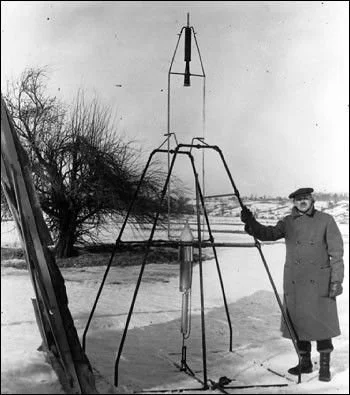
The first liquid-fueled flight lasted only 4.2 seconds, reached only 41 feet, and landed just 184 feet from its launch pad. However, this modest accomplishment marked the beginning of the space age.
That is not just NASA's official history. Kristin Houston, CEO of Rocketdyne, told the same story on an Ohio stage this year, the same forty-one feet, the same 1926 flight, and closed with her own line: keep working toward our next forty-one feet. When the industry's own sitting CEO reaches for the same origin story NASA Glenn reaches for, this piece isn't leaning on a coincidence. It is the story the field already tells itself.
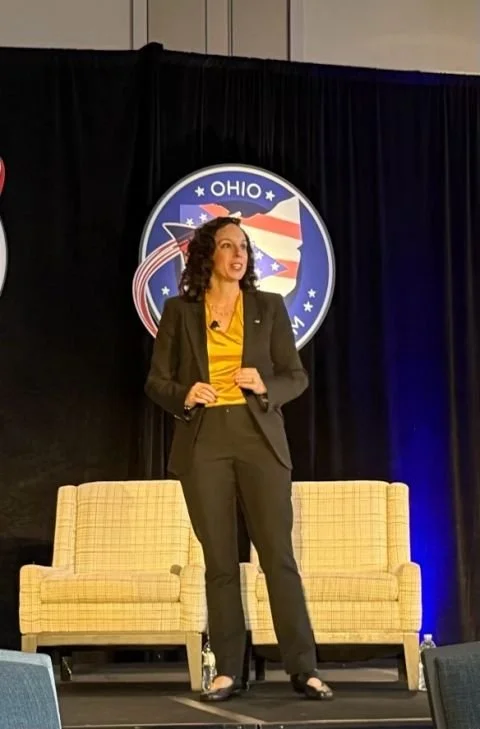
Kristin Houston, CEO of Rocketdyne at Ohio Space Forum 2026
Thermodynamics is why a jet engine and a rocket engine trace back to the same handful of laws, laws that don't care whether the fuel burns inside a cast-iron flywheel housing or a Saturn V. They stop applying once the vehicle leaves the atmosphere it was built in.
What we build on Earth, for Earth - a car, a commercial jet, and a rocket - still aren’t tested the same way, and it was never about engineers being precious about rockets. The laws are identical. What changes is the environment they are operating in. A car assumes an atmosphere, gravity holding fluids where they belong, and a driver who can pull over if something goes wrong. Beyond a certain altitude, the rules change, and testing has to change with them, or the mission doesn’t survive.
NASA lost the Mars Climate Orbiter this way in 1999, and not because either engineering team did bad work. One team's software calculated thruster force in pound-seconds. The other team expected newton seconds. Each system passed its own tests, on its own terms, in isolation. Nobody caught the mismatch until the spacecraft was already approaching Mars at the wrong altitude, and it was gone. A 125-million-dollar mission did not fail because the part was weak. It failed at the exact seam this piece keeps returning to: the interface nobody checked.
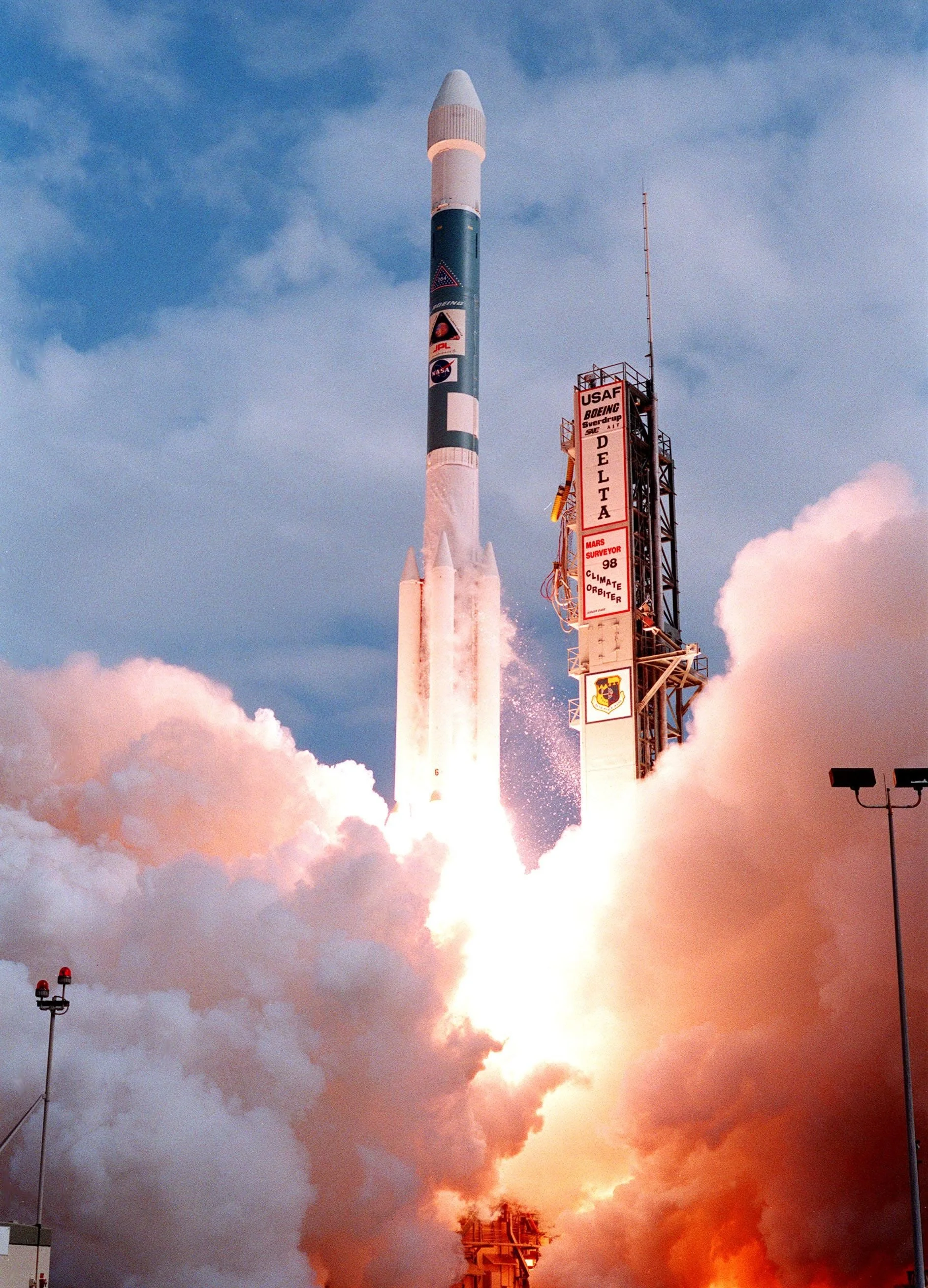
A Boeing Delta II expendable launch vehicle lifts off with NASA's Mars Climate Orbiter at 1:45:51 p.m. EST, on Dec. 11, 1998, from Launch Complex 17A, Cape Canaveral Air Station.
Using that same lens, this piece runs Ohio's own workforce rocket through the same tests. Spacecraft tests each component alone, sealed off from everything it will eventually survive symbiotically with, to prove each one can survive on its own and be relied on. A part tested alone can operate alone permanently, yet when each isolated component comes together into the machine, reliability becomes relative to the whole and the connections between.
A rocket does not carry every stage to orbit. Each one burns until its fuel is spent, then separates cleanly and falls away. Change is constant, so testing is imperative to ensure proper integration. Parts that pass isolated exams can still fail when asked to work as a complete system. A machine that looks flawless in pieces can still come apart at the interface.
This article explores the different parts of Ohio's metaphorical rocket, each in a different corner of Ohio's aerospace and defense economy, each one a component in that test. Ohio is in the race. The open question is whether it is building one integrated system or a set of components.
The Physics
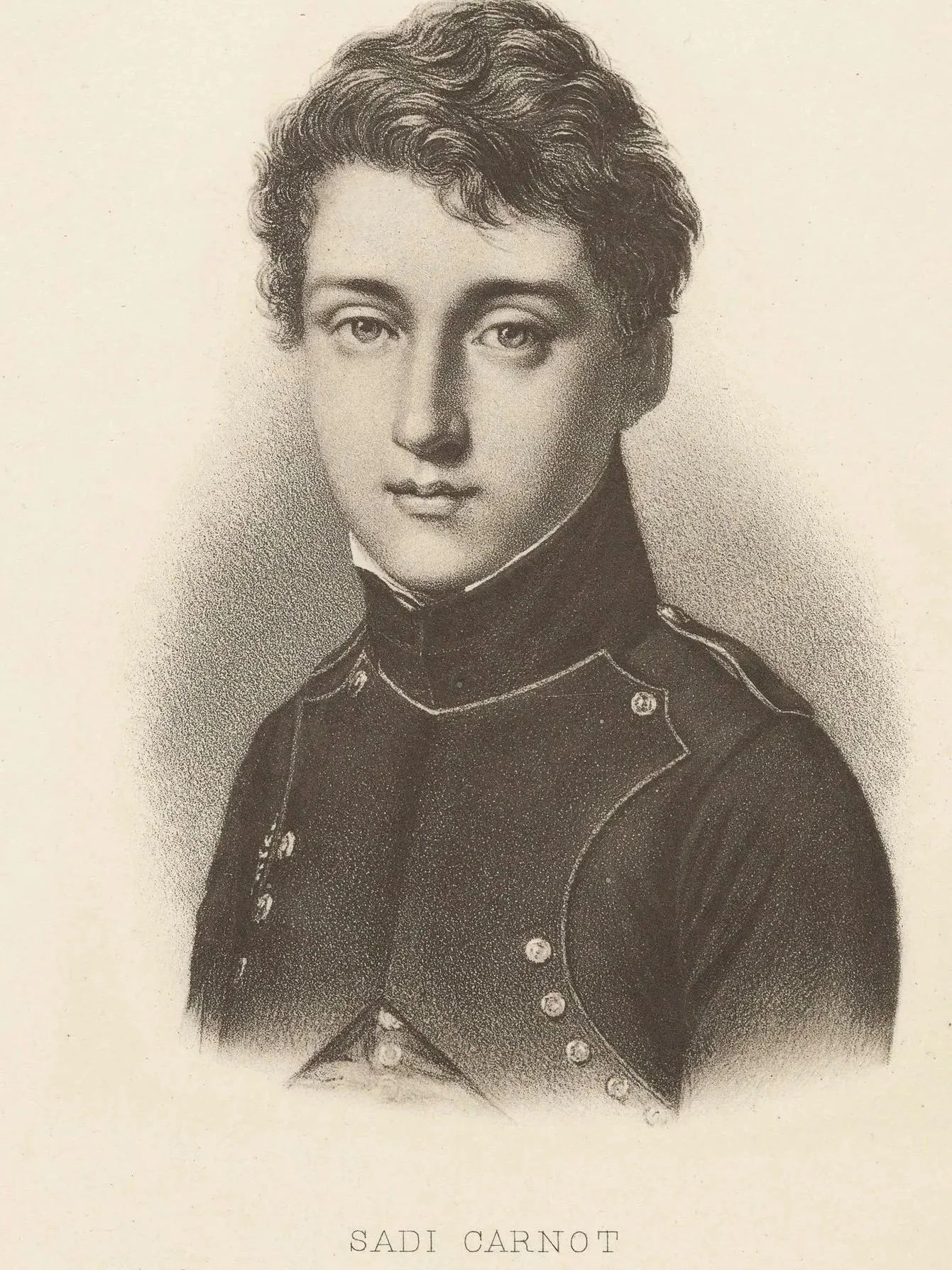
It is no coincidence that people discovered thermodynamics while chasing a version of this piece's own question. In 1824, Sadi Carnot did not chase universal truth. He wanted to know why steam engines lost so much of the energy they burned, and what limited their thrust output. Count Rumford detected something peculiar while overseeing cannon manufacturing: boring a hole into solid metal generated what seemed like an endless supply of heat, which made no sense if heat were the fixed, weightless fluid most of his contemporaries believed it to be.
James Joule spent years turning a paddle wheel in a tub of water, measuring exactly how much mechanical work it took to raise the temperature by a fixed amount, because he wanted a precise number, not a theory. Universal laws came after the practical problem, not before it.
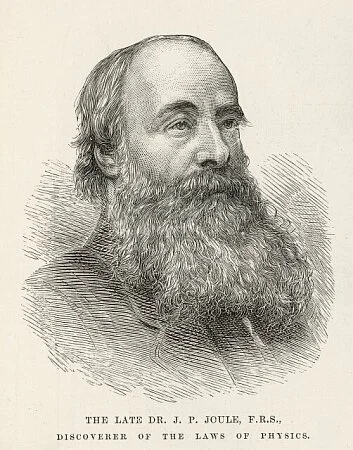
James Joule
This series follows a similar pattern. It didn't start with a theory of Ohio's economy and go looking for parts to fit it. It started with individual pockets, tested one at a time, and only after enough stories correlated did we notice that two laws that have governed the physical universe since long before anyone named them were already running underneath it all.
The First Law: energy cannot be created or destroyed, only converted or transferred from one form to another. Fuel that leaves a rocket does not vanish. It becomes exhaust velocity, thrust, motion, somewhere. The same is true of a PhD or a founder leaving Ohio. Nothing is destroyed. It is transferred, in full, into whatever state, company, or economy receives it. Staging works the same way. A rocket does not carry every stage to orbit. Each one burns until its fuel is spent, then separates cleanly and falls away.
The Second Law: in any natural process, the total entropy of a system and its surroundings always increases. Left alone, order does not sustain itself. It takes continuous work to keep any system from drifting toward disorder; the literal physics behind the opening of this piece: the gears seized, rust settled in, not because anyone wanted that, but because that is what happens to any system nobody keeps doing work on.
Integration and test is the phase after every component has already passed its own isolated exam, where the real risk actually lives, not in any single part, but in the interfaces between parts that were never tested against each other. Skipping that check does not pause entropy. It just moves the increase to a less convenient moment. It shows up at the end, in the Synthesis. Isolation testing has a clock built into it on purpose. It is supposed to end. Ohio's version of it doesn't have a scheduled end date yet.
Dawn Schaible, director of NASA Glenn, put the whole idea in five words on an Ohio stage this year, without ever having read a draft of this piece: invented, tested, and proven before it can fly. That is not a paraphrase of this section. It is the actual standard her own center runs on.
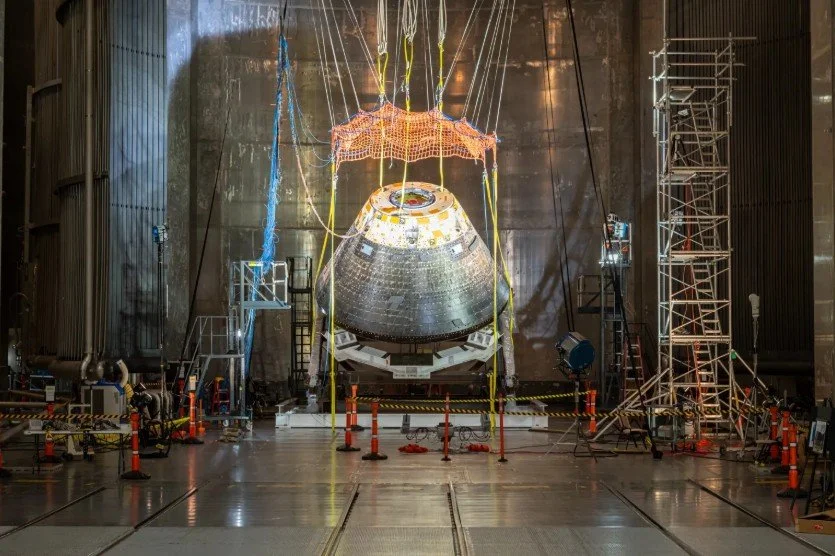
Orion ETA NASA Neil Armstrong Test Facility
A thermal vacuum chamber tells you what a part does in a vacuum. It doesn't tell you what that same part does in actual orbit, where the vacuum is real instead of simulated, where thermal cycling comes from the actual Sun instead of a heat lamp on a timer, and where the environment does things no ground chamber can fully reproduce. Ground testing is necessary. It has never been the same thing as flight.
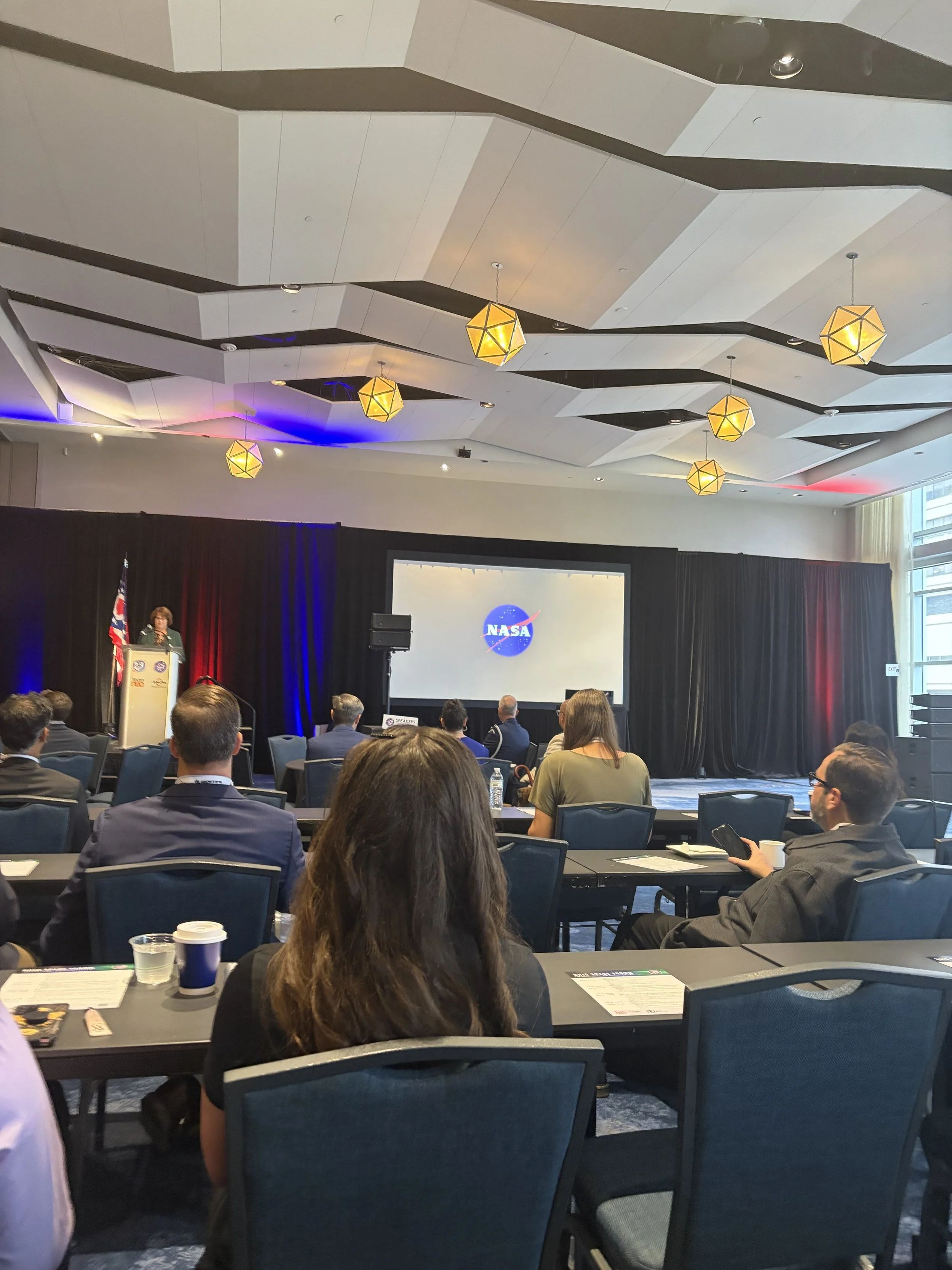
Dawn at Ohio's Space Forum 2026
None of this is hypothetical, and none of it happened somewhere else. NASA ran the actual vacuum testing for the Artemis I Orion spacecraft at its Glenn Research Center in Cleveland. After that mission, Orion's module, redesignated the Orion Environmental Test Article, went to NASA's Armstrong Test Facility in Sandusky for an eleven-month campaign simulating the exact conditions of a launch abort ahead of Artemis II. The isolation chamber this piece keeps describing is not a metaphor borrowed from NASA. NASA has already been running it inside Ohio's borders.
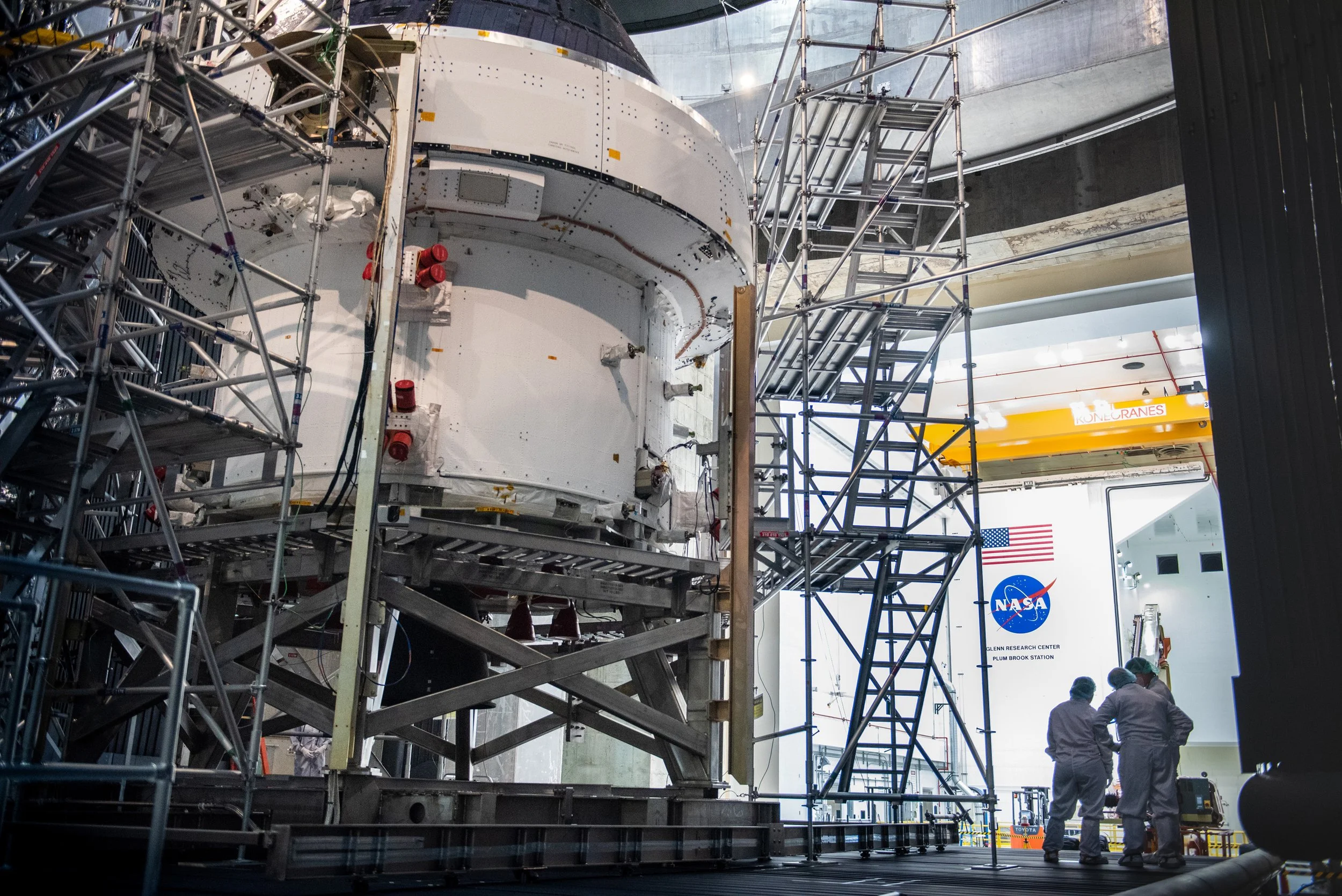
Glenn Research Center's Neil A. Armstrong Test Facility in Ohio houses the world’s largest space simulation vacuum chamber where the Orion spacecraft, shown here on March 11, 2020, was rigorously tested for the Artemis mission
The CNBC ranking is Ohio’s version of the vacuum chamber. It is real, necessary, and still a simulation of competitiveness, not competitiveness itself. Passing it doesn't tell you what happens when the whole system actually flies against real competitors under real conditions over time. This conversation will guide us towards sustainability.
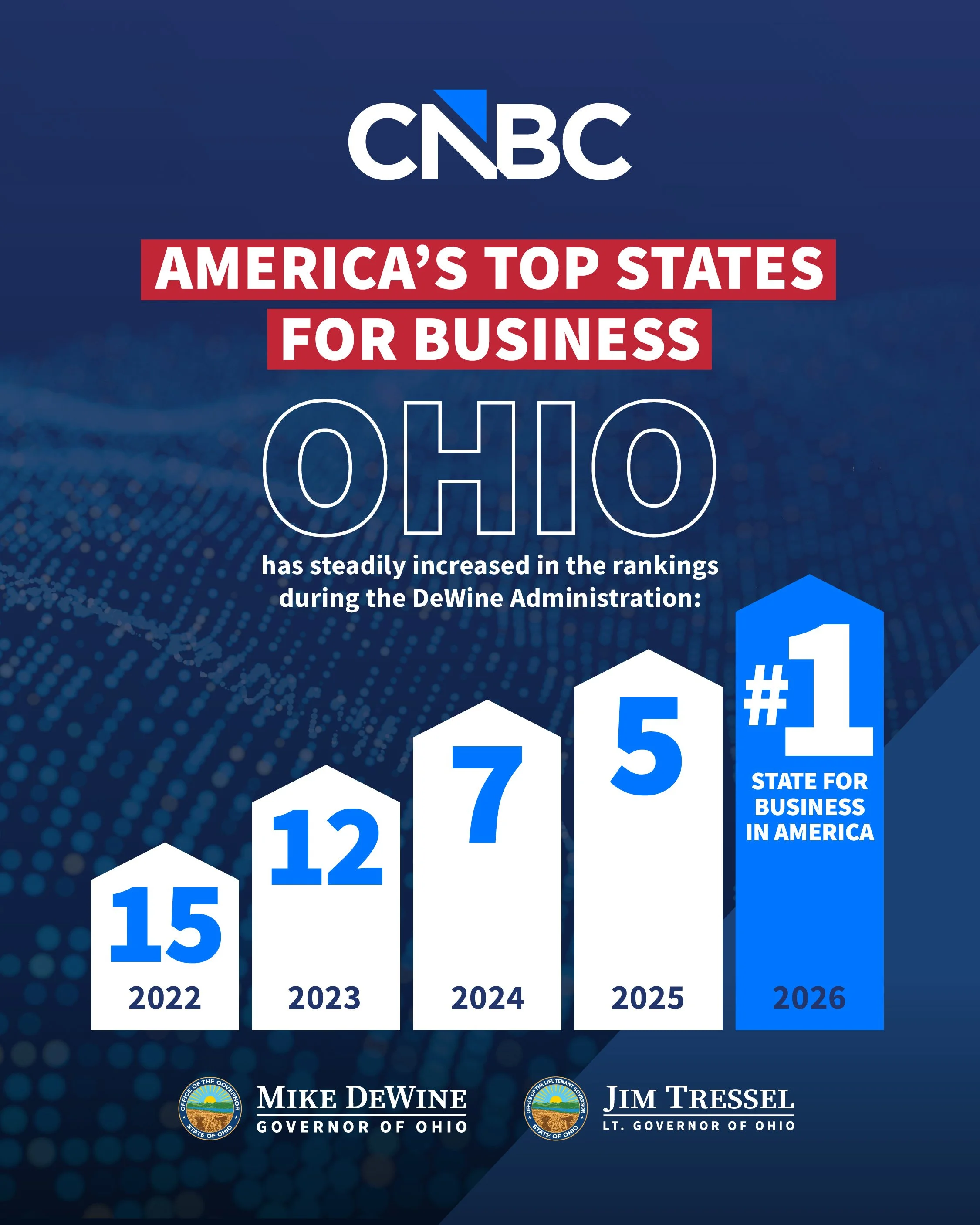
Ohio's instruments don't agree, and that disagreement is worth sitting with before this piece goes any further. CNBC's States for Business, the vacuum chamber this piece already leans on, ranks Ohio first for 2026. The climb is real: thirty-fourth in 2010, fifth in 2025, first this year, on a score of 1,623 out of 2,500 across 138 metrics.
Chief Executive magazine's 2026 survey of more than 650 CEOs ranks Ohio seventh nationally and first in the Midwest, a different instrument built on a different question: not what the metrics say, but what it feels like to run a company here.
WalletHub's instrument, built around the conditions a new business needs to survive rather than the conditions that attract an established one, ranks Ohio twenty-sixth, with a business environment sub-score of thirty-sixth.
Three real rankings. Three different tests. All measuring different things. A vacuum chamber and a wind tunnel can both certify the same part and still tell an engineer two different things about how it will behave in flight.
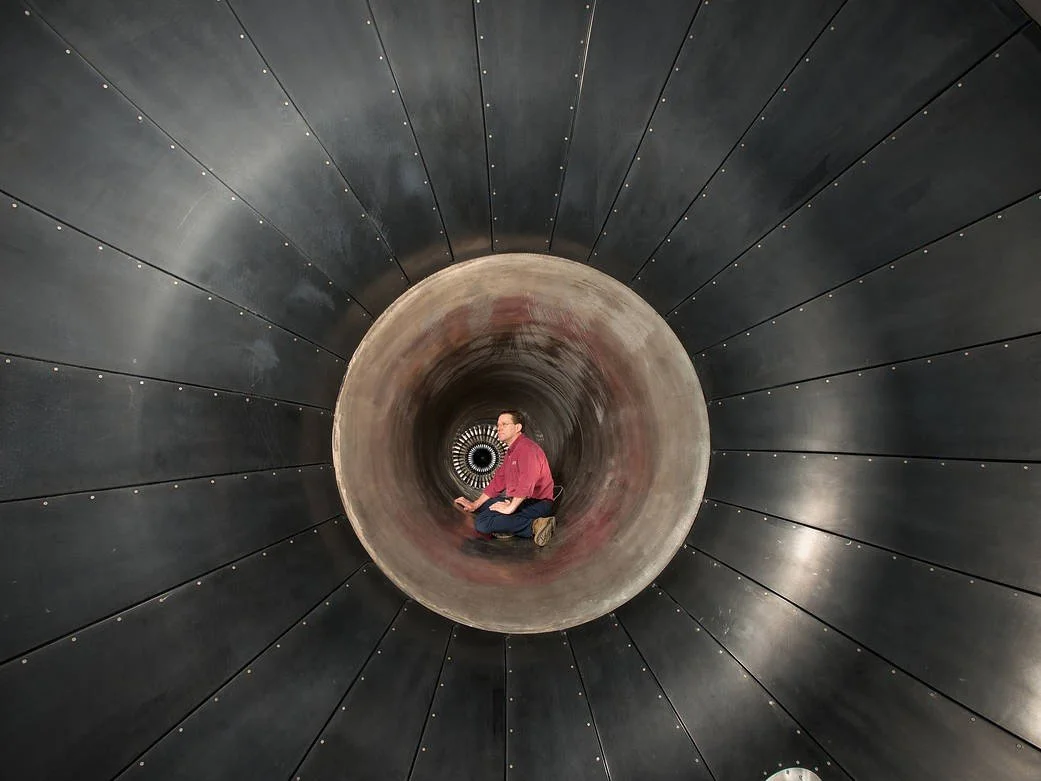
NASA Glenn's Propulsion System Laboratory (PSL) is inspecting the inlet ducting.
The Census Bureau's instrument tells a version of the same story from ground level, in federal data instead of a magazine's weighting. Ohio filed 183,897 new business applications in the year ending July 2026, up nearly 23 percent year-over-year, by any measure. But only 23.9 percent of those filings carry the characteristics the Bureau associates with an application that actually becomes an employer, below the 28.2 percent national rate, and Ohio's conversion rate into an actual employer business, 4.7 percent in the most recently measured cohort, sits below the 5.9 percent national average.
Ohio is filing more paperwork than most states and turning a smaller share of it into a company that hires somebody. That is not a contradiction of the CNBC ranking. It is the same isolation problem this piece keeps finding, expressed as raw federal data instead of metaphor: passing the vacuum chamber test and still not knowing, precisely, what happens after ignition.
The Structure
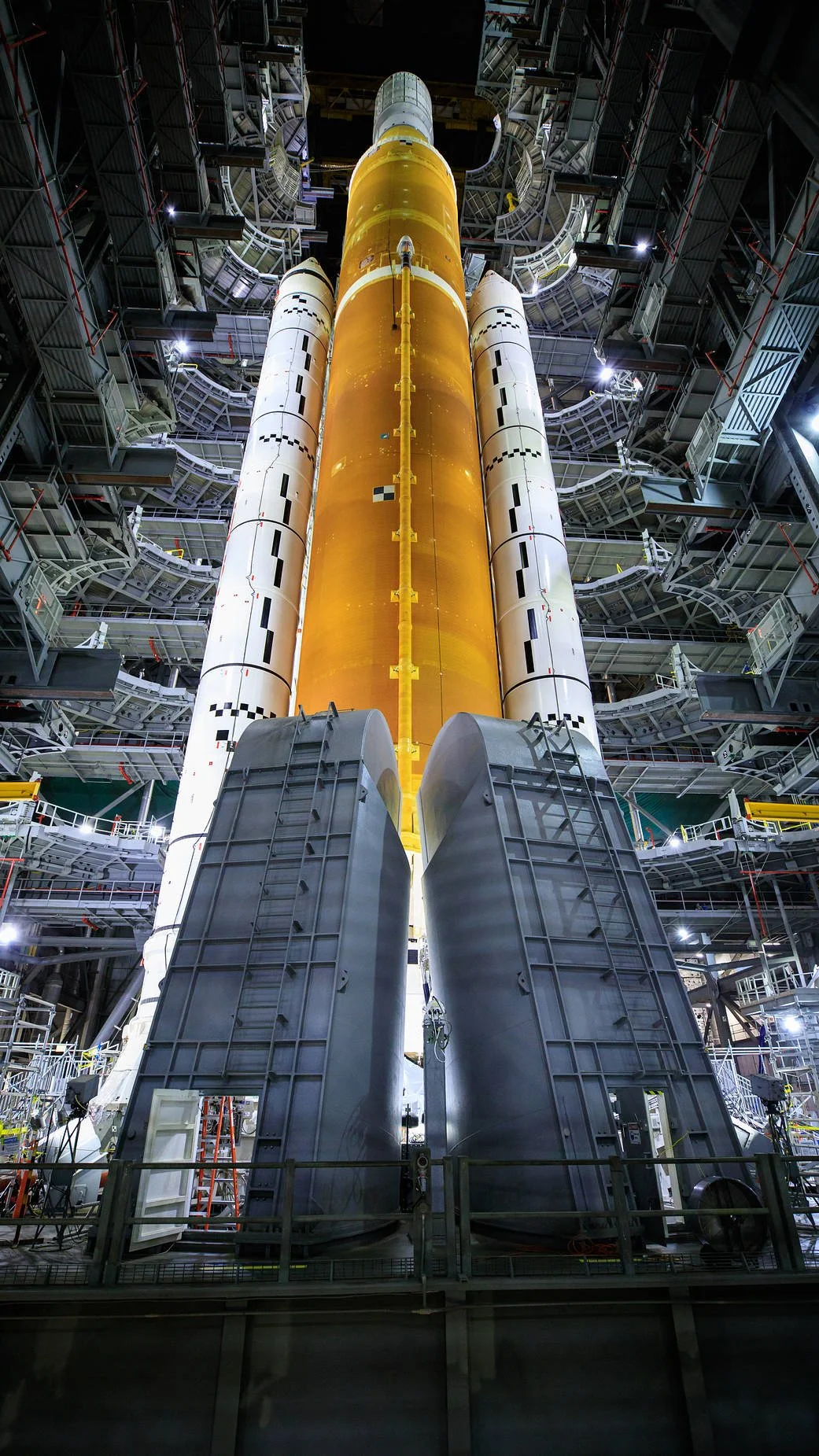
Artemis I Umbilical Testing Inside the VAB Inside High Bay 3 of the Vehicle Assembly Building at NASA’s Kennedy Space Center in Florida, the work platforms have been retracted from around the Artemis I Space Launch System
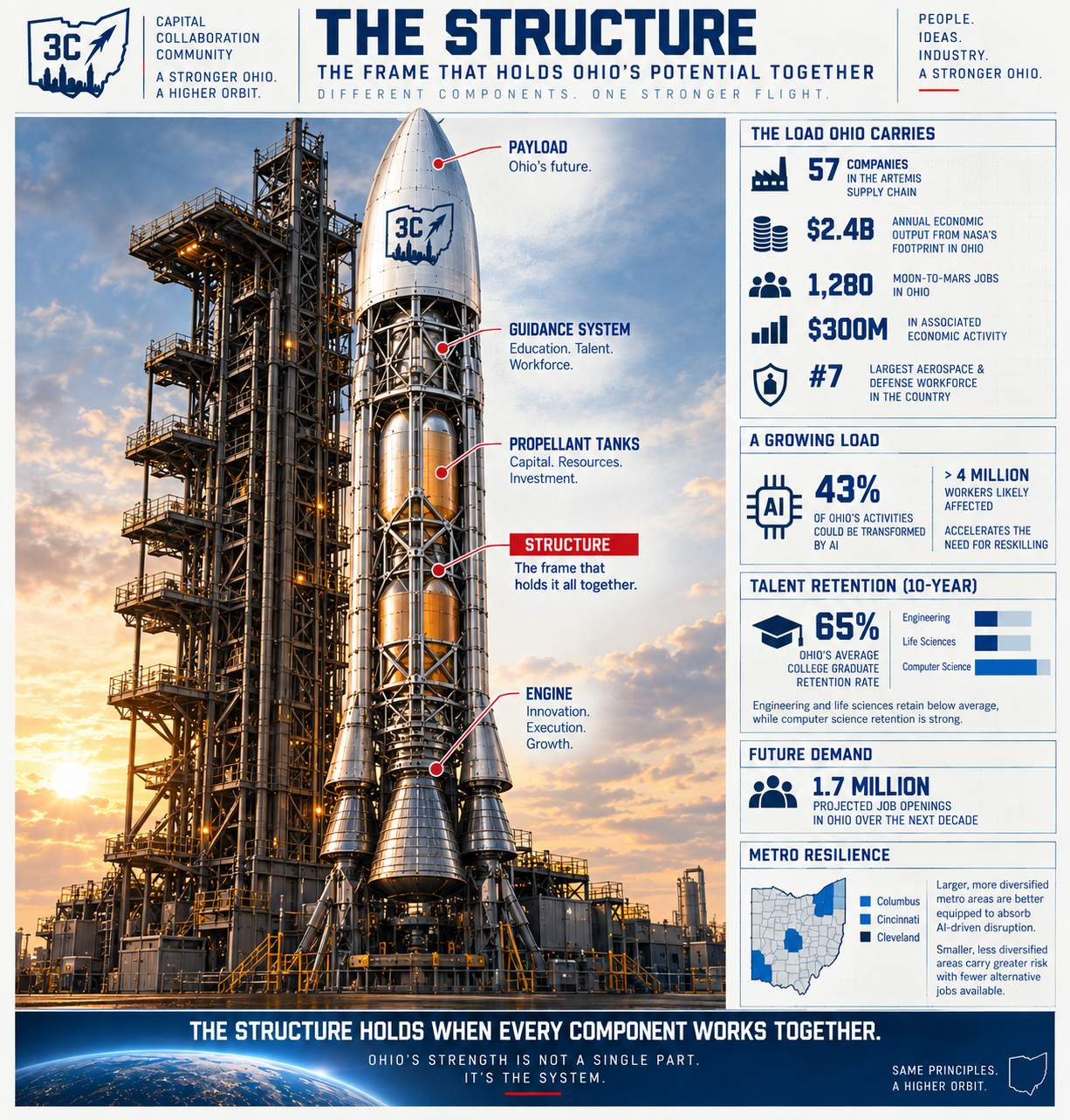
A rocket's structure is not glamorous. It is the frame that holds the engine, the guidance system, the payload, and the propellant tanks in the right position relative to each other, under stress that would tear apart almost anything else, from ignition through separation. It does not get its own isolated static-fire test the way an engine does. Everything else tests it simultaneously and continuously for the entire flight.
Ohio's strength is that structure, and the numbers are the load it carries. Fifty-seven companies sit inside the Artemis supply chain. NASA’s footprint generates roughly 2.4 billion dollars a year in economic output. Roughly 1,280 Moon-to-Mars jobs and 300 million dollars in associated economic activity run through the state, which has the seventh-largest aerospace and defense workforce in the country. None of that is a person, and none of it is a single pocket. It's every pocket in this piece that is mounted to.
The load is also growing. The Ohio Chamber's Blueprint for Ohio’s Economic Future quantifies how fast: up to 43 percent of Ohio’s activities could be transformed by AI. This shift will likely affect more than four million workers and accelerate the need for reskilling faster than most systems were built to handle.
The Blueprint’s own retention data runs counter to the instinct to treat this as a simple headcount problem. Ohio’s average ten-year retention rate for college graduates runs around 65 percent. Still, engineering and life sciences graduates retain below that average, exactly the fields this piece keeps returning to, while computer science retention is strong. Its pipeline is too small, producing a smaller share of computing graduates than peer states, even as demand for those roles climbs toward a projected 1.7 million job openings statewide over the next decade.
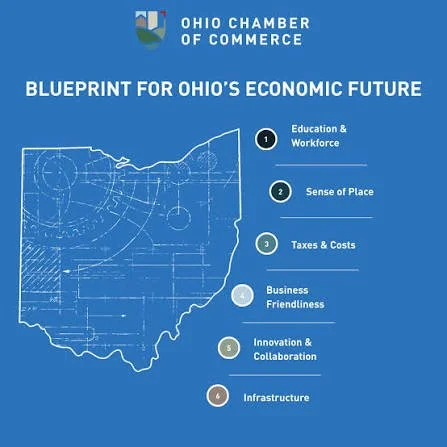
The same Blueprint flags larger, more diversified metro areas - Columbus, Cincinnati, and Cleveland - as better equipped to absorb AI-driven workforce disruption because they have a wider mix of industries and more labor-market mobility to fall back on. Smaller, less diversified areas carry that risk unevenly, with fewer alternative jobs available if a role disappears.
The same three counties show up on two entirely different maps, capital concentration and disruption resilience, for the same underlying reason. Whether the structure holds is not a question one contributor can answer alone; it takes all of us working together.
See content credentials
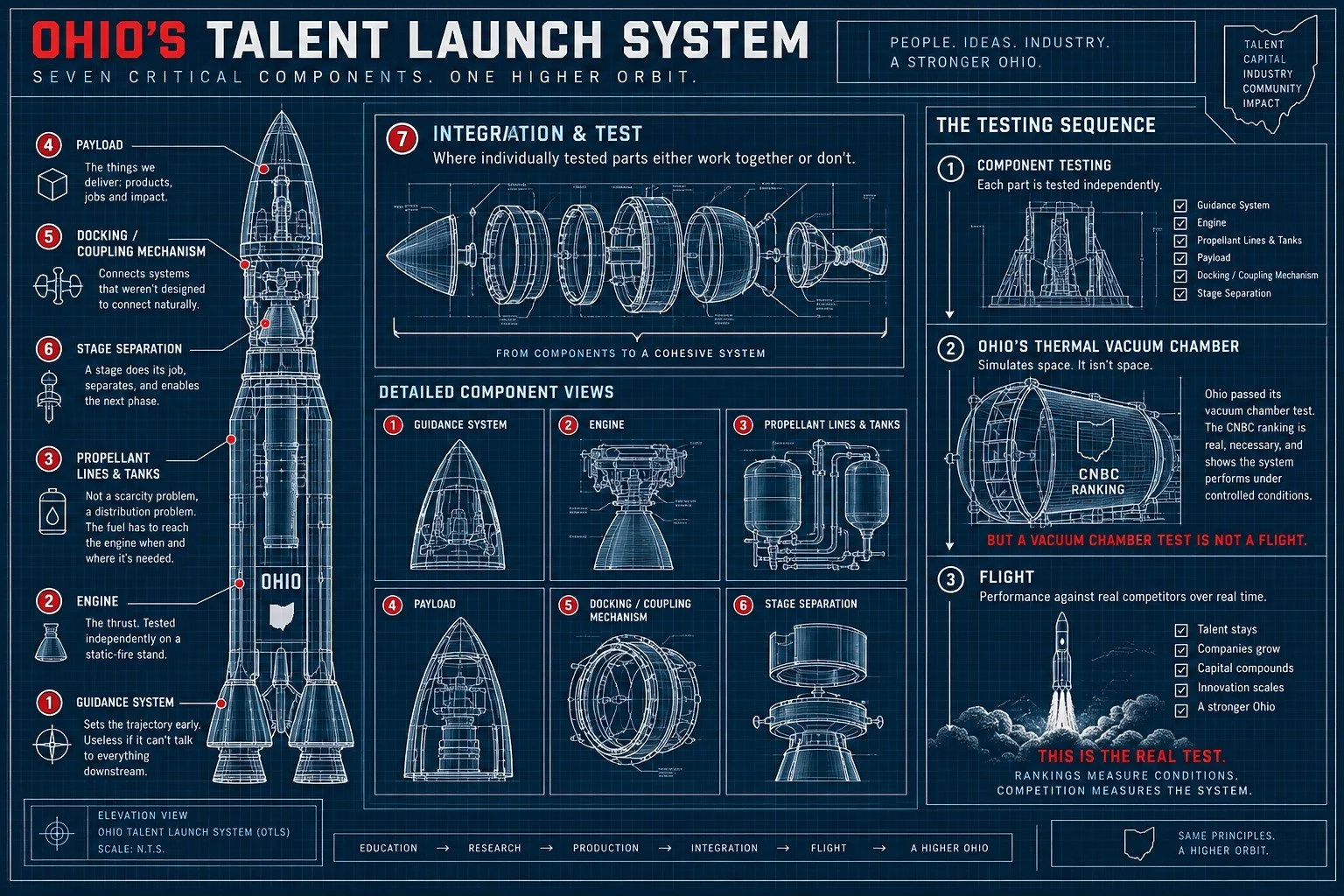
Seven parts make up Ohio’s own talent launch system, and each one gets tested here in the same order it would be tested for real: Guidance System, Engine, Propellant Lines and Tanks, Flight Deck, Stage Separation, Docking and Coupling Mechanism, and Payload.
Each component has its own pocket, contributor, and isolated exam.
Guidance System:
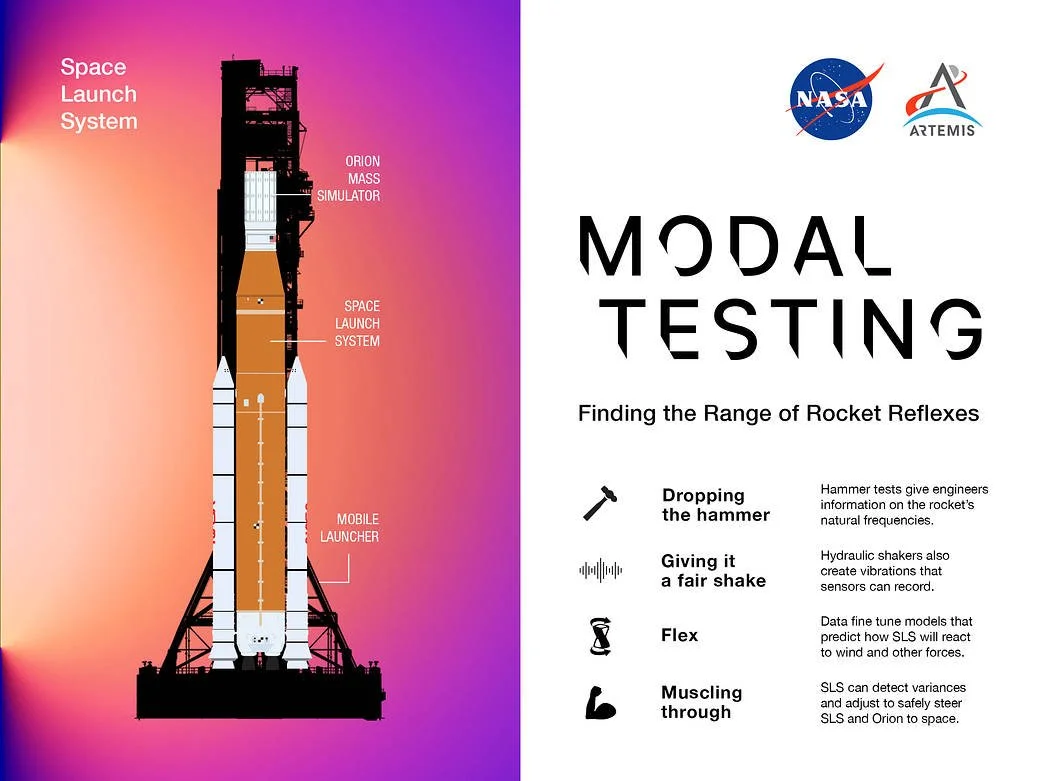
SLS Modal Testing: Finding the Range of a Rocket’s Reflexes
(Kristy Venne, M.Ed. | Co-Founder and CEO, i3 Invention Labs; Founder, Classroom-to-Career; Founding Director, Emerald Campus (2017 to 2020))

The guidance system sets a trajectory, but it's tested alone and becomes worthless the moment it needs to talk to something downstream and cannot.
Kristy Venne has spent more than twenty years building the connective tissue between a classroom and a career, which puts her at the first pocket in this piece. The one furthest from a paycheck and closest to the moment a kid first decides what they might become.
Her path there wasn't a straight line on a résumé; it was two decades inside the system she now works to redesign. Born and raised in Columbus, an Olentangy High School graduate who went on to earn both her bachelor's and master's education at Ohio State, she spent her early career as a classroom visual arts teacher before moving into building and district leadership across two central Ohio districts, New Albany-Plain Local Schools and Dublin City Schools, eventually earning her principal and superintendent licensure. The credential is not incidental to this pocket. She has run the system she is now trying to open.
In 2018, Dublin City Schools named her the first director of Emerald Campus, a genuinely unusual move: taking a four-story former Verizon call center and converting it into a single home for all three of the district's schools' Exploration Academies, something she said at the time had not been done anywhere else. By her own description, the culture she built there let teachers and students fail forward. That is not a small detail for a district administrator to focus on. Most systems aren't to reward failure.
She opened her own contribution with a lesson that connects Emerald Campus directly to the work she does now, and it states this piece is almost exactly. Emerald Campus, she said, was originally conceived as a lab school, a place to develop new approaches to experiential and career-connected learning and then spread them across the district's traditional high schools. It was never meant to become an exceptional pocket operating in isolation. She learned that creating the pocket is often the easy part. Building the connective tissue that lets ideas, practices, partnerships, and people move beyond it is the actual work.
i3 Invention Labs grew out of noticing another missing handoff, one level down. Students build something real, win a science fair or finish a research project, and then the program ends, leaving them with nowhere to take it. They need help understanding customer needs, prior art, patentability, and what it would actually take to move an idea toward the marketplace. If Ohio wants to grow its own innovation talent, she argues, those connections have to be built much earlier in the pipeline than they currently are.
The Taxi to Takeoff Aviation Academy, the partnership between Dublin City Schools and Ohio State that produces this pocket's point, took her about five years of relationship-building, planning, and problem-solving to bring to life. Her partner on that launch was Professor John Horack, then senior associate dean of the College of Engineering and director of Ohio State's Center for Aviation Studies, now Ohio State's president for research and the subject of this piece's Engine section.
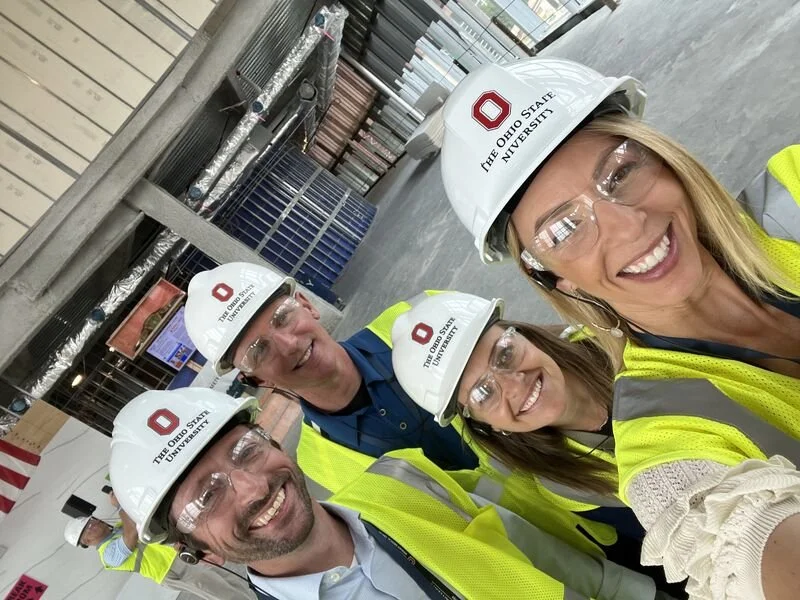
Visiting OSU under construction 2023
The two have stayed in each other's lives since. Venne now hosts a podcast, Innovate Where You Are, and one episode features Horack, as they talk through what she calls the messy, courageous, long-term nature of innovation in aerospace. In this piece, the Guidance System and the Engine are not two strangers standing near each other. They are two people who already spent five years building something together.
Kylyn Smith was a student at the Academy. The moment that stayed with Venne was hearing Kylyn describe realizing that aviation was much broader than becoming a pilot, and that she could relate her strengths in science and physics to a future in aerospace and military service. Kylyn graduated from Yale with degrees in physics and economics and a certificate in data science.
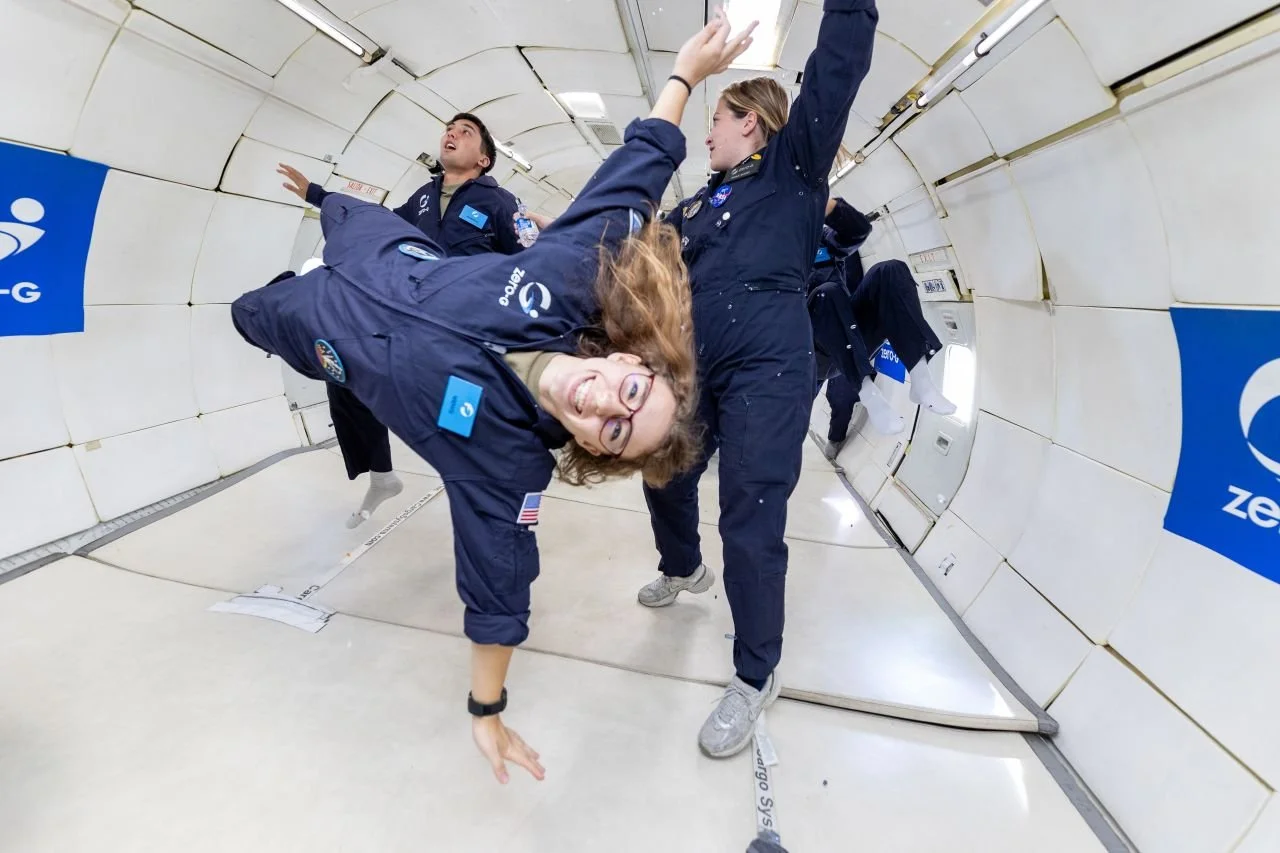
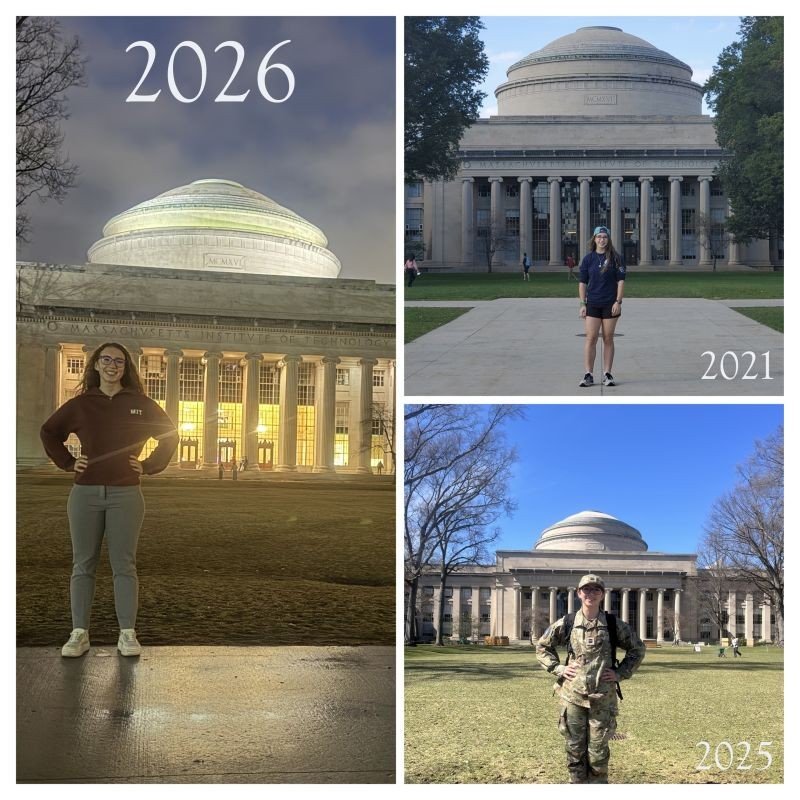
She is headed next to MIT’s Astronautics program and will serve as a second lieutenant in the U.S. Space Force. I would never suggest that one high school program created that outcome, Venne said. Kylyn did. But her story shows what can happen when a talented young person encounters the right environments, relationships, and possibilities early enough. Venne added that our best programs are built with students, not simply for them.
Asked where she would plug i3 Invention Labs into Ohio's space ecosystem if she could choose one connection, she did not p’t point to a university or a prime contractor. She pointed to Wright-Patterson Air Force Base and the Air Force Research Laboratory, and a specific mechanism: technical professionals identifying real problems appropriate to share with students, educators translating those problems into rigorous, age-appropriate innovation challenges, and students moving through i3's Inventor Fellowship model, from problem understanding through prior-art research, prototyping, testing, intellectual property strategy, and a final technical review with actual experts.
A repeatable pathway into university labs, internships, mentorship, and follow-on venture development. She said what is missing is not student ability or interest. Ohio has many strong individual programs and institutions. What we need is infrastructure that helps students and their ideas move intentionally between them.
Her answer to what an Ohio CEO could do tomorrow was equally specific, and it lands on the same Monday-morning register this piece has already used once, from a very different contributor. Start earlier, she said. Specifically, fifth through seventh grade, since companies tend to focus education outreach on juniors, seniors, and college students because the connection to hiring feels more immediate, by which point many students have already ruled out pathways based on what they were or were not exposed to.
A CEO could sponsor one age-appropriate learning experience introducing younger students to the company's story, validated by industry professionals but built to be reusable across many classrooms, without asking an eleven-year-old to choose a career. The goal, she said, is to make sure young people encounter enough possibilities that they don't close doors simply because they never knew certain ones existed. A hiring pipeline is not created during senior year. It is cultivated years earlier.
What she has built since leaving district administration extends the same throughline. She co-founded i3 Invention Labs alongside Dr. Dipanjan “DJ” Nag, a globally recognized IP strategist with a background spanning Ohio State, Rutgers, and the University of Nebraska.
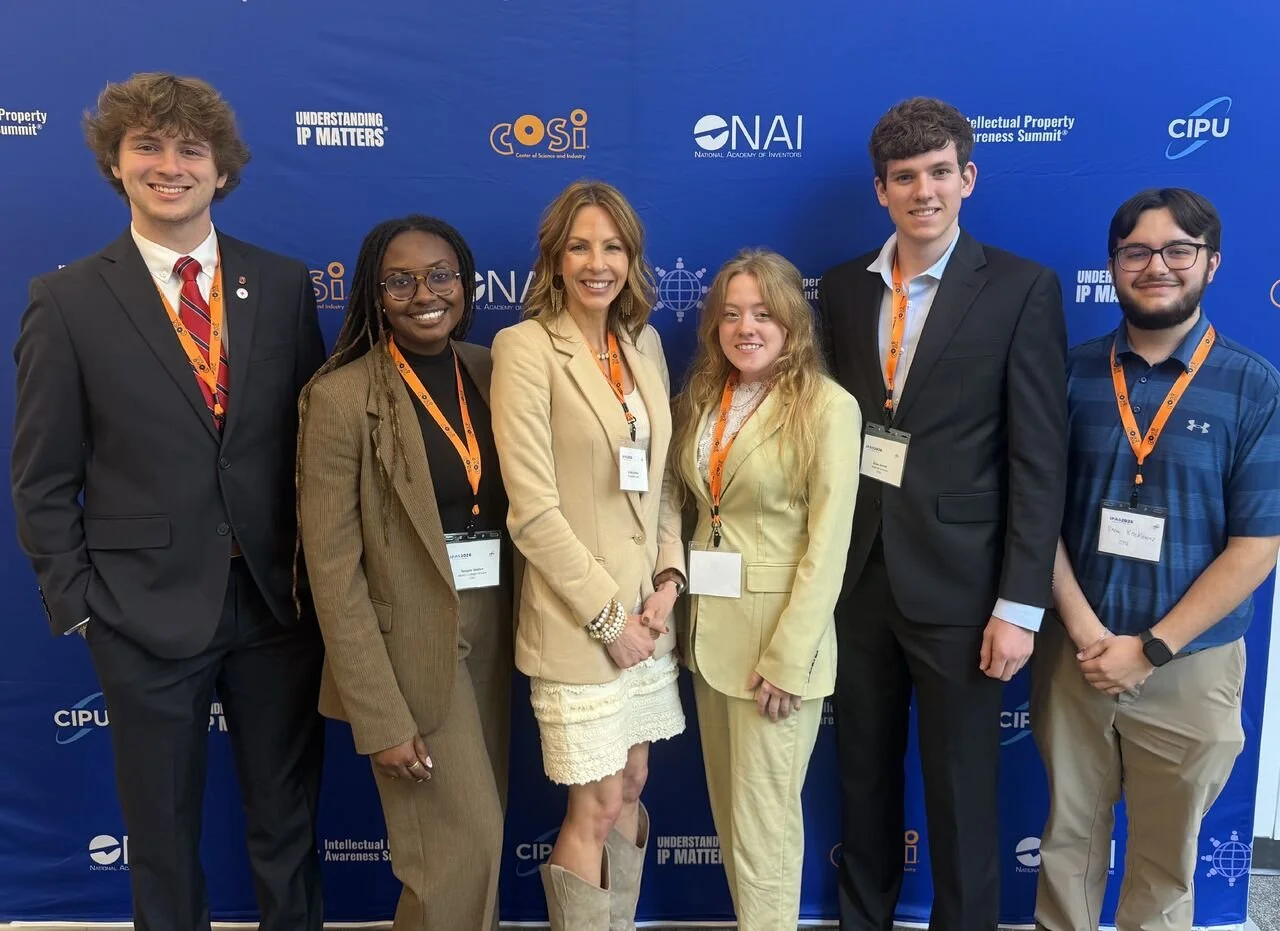
IP Awareness Summit
Kristy is a lifelong educator, community connector, and advocate for student success. Her willingness to stand for students across decades is who she is. She has built this ecosystem often without her name attached. She does her part to make a positive impact on Ohio's youth, and we should all appreciate that.
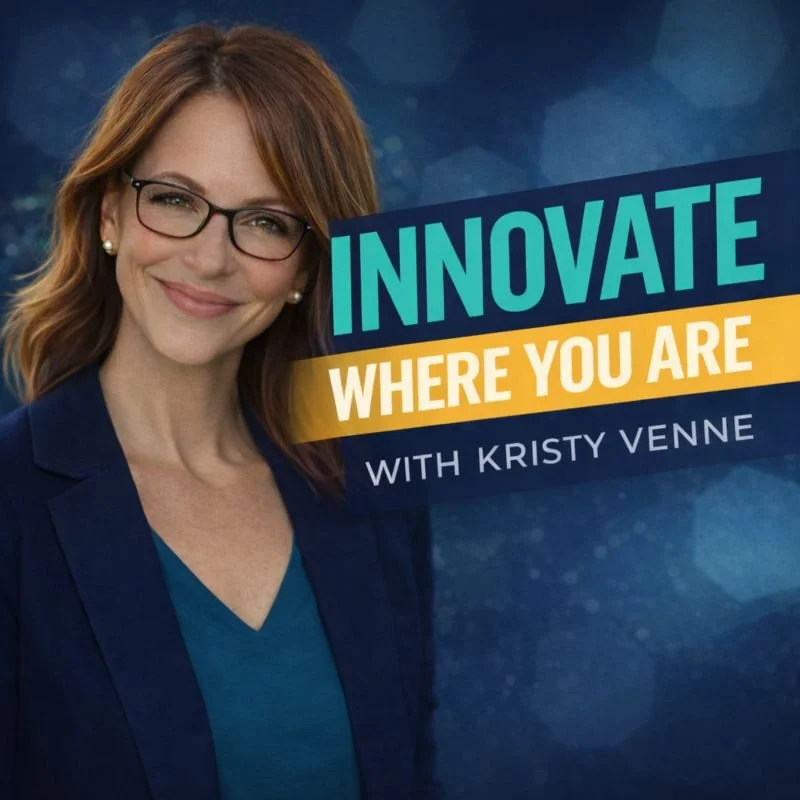
The honest question this pocket answers is not whether Ohio has talent at twelve years old. It obviously does. It is how many Kylyn Smiths the state loses because nobody built the pipeline to capture the inspiration Kristy Venne created.
Engine:
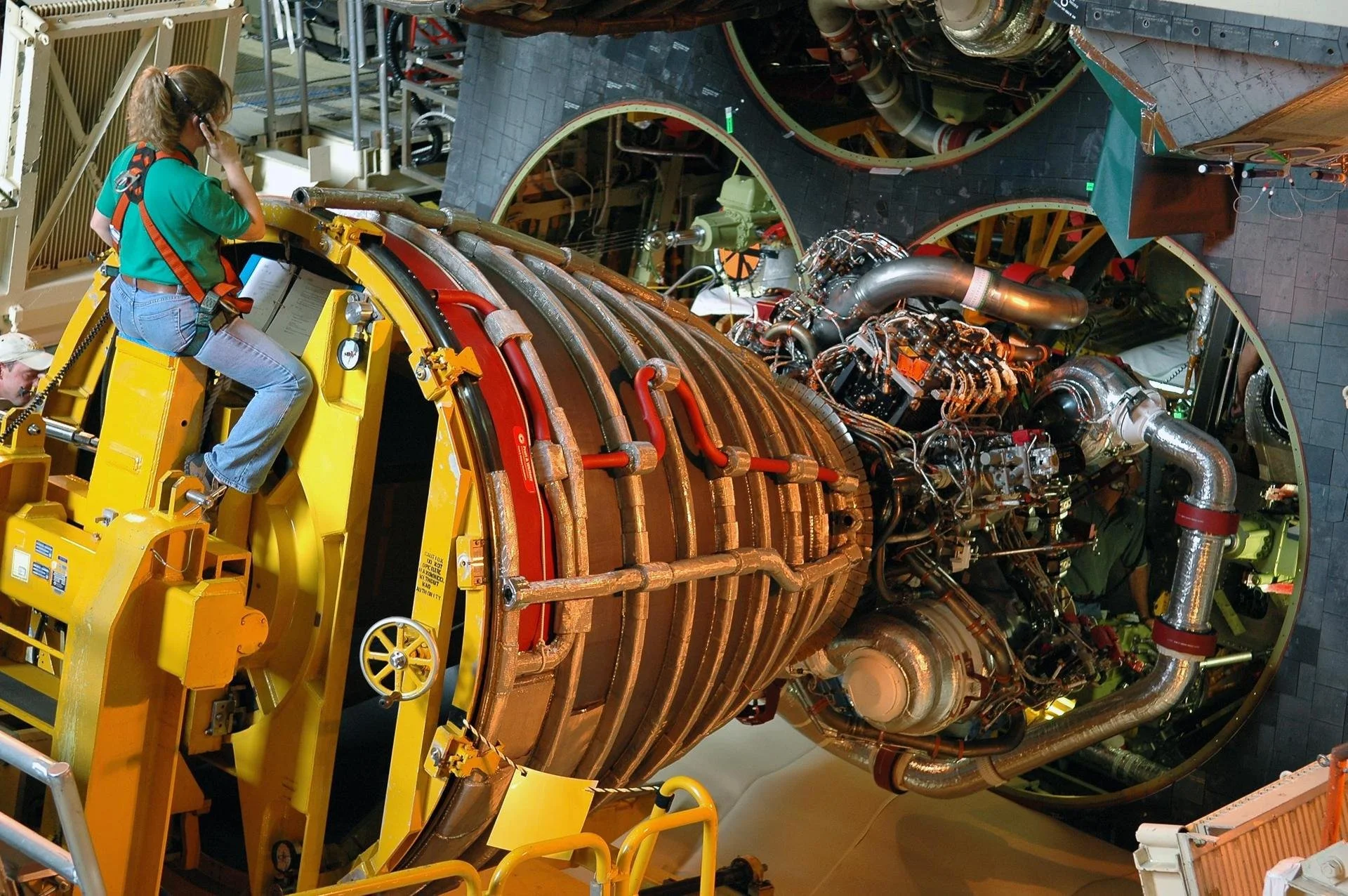
In the Orbiter Processing Facility bay 3, technicians on the Hyster forklift maneuver main engine No. 3 into place in Discovery
John Horack | Neil Armstrong Chair in Aerospace Policy; Vice President for Research, The Ohio State University
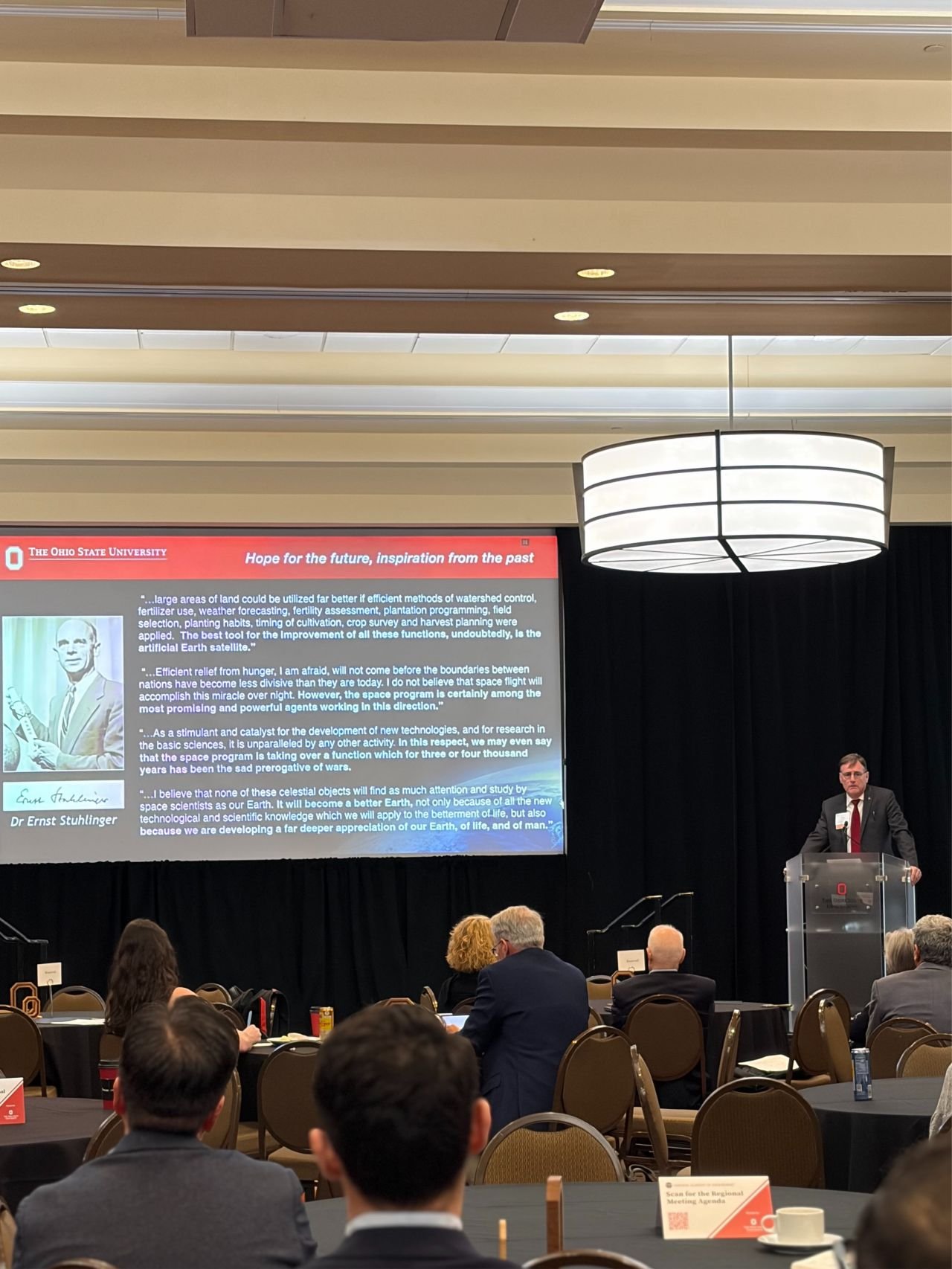
John Horack Closing NAE
An engine is not judged by how much fire it makes. It is judged by specific impulse, how efficiently it converts a given amount of fuel into usable motion. A bigger engine that wastes most of its propellant as heat is not better, only louder.
John Horack holds two roles that put him at the center of both halves of Ohio’s. The Neil Armstrong Chair in Aerospace Policy puts him inside the pipeline that produces the state's space and defense PhDs. The Vice President for Research title, and the board seat at Rev1 Ventures that comes with it, sit him inside the infrastructure that decides whether a founder can leave the university with something worth building.
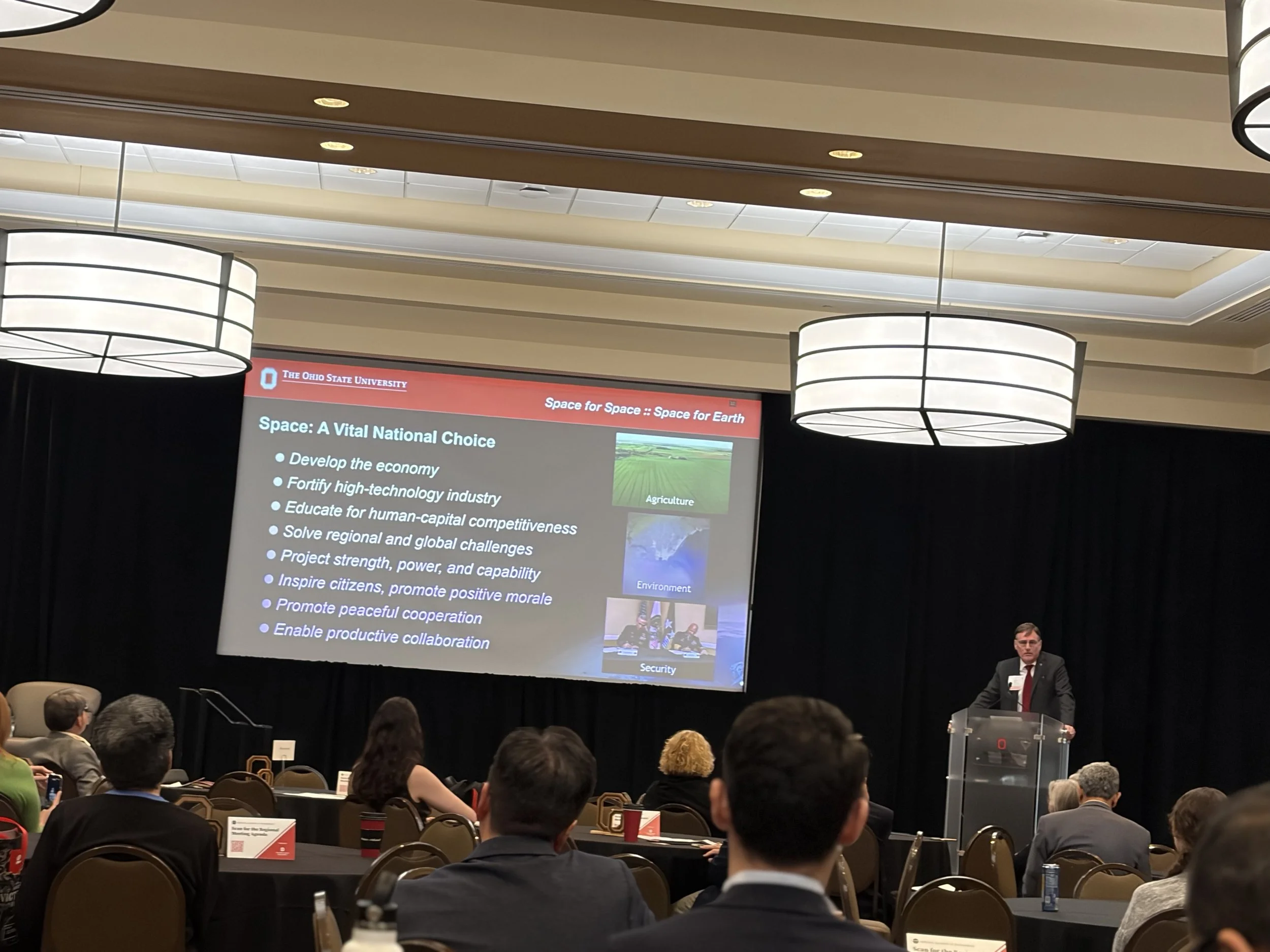
John's Advice
On raw thrust, Ohio State runs hot and clean, and no one disputes it. Ohio State's College of Engineering ranked 28th nationally and 1st in Ohio this spring, with aerospace 19th, materials 18th, and nuclear 15th among specialty programs. Rev1 Ventures, where Horack sits on the board, was named the highest-ranked Ohio organization on "TIME's-ever" national ranking of incubators and accelerators in August 2026, driven by more than 1,700 startups supported and $ 7.7 billion in economic impact since 2013. Whatever else is true about this engine, it is not underpowered.
Thrust was never the open question. Specific impulse is, and it splits cleanly into this pocket's halves. The physics behind that distinction is not abstract, and Ohio has a stake in it. Almost every rocket that has ever left Earth still runs on the same basic chemistry the Wright brothers would recognize: fuel and oxidizer burned fast for a lot of thrust over a short time, and that chemistry has a hard ceiling on specific impulse because combustion can only convert so much stored energy into exhaust velocity before the reaction runs out of anything left to give.
Fission is the first real step past that ceiling, and it is not theoretical. Ohio State has run its own research reactor on campus since 1961. Oklo and Meta are building a 1.2 gigawatt fission campus in Pike County. Fusion is the next step, and it stopped being science fiction this year too: in March 2026, Pulsar Fusion achieved first plasma in its Sunbird engine, with a published specific impulse between 10,000 and 15,000 seconds, roughly 25 to 40 times what chemical propulsion can achieve. Neither is a bigger version of the same engine. Both are entirely different reactions, one that gets dramatically more usable motion from the same starting fuel. That is the exact upgrade this pocket is asking whether Ohio's talent engine has made.
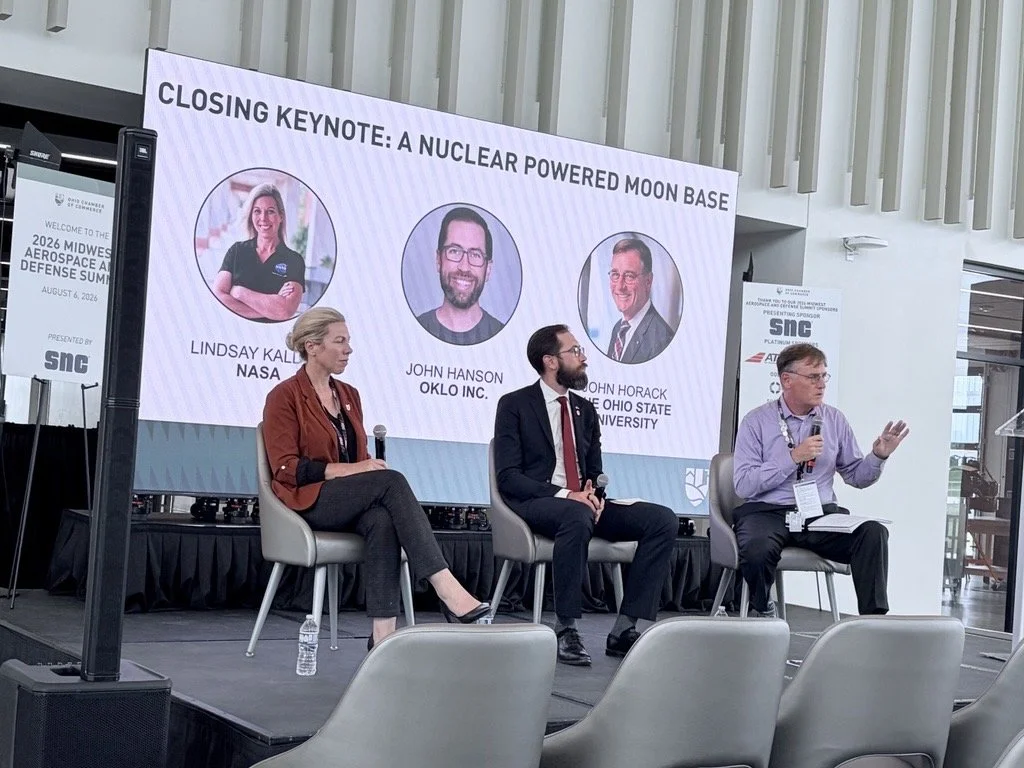
Ohio Chamber's Aerospace and Defense Conference
On the PhD side, Ohio has already built the instrument to answer this, but it isn't being used. The state's longitudinal data archive, maintained jointly by Ohio State's Center for Human Resource Research and the state's workforce and education agencies, tracks graduate earnings and employment in Ohio for up to ten years after graduation, excluding out-of-state and federal employment. Hence, the measurement isolates exactly what this pocket needs: how much of what the engine produces stays in Ohio’s vessel. That instrument exists at the state level. It is not published, by specialty, for the aerospace, materials, and nuclear engineering programs that carry this piece's thesis.
Walk two buildings over to the English department, and a much smaller, much less consequential version of the same question- where do our PhDs end up- sits on a single public page, updated by hand, readable in under two minutes. The instrument that actually matters for Ohio’s competitiveness sits inside a state data archive built for research queries, not a plain sentence anyone outside the university could read. Ohio has real proof this kind of gain is buildable, one tier down from where this pocket has spent most of its attention. Kathryn Kelley, executive director of Ohio State's Manufacturing Institute, built a Bachelor of Science in Engineering Technology for the university's Mansfield, Marion, and Newark regional campuses around local manufacturer partnerships instead of national recruiting. Every 2024 and 2025 graduate from Lima and Mansfield took a job near home. About half of Marion's did the same. That is a working, specific impulse gain already running at the regional campus tier. The open question is whether the same instinct reaches the flagship research programs producing this state’s aerospace, materials, and nuclear engineers.
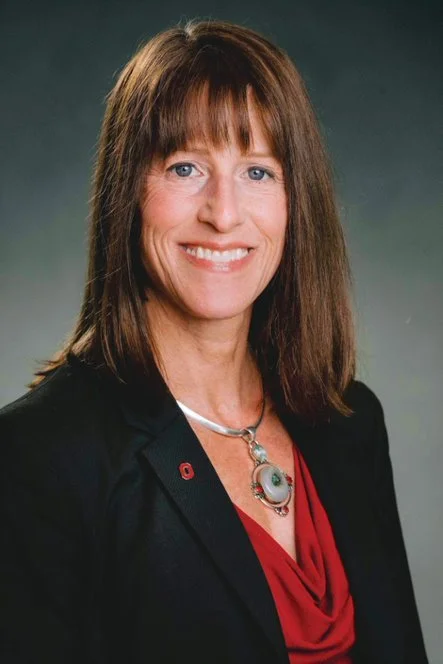
Kathryn Kelly - https://ohiobusinessmag.com/manufacturing/
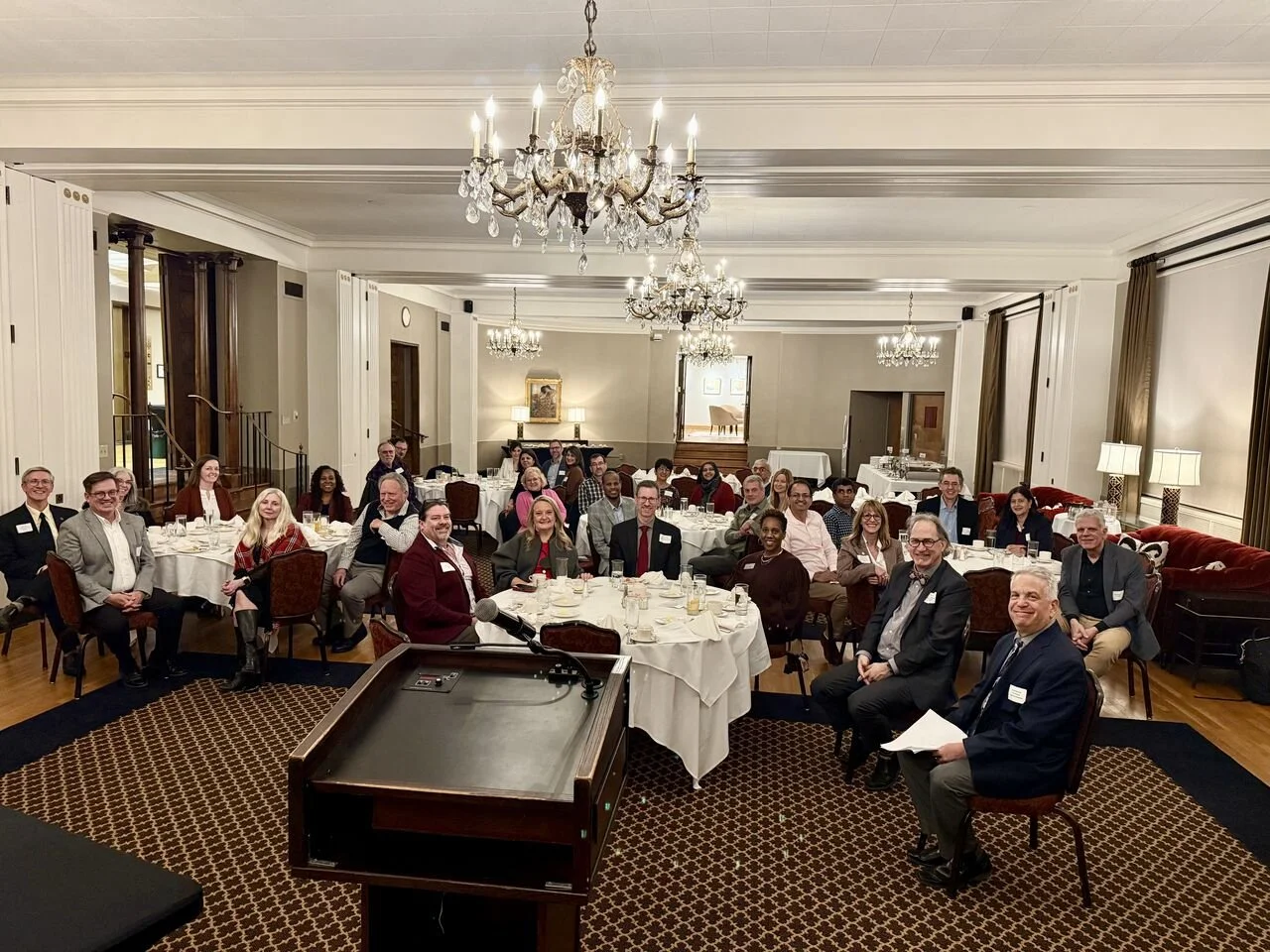
Decade Celebration by the OSU Engineering Technology and Engineering faculty. Powerful industry partnerships define the program at The Ohio State University College of Engineering.
Ohio State's Chemical and Biomolecular Engineering department publishes the list of companies that hire its graduates: Abbott, Anheuser-Busch, Cargill, Dow, ExxonMobil, General Mills, Goodyear, L’Oréal, Marathon Petroleum, Nestle, Procter & Gamble, Scotts Miracle-Gro, and Toyota. When you check where those companies are actually headquartered, the list splits almost evenly. Goodyear, Marathon Petroleum, Procter & Gamble, and Scotts Miracle-Gro are Ohio companies, and hiring into any of them keeps a graduate local. Abbott, Anheuser-Busch, Cargill, Dow, ExxonMobil, General Mills, L’Oréal, and Toyota are not, and Ohio State's recruiting apparatus sends engineers to all of them through the same career fair pipeline.
Abbott's published list of primary university partnerships- the schools it invests in beyond a booth at a career fair- does not include Ohio State at all. Cal Poly, Georgia Tech, Northeastern, and five others do. Whatever thrust is leaving Ohio through that pipeline, it is not one company doing it. It is roughly half the list.
Owens Corning, headquartered in Toledo, shows what the other side of that ledger can look like. It runs an apprenticeship partnership with Northwest State Community College that trains 60 to 80 industrial maintenance technicians a year for its own Ohio plants. That is a real gain in specific impulse. But the company's hiring behavior suggests it's not a big enough engine for the job: Owens Corning's 2025 and 2026 investment runs $200 to $250 million.
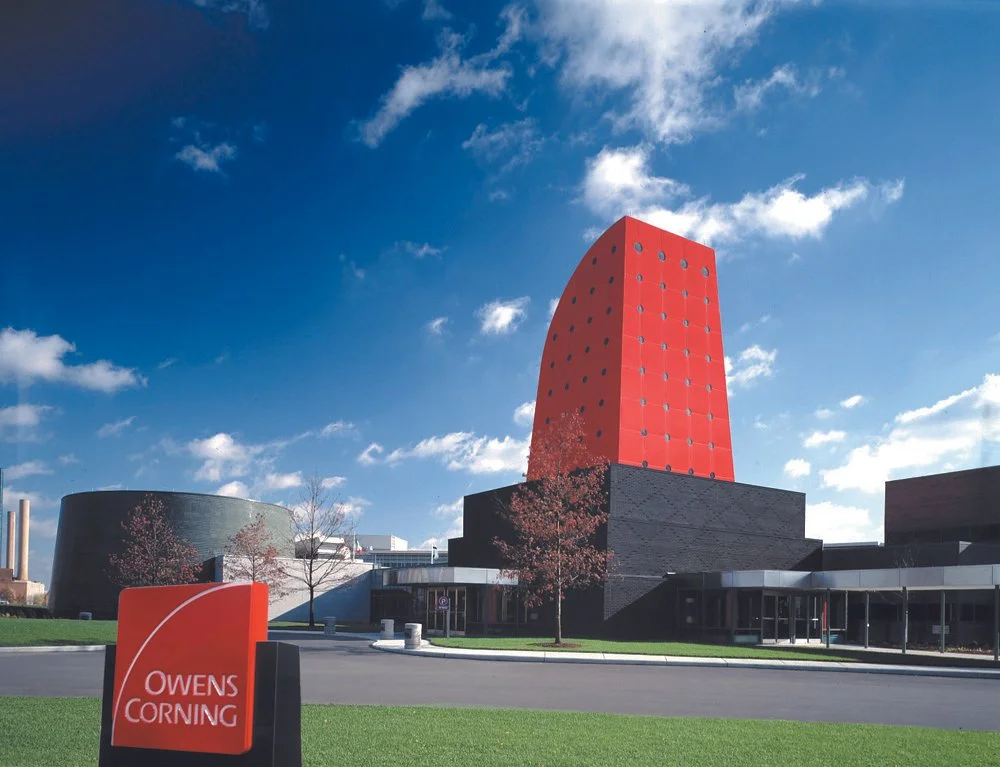
The local pipeline hasn't kept pace, so the company has started paying signing bonuses of $15,000 to $25,000 to pull automation engineers out of Toledo's auto supply chain. Building the mechanism and sizing it correctly are two different problems.
David Williams's decade as Dean of the College of Engineering, from 2011 to 2021, was largely spent building this kind of infrastructure at a bigger scale, including the Center for Design and Manufacturing Excellence, which places students directly with manufacturers such as a Piqua-based defense alloy company where students finish a paid program and often join the firm outright. That instinct is still active. This month, Ohio State joined Stanford, Penn State, Georgia Tech, and four other universities to launch Foundry School, a national manufacturing workforce program aimed at closing an estimated 3.8 million-strong skilled-worker gap by 2033.
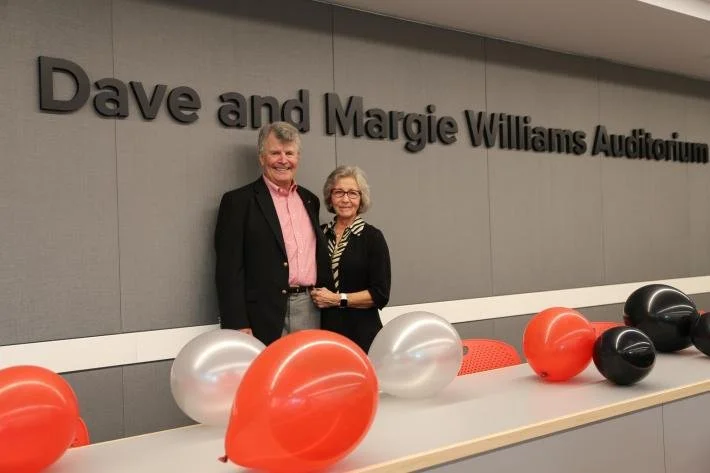
Emeritus Dean and Professor David B. Williams and his wife, Margie, were honored recently with the naming of the “Dave and Margie Williams Auditorium” in Mars G. Fontana Laboratories.
The volume of fuel involved is not small. Ohio State's College of Engineering alone awarded 1,896 bachelor's, 457 master's, and 163 doctorates in the 2024-25 academic year, while its undergraduate engineering population has more than doubled since 2006, from roughly 5,000 to over 10,000 students.
The University System of Ohio, all fourteen public universities combined, enrolled more than 444,000 students as of fall 2024. Whatever fraction of that output the state is currently losing, it is not a rounding error. One of the smaller, stranger proof points sits inside that same college: Ohio State offers a PhD in welding, built for exactly the kind of nuclear and aerospace manufacturing problems this pocket keeps returning to. It is not a headline program. It is the specific-impulse work happening at the smallest scale most people never look at.
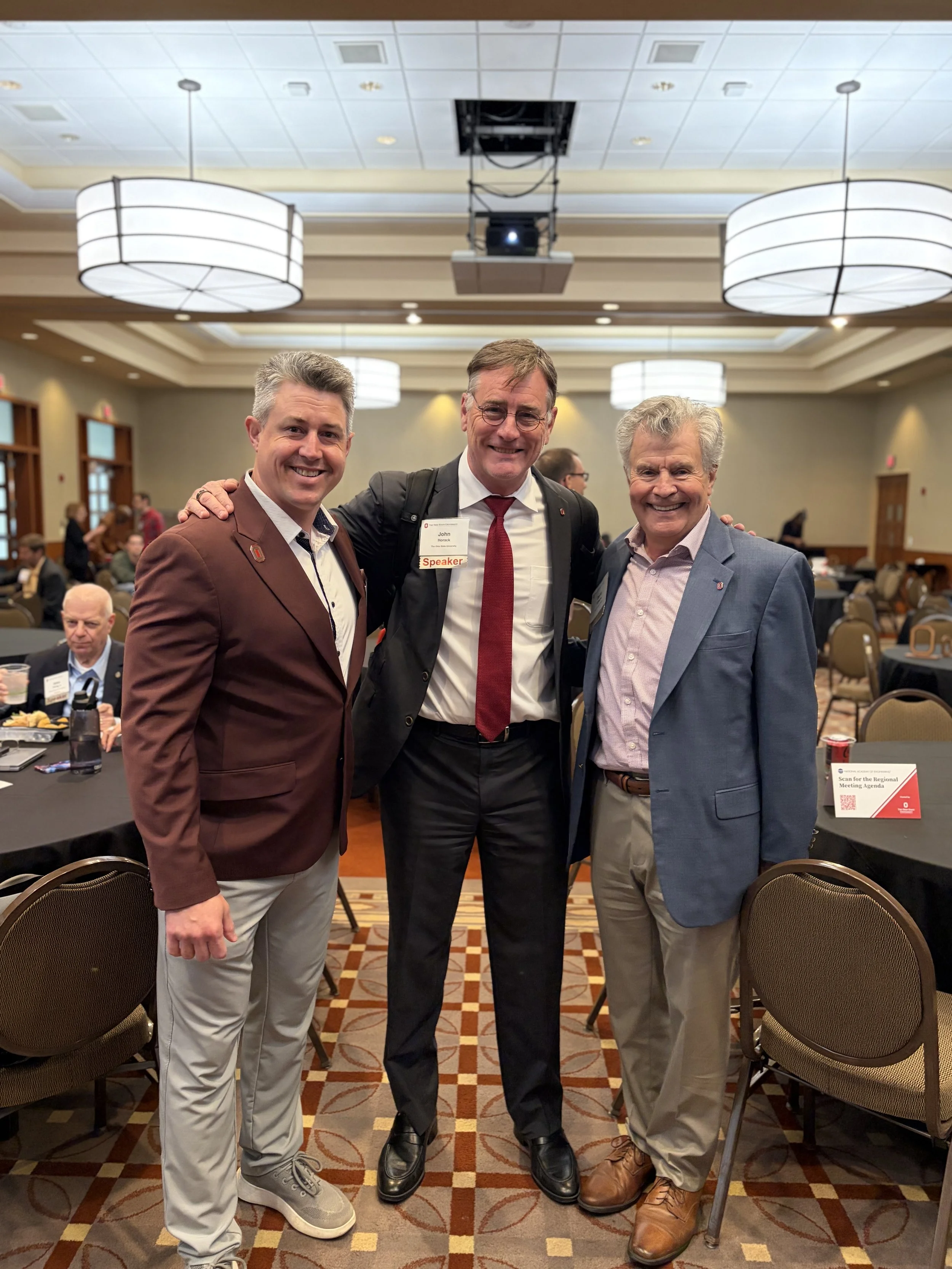
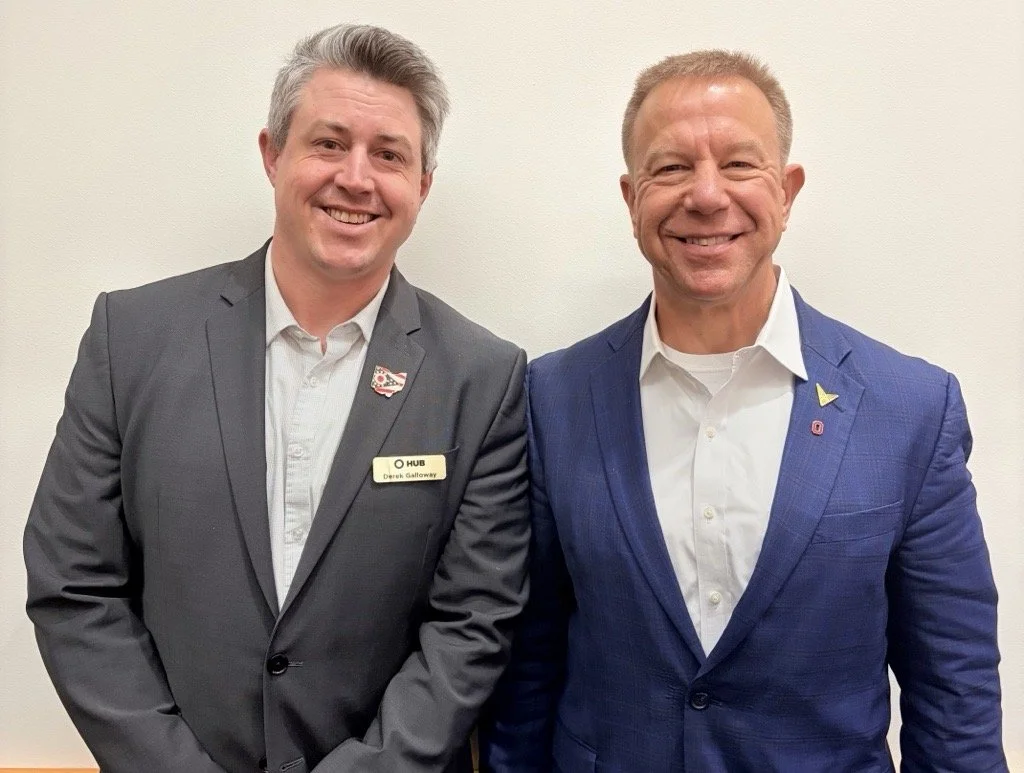
Derek Galloway, John Horack, Dave Williams at NAE
On the start-up side, the same gap shows up from a different angle. Ohio’s economic flywheel, and the word is appropriate here since this series has used it before, has produced 106 university spinouts and 1,604 total alum-founded companies statewide, with a combined enterprise value of $ 84.1 billion. Columbus' ecosystem grew 9.7 percent in 2026 alone, now tracking 384 startups and more than $208 million in funding. That's genuine credit to the pipeline. By its own methodology, it also ignores the question this pocket is actually asking: these rankings count a founder by where they went to school, not where their company is headquartered today.
They cannot tell the difference between fuel that propelled Ohio’s vessel and fuel that was vented, at full thrust, into someone else's gap.
Jacinta Tobin (“JT”), president of Mbryonics, said plainly on an Ohio stage this year: the coastal capital that does show up often needs to be educated, not just courted, because it has to learn to be patient in a way it is not always built for. The instrument doesn't just measure who gets funded. It is measuring whether the capital arriving already knows how to wait.
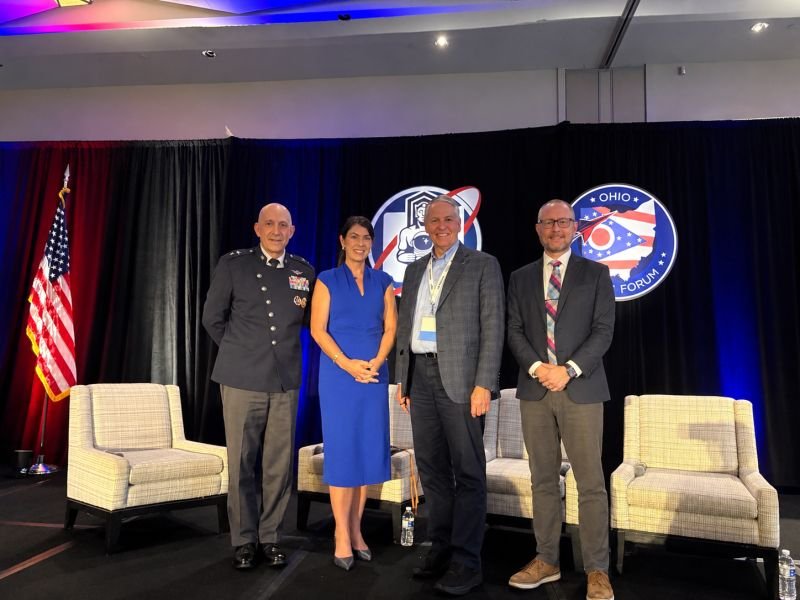
Ohio Space Forum in Cleveland 2026
A live example of this choice playing out in real time is one that Horack has a prime vantage point for. At the National Academy of Engineering's annual meeting at Ohio State this year, which Horack opened and closed himself, Joe Miller of BWXT told the room that nuclear power in space is no longer a future technology. In his words, it is the best answer for extended-duration missions today, and the engineering timeline is now. The industry is not moving toward nuclear propulsion because chemical engines ran out of ways to get bigger.
It is moving because raw thrust is no longer the limiting factor. Nuclear thermal and nuclear electric systems do not solve that by building a bigger version of the same engine. They change what conversion is possible with the same fuel.
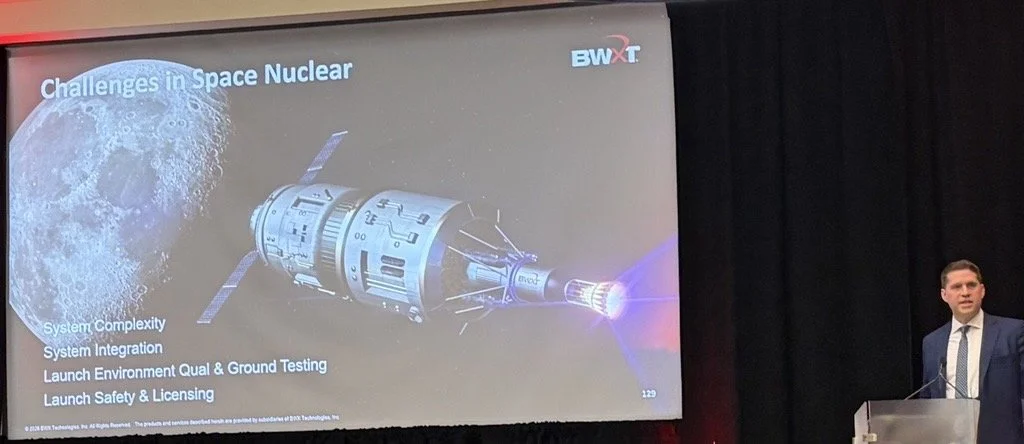
Joe Miller at NAE 2026
Ohio's engine is at the same point in its own arc. The rankings have already answered whether it can be bigger. It cannot get much bigger without a different kind of investment than the state has been making. The open question, the one this pocket is actually built to ask, is whether Ohio has built, or is willing to build, its own version of that efficiency gain: a mechanism that converts more of the PhDs and founders the university already produces into motion for Ohio’s economy, rather than into thrust that carries the same fuel toward somebody else’s.
That is a fairer question to put to John than an earlier draft of this piece implied, and a better one for him to answer in public. He is not the person sitting on a data gap. He is positioned at the exact intersection of both pockets to say plainly whether Ohio is optimizing for a bigger engine or a more efficient one, and what it would take to build the second kind.
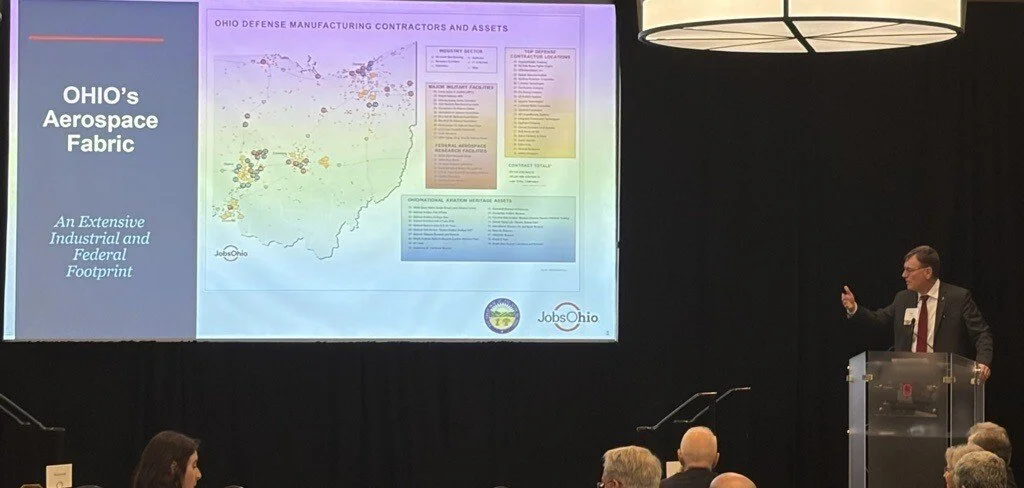
A few things about John himself are worth knowing before this pocket closes; I first met him in 2024, and most of them were said in NAE rooms rather than anywhere quieter. He talks about space the way most people talk about a tool already sitting in the drawer, not a special occasion, something to reach for on a typical Tuesday because the problem in front of you happens to need it. When someone questions whether a man with his kind of national reach still belongs to Ohio, he always gives the same answer, and he’s given it to an NAE audience more than once. He got here as soon as he could.
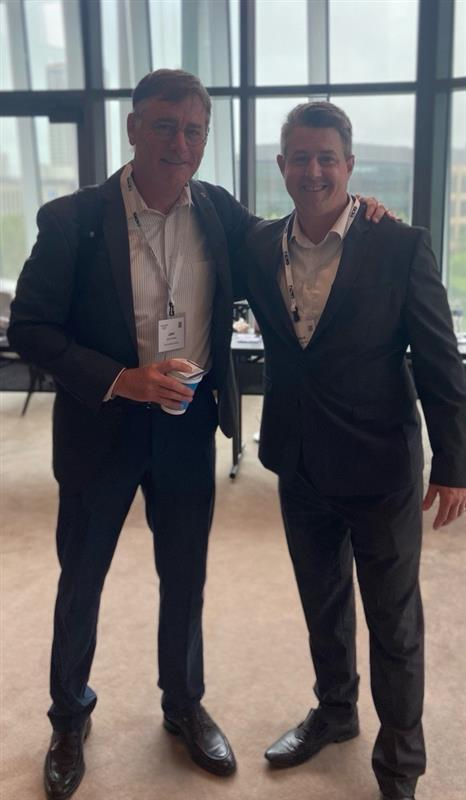
Meeting John (Our Hammer moment)
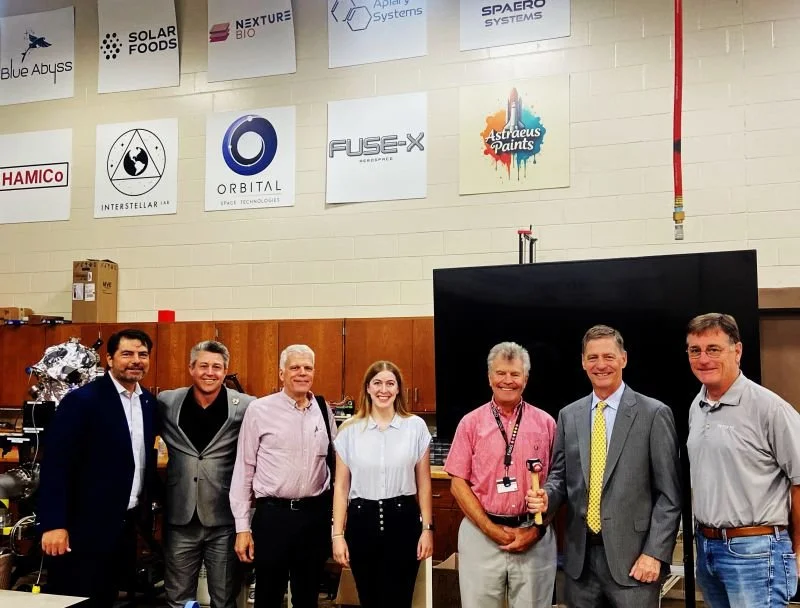
Starlab Tour - Abby Harrison in Middle (https://www.planetary.org/profiles/abigail-harrison), Lou Von Thaer - President and CEO of Battelle (holding the Ohio State Space Hammer)
John Horack was named to an eleven-member steering group Governor DeWine formed this week to prepare Ohio's application to host a new U.S. Space Academy, alongside JobsOhio's CEO, Team NEO's CEO, and a retired NASA senior civilian who already advises the state on aerospace and defense. NASA's own request for that information is due back October 26. Whether Ohio's application succeeds is still unknown. That the state is now doing, formally, at least part of what this pocket has been asking it to build- a real mechanism instead of one relationship at a time- is not.
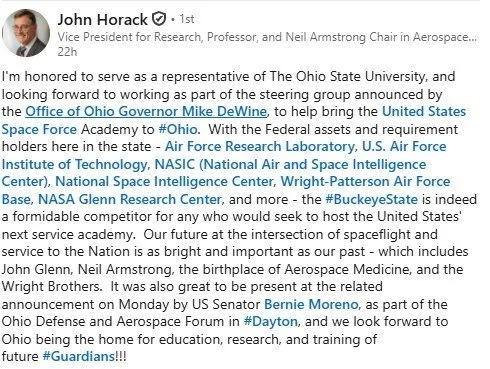
Dr. Horack named to the steering committee to bring Ohio US Space Force Academy Posted on 9.22.2026
A version of this whole argument sits inside my own family. My father earned his PhD in organic chemistry at Miami University, after growing up in Columbus. Dow Chemical did exactly what this pocket has described: refined the fuel, burned it once, aimed it elsewhere. He relocated to Midland, Michigan, and I was born and raised there as a direct result. I worked for Dow myself through high school and college, and my first professional role was on-site at Dow’s Process Service Center, in the Cost Accounting Expertise Center, through Tata Consulting Services, as a financial analyst. There, in Michigan, surrounded by Ohio State graduates who had made the same trip my father made a generation earlier, the pattern this pocket describes stopped being an argument and became something I had grown up inside.
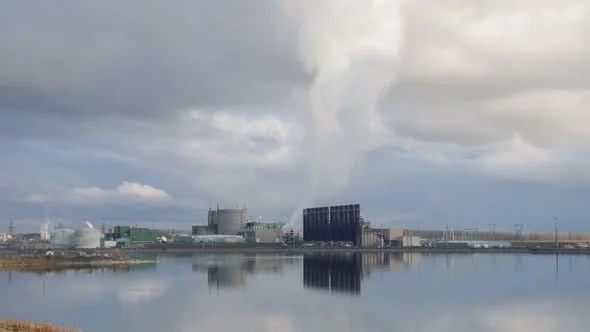
Overlook Park View of Dow's plant in Midland, MI - Just a few miles from childhood home
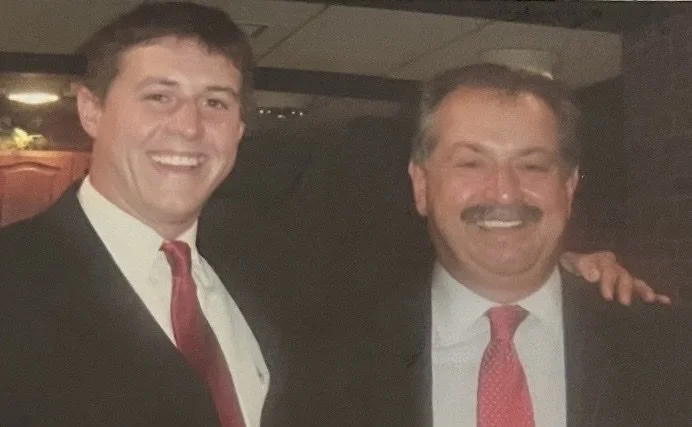
Andrew Liveris - Former Chairman and Chief Executive Officer, The Dow Chemical Company - Photo taken at the wedding of mutual friends in Midland, Michigan, 2010
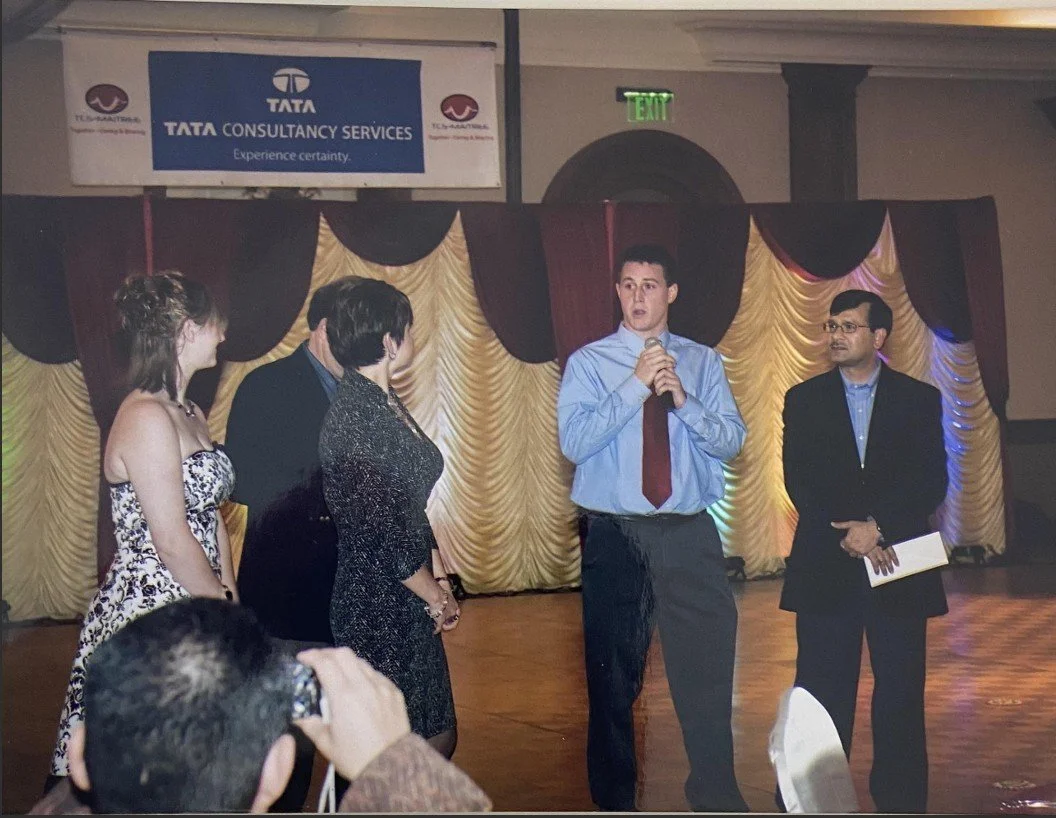
Presenting Midland United Way with check from TCS Consultancy Services Tarit Dey as A Dow Chemical Employee staffed through TCS/Dow Partnership
My return to Columbus came through my father's ties, and I borrow John Horack's words, unchanged. "I got here as soon as I could". I did not come back alone. Before leaving Midland, I had met an Ohio State graduate, and when an opening came up at my new employer in Columbus, I passed her resume forward myself. She got the job. No program built that. No dashboard tracked it. I had already found my own way home and decided to bring someone with me.
That is this pocket's argument, reduced to the smallest unit that still holds it. Refined fuel does not return on its own once it leaves. It returns because somebody who already knows the way home makes the trip, and then chooses not to make it alone. Ohio’s question is whether it wants to keep depending on people like me, one resume at a time, or whether it is ready to build the mechanism that does it without anyone having to remember.
Propellant Lines and Tanks

Artemis II Rocket Propellant Tanks Prepped for Next Phase of Manufacturing
John Crist | Ohio Division of Securities
The propellant system is the fuel and distribution that propels a rocket: the tanks and the lines that move fuel to the engine. Ohio does not have a fuel shortage. It has a constriction problem, and constriction is not just a plumbing inconvenience. It is a thermodynamic event. Push a fluid through a narrowed passage and the pressure on the other side drops, irreversibly, with no useful work recovered from the loss. Engineers call this throttling, and it falls under the Second Law: entropy increases even when nothing visibly breaks.
The specific failure modes in this pocket are exactly that kind of constriction: lines that never reached the tank they were supposed to serve, gaskets misaligned at the joints between two working parts, and gauges that read the flow differently depending on where you are standing when you look at them.
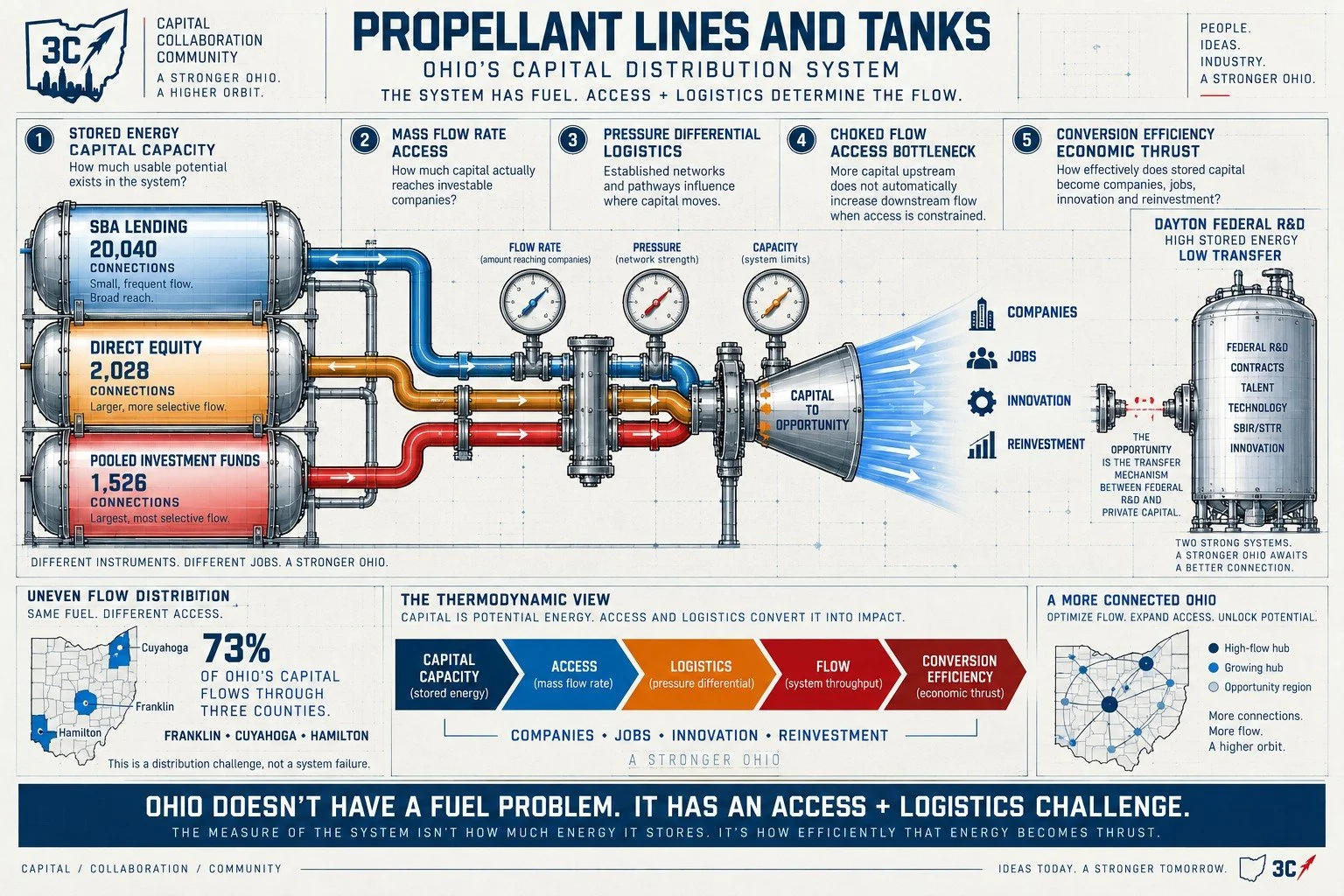
Two words keep coming back across every conversation behind this piece, in rooms that had nothing to do with each other: access and logistics.
John Crist's day job is at the Ohio Division of Securities, and his passion for Ohio turned a LinkedIn comment into the most extensive collaboration in this piece. Everything in this pocket is his own personal-capacity work, done on his own time using SEC filing data publicly available to anyone. The analysis and the views behind it are his, not the Division's, and none of it should read as the Division having produced or endorsed it. A coffee conversation turned that original comment into John analyzing public SEC filing data on his own time, in enough depth to fill this pocket several times over. What follows is not a record of what he posted. It shows what his analysis reveals about where Ohio's capital lines run, where they don't, and what that means for anyone trying to build something here.
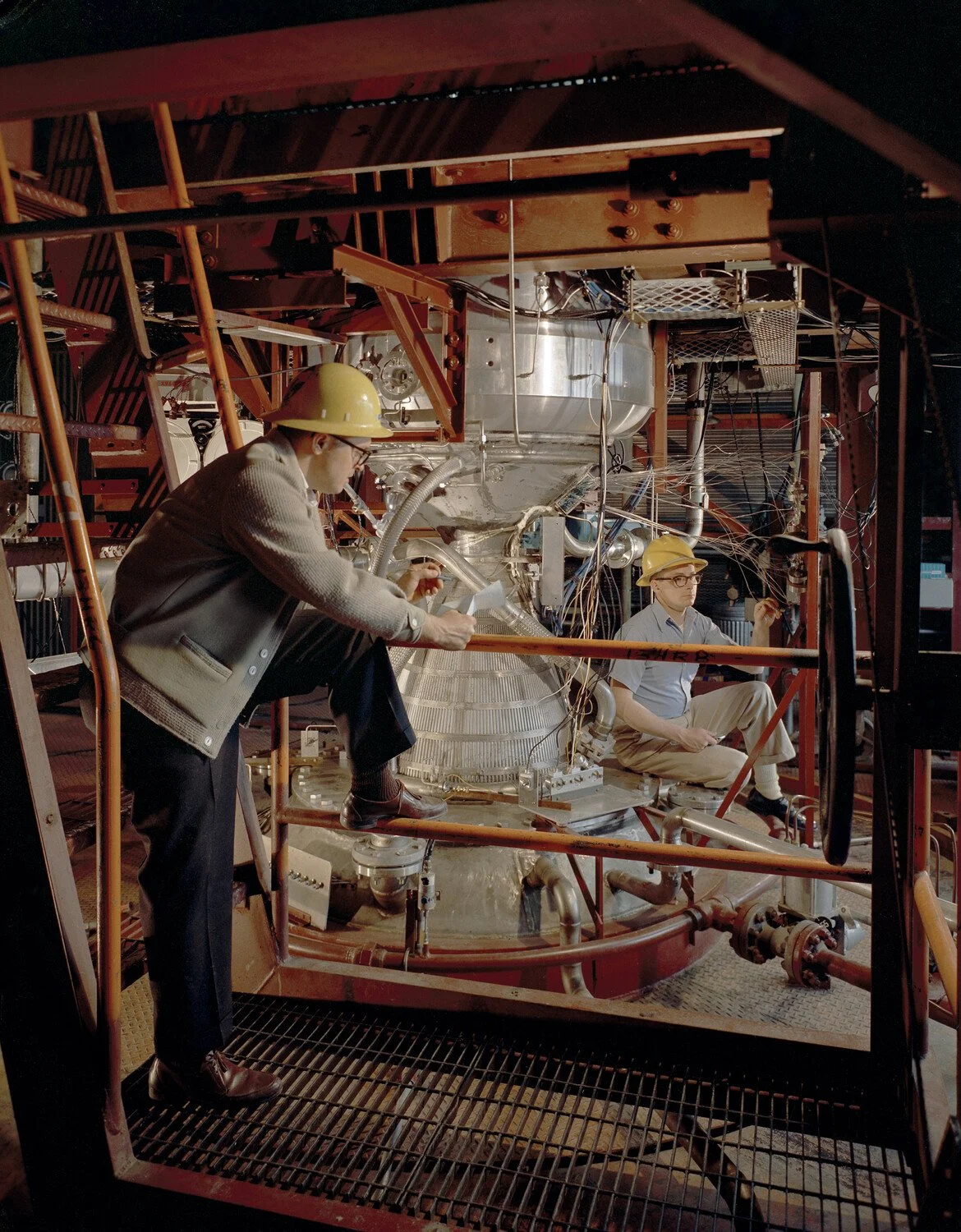
Kiwi B–1B in the B-1 Test Stand Engineers examine a Kiwi B–1B nuclear engine installed in the B-1 test stand to study the start up of an unfueled reactor and its turbopump without prechilling the pumps or propellant lines
Before the diagnostics, the actual physics underneath all of them, translated once, so the rest of this pocket can be read against an equation instead of a metaphor:
THE 3C ROCKET EQUATION:
Why More Fuel Doesn't Automatically Mean More Momentum
Δv = Isp g₀ ln(m₀/mf)
The Tsiolkovsky Rocket Equation — NASA, Basics of Space Flight
ECONOMIC MOMENTUM = (ACCESS + LOGISTICS EFFICIENCY) × ACCESSIBLE CAPITAL
CAPITAL CAPACITY: What's in the tanks?
SBA Lending — 20,040 connections
Direct Equity — 2,028
Pooled Funds — 1,526
ACCESSIBLE CAPITAL: How much fuel can actually reach the engine?
73% → Franklin + Cuyahoga + Hamilton
SPECIFIC IMPULSE: How efficiently is capital converted?
Access + Logistics
Networks • Geography • Introductions • Institutions • Connections
Δv — ECONOMIC MOMENTUM: What actually comes out the other end?
Companies - Jobs - Innovation - Reinvestment
THE QUESTION ISN'T HOW MUCH FUEL OHIO HAS. IT'S HOW MUCH MOMENTUM OHIO CREATES FROM IT.
Start with the main line. By filing-level data, 73% of Ohio's capital runs through three valves: Franklin, Cuyahoga, and Hamilton counties. Everything else in this pocket really comes down to what happens on the other side of those three valves, and why the lines running past them narrow the way they do.
The first diagnostic is whether each valve is sized correctly for the pressure it should carry. A size-adjusted ranking across thirteen Midwest metros, controlling for population, gives a real answer instead of a guess. Columbus has a correctly sized valve, and then some, scoring plus 0.36, effectively tying with Pittsburgh near the top, just behind Minneapolis. Cincinnati and Cleveland are undersized for their own scale, at minus 0.33 and minus 0.46, moving less capital than a metro of their size should. Akron, a fraction of either city's population, is calibrated almost exactly right at minus 0.05. Toledo is the clearest case of a valve that has nearly seized shut, at minus 0.97, among the worst performers in the entire thirteen-city set.
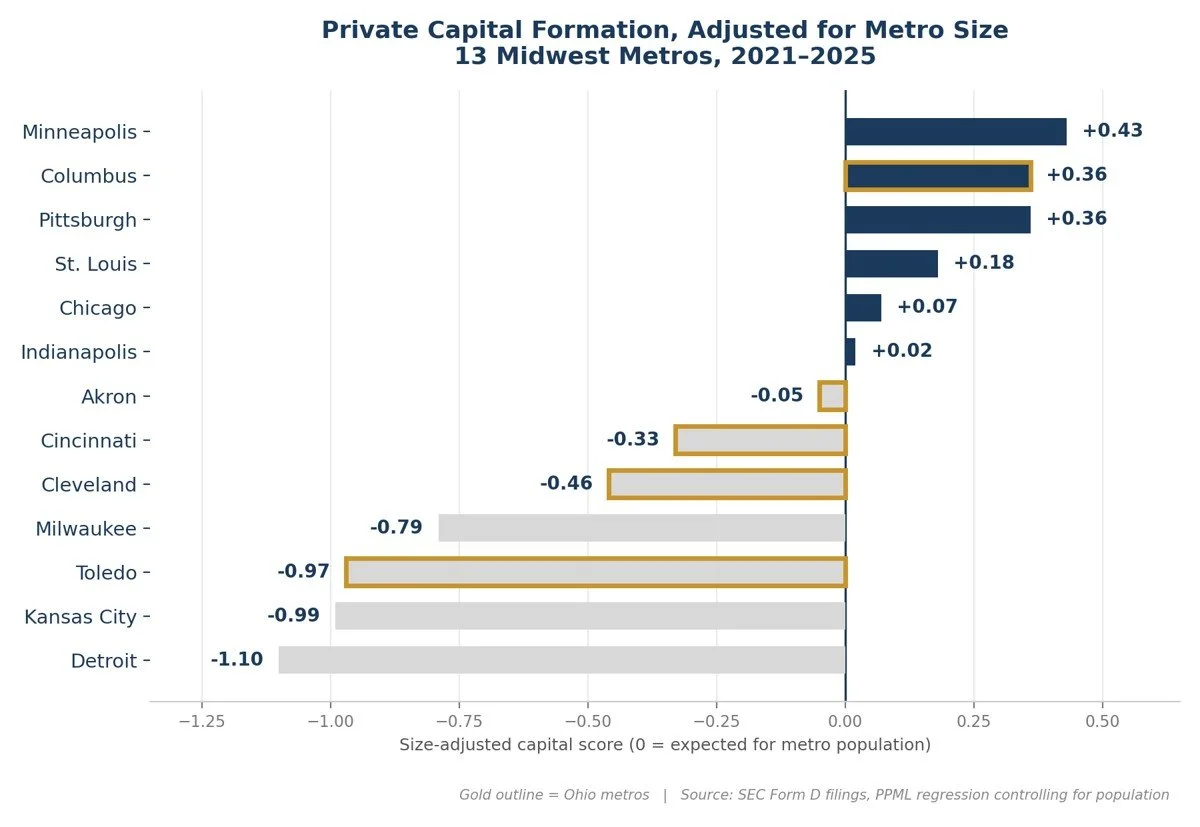
That is the story behind the 73 percent figure. It is not that three counties hoard capital while the rest of the state goes without. Even within the three counties getting the capital, only one is running at the pressure its size would predict. The other two are underperforming valves that happen to be larger than everything downstream.
The second diagnostic is whether the lines themselves are sized for the right fluid. Ohio runs three separate capital instruments through this system, and each is built for a different job. SBA loans move through 20,040 separate connections statewide, a small, frequent flow reaching almost everywhere. Direct equity raises move through 2,028 connections, larger and far more selective. Pooled investment funds move through only 1,526, the largest and most selective flow of the three. Worth flagging precisely: the SBA figure runs roughly 2020 through 2025, while the equity and pooled figures run 2021 through 2025, a slightly different window kept honest here rather than smoothed over.
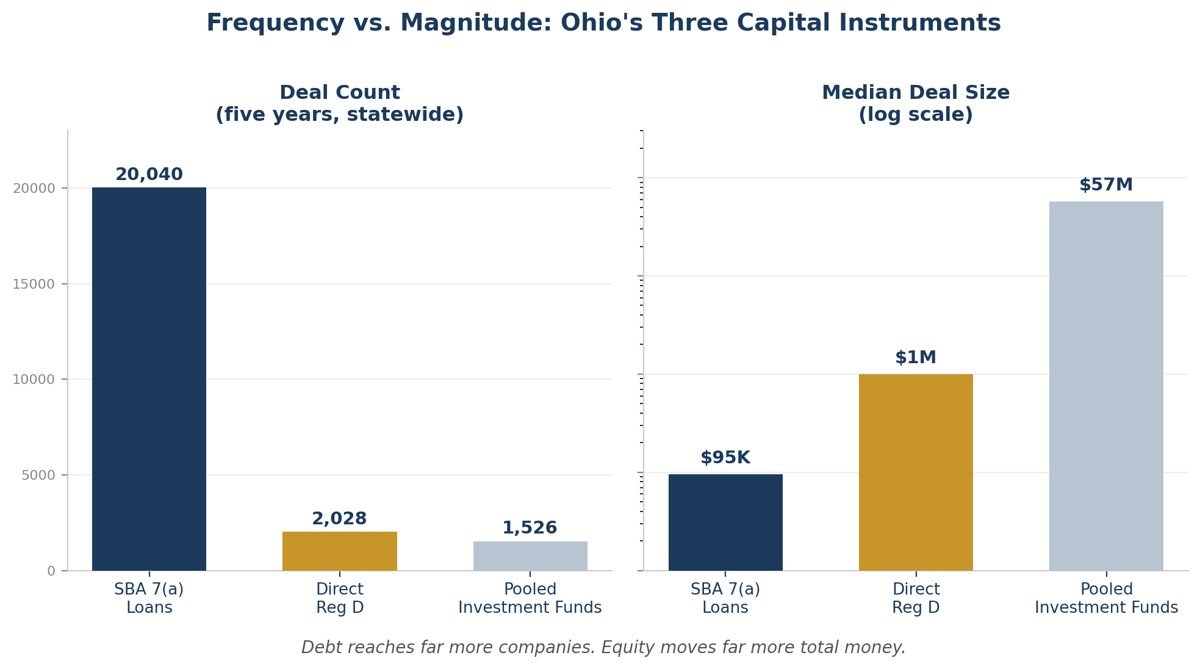
SBA debt reaches far more companies than equity does. Equity moves far more total money than SBA debt does. The gap is worth pointing to because it shows what happens at the transition: a company that has only ever been fed through the small, frequent line has no guaranteed connection to the larger one, and the founder is left to build that connection, one relationship at a time.
A third diagnostic has nothing to do with a leak. It is a suspected gauge problem, not yet a measured one, whether the instrument reads differently depending on who is standing in front of it. The working hypothesis is that when a coastal investor participates in an Ohio round, the deal tends to get counted, framed, and covered differently than the identical dollar amount raised from an Ohio-based fund alone. If that holds, the fuel moved and the gauge simply did not register it the same way, a reporting gap worth testing rather than a settled finding, sitting on top of the geographic one.
The fourth diagnostic is the one worth calling by its real name: misaligned gaskets. The working hypothesis, not something the filing data itself measures, is that capital concentrates in those three counties less because of the quality of the ideas or the depth of the workforce outside them, and more because of proximity, who golfs with whom, who sits on which board, who happens to be in the room. Independent research on ecosystem building, unrelated to this series, describes a similar institutional pattern. When capital is scarce, the organizations that control access to it guard what they have instead of sharing it, each one running its own program rather than integrating with what already exists. Two components that each function fine on their own, failing to seal properly where they are supposed to connect. If that holds, it is not a supply problem. It is a fitting that was never torqued down.
The fifth diagnostic is that the lines themselves change size as a company grows, and nobody hands a founder the new fitting when it does. A friends-and-family round is local by definition. A pre-seed round is still mostly local, drawn from nearby angel groups or accelerators. A Series A round runs through an entirely different line, one that terminates in the Bay Area, Miami, or New York, and a founder is now competing for that line against founders who already have the coastal relationship built. A Midwest founder needs two separate sets of fittings, one for the line that starts a company and a completely different one, built well before it is needed, for the line that scales it. Nobody supplies the adapter. Founders have to weld it themselves.
Context matters here, and it is worth getting exactly right. Over the same five years, Ohio's early capital lead over Michigan and Indiana was real but not durable. By 2025, all three states had converged to roughly the same baseline, and Indiana had passed Ohio. The takeaway is that Ohio's early number was likely inflated by a few large deals during the low-rate period, which means three states converging, not one state losing ground to its neighbors.
This series has kept two capital problems separate from the start: the national deficit against places like Texas, and the internal isolation of capital inside three Ohio counties. This third finding should not be collapsed into either of the first two. Ohio is not falling behind its Midwest peers. It is converging with them. The isolation problem is not that Ohio lacks capital relative to Michigan or Indiana. The problem is that Ohio's capital still routes through the same three valves every year, regardless of how the state's total compares to its neighbors.
The sixth diagnostic is the most serious one in this entire pocket, because it is not a misalignment. It is a missing line, or at least a suspected one. AFRL manages roughly twelve billion dollars a year in federal research and development from its Wright-Patterson headquarters, though it runs sites nationwide, so that full figure doesn't land in Dayton's economy. The local impact is closer to $4–5 billion a year. Even at that scale, Dayton still lands at the bottom of the size-adjusted rankings. That money turns into companies; Dayton firms have won more than a billion dollars in federal small-business awards, outperforming comparable Air Force towns like Albuquerque and Colorado Springs on that measure. But those companies are federal research contractors living on government awards, and the working hypothesis, still being tested rather than proven, is that federal award money gets reinvested differently than startup money does: it does not raise venture rounds, it does not get acquired the way startups do, so it never surfaces in the private capital data anyone uses to size up a city, and it may not reinvest the way a startup exit does, no local angels, no recycled equity, at least not in the same way. If that holds, no line connects that tank to this one, two real systems, operating at real scale, in the same city, that may never have been connected.
That is the clearest isolated pocket in this entire piece, sitting inside the exact city its own aerospace and defense argument already runs through. The working hypothesis, still being tested rather than proven, is that Dayton did not fail to build a startup economy. It built two separate ones, and nobody ever connected them.
Worth being precise about what Ohio has already tried here. Since 2015, the Ohio Federal Research Network has spent a decade building exactly this kind of bridge, connecting the Air Force Research Laboratory, NASA Glenn, and other federal partners to Ohio State and industry, with a mandate to demonstrate technology to real stakeholders and customers. It also targets a different valve. Showing a technology to a potential customer isn't the same as routing a company toward venture funding, recycled equity, or a local angel network. Ohio has been working the industry side of this gap for ten years. The capital side is still the part nobody has connected.
An outside instrument landed near the same place from a completely different angle. An independently run set of Midwest startup rankings, twenty-three weighted variables across activity, access to resources, and business climate, has Columbus climbing to fourth this year, its best finish ever, ahead of Cincinnati and Cleveland for a seventh straight year. That confirms, from a different methodology entirely, the same reading this pocket's own filing data already gave: Columbus is the one valve in this system actually calibrated for its size, and it is not close.
It is worth setting all of this next to a wider instrument problem the Physics section already raises. Three separate national surveys, CNBC, Chief Executive, and WalletHub, score Ohio's business climate on three different scales inside the same rough window: first, seventh, and twenty-sixth. Filing-level data is not a fourth opinion piled on top of the other three. It is a sharper instrument, built from where the money actually lands rather than a composite survey score, and this piece trusts it most for exactly that reason. It is also the hardest one to spin.
None of this closes the file. The next diagnostic step is tracing specific companies that succeeded from inside the underperforming valves and finding out where their capital actually came from. The early expectation, based on everything the filings already show, is that it was rarely equity. More often, an SBA loan did the job venture capital was not there to do. That is a harder path for a founder, and genuinely useful intelligence for an investor, because it shows outcomes coastal capital hasn’t yet noticed.

A fully functional Launch Abort System (LAS) with a test version of Orion attached, soars upward on NASA’s Ascent Abort-2 (AA-2) flight test atop a Northrop Grumman
A few questions stay open for that next diagnostic pass: why Dayton's federal contractor community outperforms comparable Air Force towns while its private capital system underperforms every metro its size; whether companies in the lighter areas of the map are leaning on banks instead of investors; whether this is a chicken-and-egg problem where no capital produces no companies which produces no capital; and whether university presence changes the picture, given the activity visible near Athens, home to Ohio University, a distinct institution from the Ohio State thread running through the Engine section elsewhere in this piece. Both universities are relevant. Neither should get merged into the other.
That is the seed of a future installment in this series, working title The Unknown Success Stories, a numbers-based look at what Ohio has already built without the capital that theory says it needed.
Every diagnostic in this pocket points to the same repair: not a bigger tank, a better connection. Ohio does not need more fuel. It needs the missing line between Dayton's federal contractors and its own private capital, a gauge that reads a coastal-backed round the same as a local one, and a standard adapter so a founder scaling past pre-seed is not welding the connection to Series A capital alone, one relationship at a time. A propellant system that leaks at the joints does not fail on the pad. It fails after ignition, when the pressure is already committed, and there is no way to shut it down and start over.

NASA, Northrop Grumman, and Lockheed Martin successfully performed a ground firing static test of the abort motor for NASA’s Orion spacecraft Launch Abort System (LAS)
Flight Deck
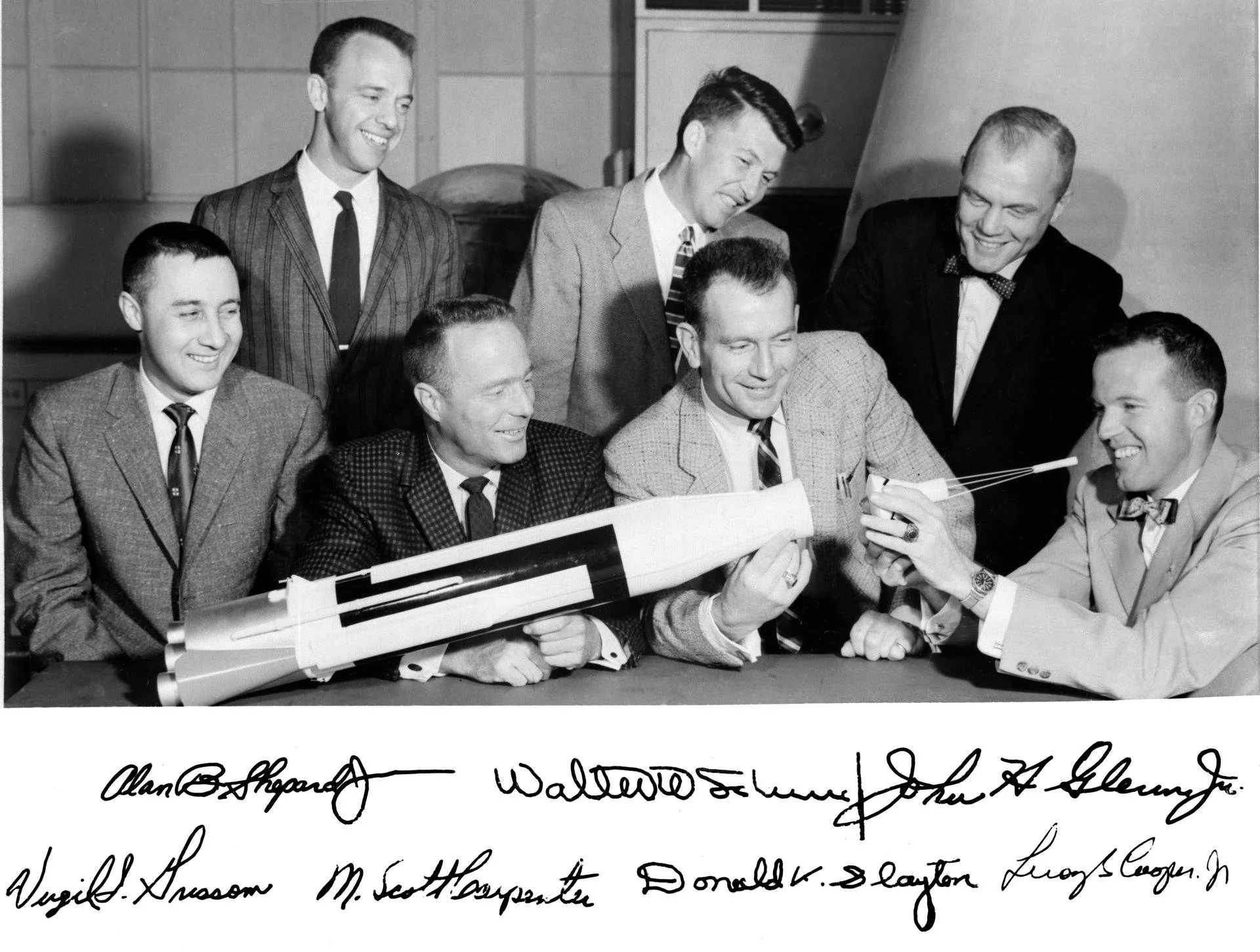
MERCURY ASTRONAUTS left to right, are Alan B. Shepard Jr., Walter M. Schirra Jr., and John H. Glenn Jr.; sitting, left to right are Virgil I. Grissom, M. Scott Carpenter, Donald Slayton, and L. Gordon Cooper Jr. Photo credit: NASA
The flight deck is where people and decisions synchronize, coordinating the mission and keeping the system on course. No part is tested alone on a stand. It is the crew. This series has already told part of this story. In 1903, the Wright Flyer's flywheel produced ninety pounds of thrust. Forty years later, GE Aviation engineers in Cincinnati found a different reaction entirely and put a jet engine in the air, generating more than twenty thousand pounds. The flywheel did not become the jet engine. It became the proof of concept.
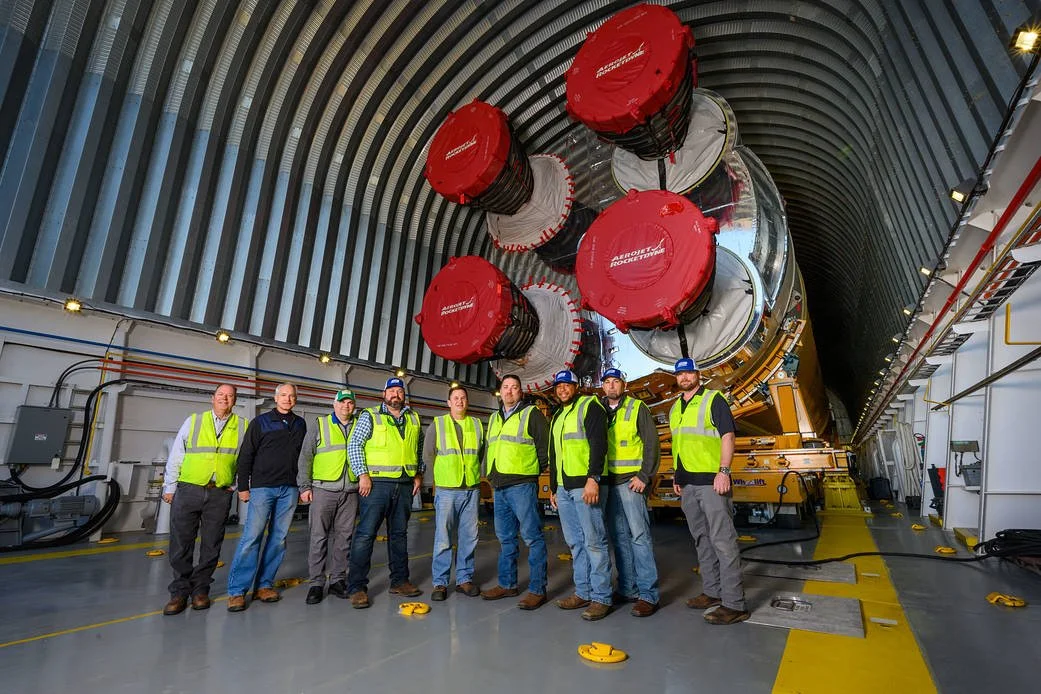
The crew of NASA's Barge Pegasus prepares for voyage after successfully loading the core stage for NASA's Space Launch System (SLS) rocket onto the vessel
Kristin Houston told a version of the same story from the keynote stage that same day: ninety pounds of thrust becoming twenty thousand, a rocket's first forty-one feet becoming a trip to the Moon, and she hadn't worked from this series at all. One thesis got echoed back by someone who had already read it. The other arrived at the identical place without ever seeing it. Both are worth having
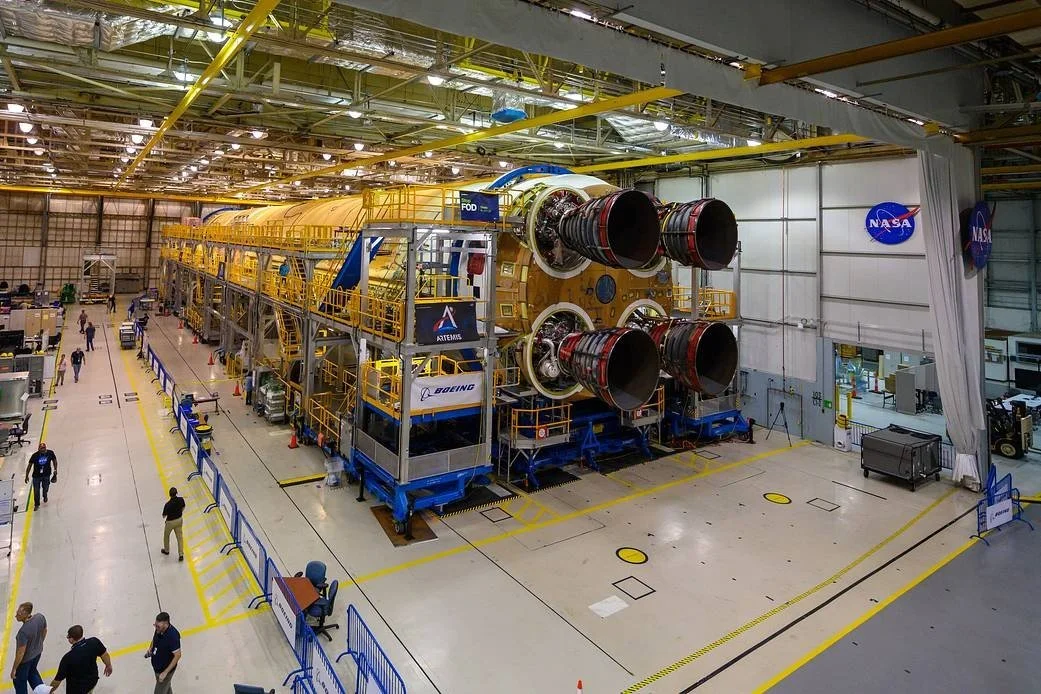
NASA, Northrop Grumman, and Lockheed Martin successfully performed a ground firing static test of the abort motor for NASA’s Orion spacecraft Launch Abort System (LAS)
The people who tested those jet engines, trained the pilots who flew them, and built the crews underneath them were not a separate workforce from the one building spacecraft today. They are the same stock. The grit that showed up in a Cincinnati hangar in the 1940s is the same grit sitting in a cleanroom in Dayton right now. Ohio's aerospace workforce didn't restart when the mission transitioned from jets into crafts built for space. It kept flying.
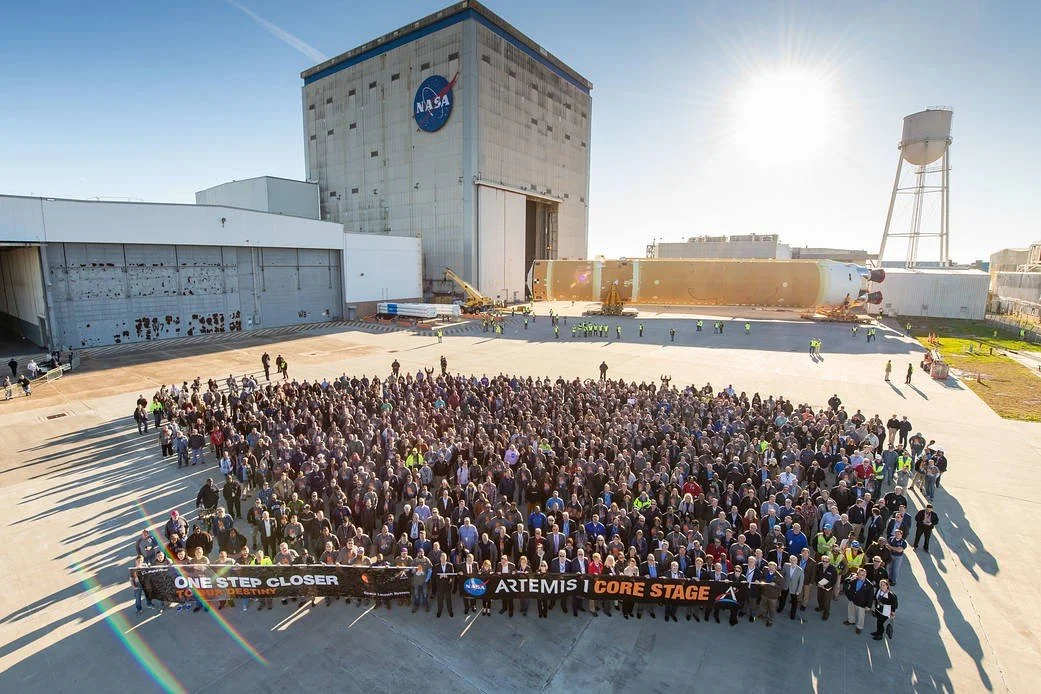
NASA Deputy Administrator Watches Artemis Rocket Stage Leave NASA Factory
Some of that workforce is new, trained specifically for this mission. Some of it is retained: people who could have left for a coastal aerospace hub but chose to stay, or who left and returned. Both matter to this piece equally.
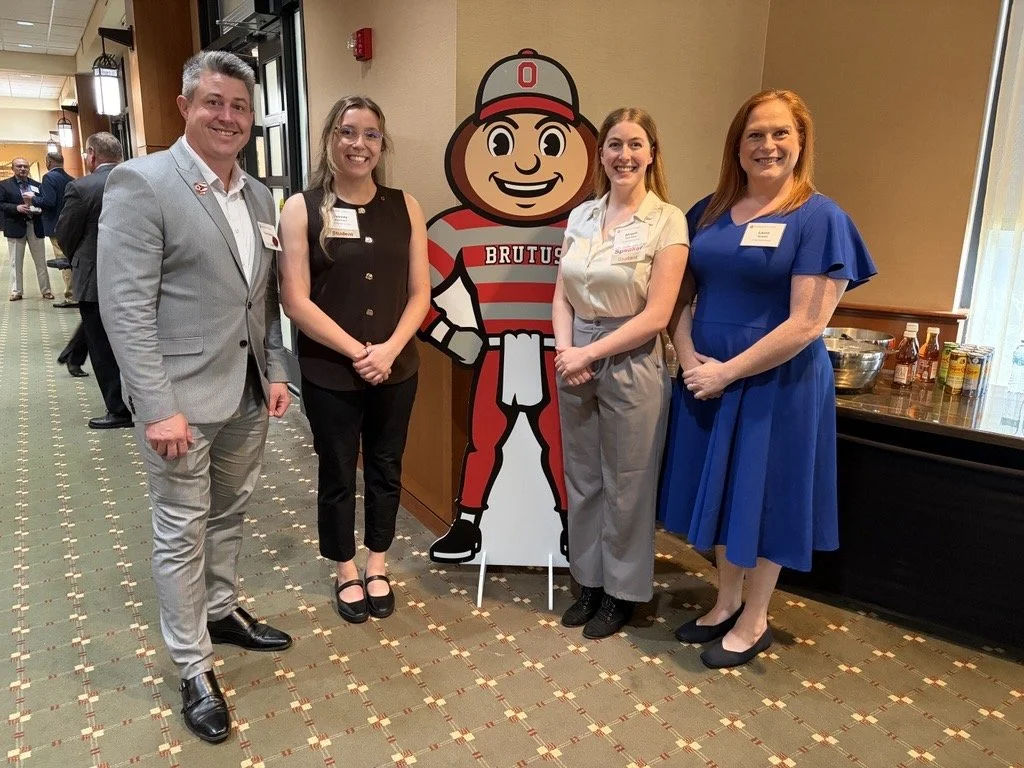
Cassidy Brozovich - Exemplary Mentorship Award winner, Laura Alvarez - Business Operations and Planning StarLab, Mechanical and Aerospace Engineering (Abby Harrison and Me) NAE 2026
The Ohio Chamber’s numbers, already cited in the Structure section, put a real figure on it: AI could transform up to 43 percent of Ohio's work activities. Versatility is the actual skill being asked for here. Reskilling. Learning while still earning a paycheck rather than stepping away to retrain. Adapting to whatever the mission needs next, not just what it was trained for originally. That is what keeps a flight deck able to respond when the plan changes mid-flight.
Tim Kopra (Colonel, U.S. Army, Ret.) NASA Astronaut - http://www.nasa.gov/astronauts/biographies/timothy-l-kopra - Voyager Chief Exploration Officer
A flight deck does not fly alone, either. Every mission this piece has already described has a command center behind it, people who are not in the vehicle but are still steering it. John Horack sits on Rev1 Ventures' board. That is not a resume line. It is exactly this function: someone with pattern recognition sitting outside the immediate cockpit, still calling corrections back in. Ohio has more of this infrastructure than it gets credit for. The open question is whether there is enough of it, sized to the actual number of missions currently in flight.
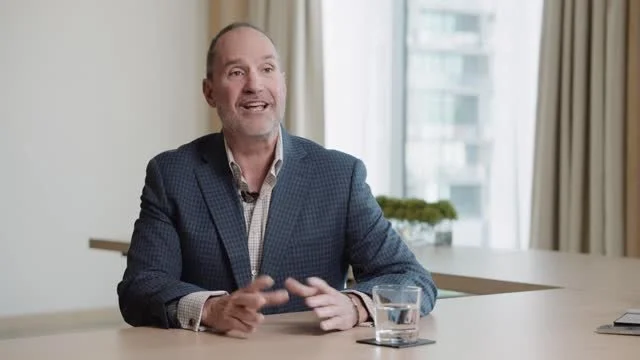
Andy Panos - 3Cs Founder's Founder
This series has already documented what that looks like when it works. Andrew Panos and Lacey Picazo met in a Vistage room in 2017, one of them years into multiple exits and an IPO, the other four years into building what would become ZoCo. Andy did not treat that meeting as mentorship handed down from above. He asked Lacey to challenge him, the way a senior pilot debriefs with a junior one after a flight, both still learning from the exchange. What passed between them was not capital. It was pattern recognition, the kind that only exists because someone flew the mission before and came back to fly it again with somebody new next to them. That is generational success, transferred the only way it actually transfers: pilot to pilot.

Lacey Picazo - 3Cs Founder's Founder
Astronauts train for this specifically, because space doesn’t run on a fixed script. Every mission carries a real chance that something happens nobody rehearsed for, and astronaut training is built around versatility rather than a single memorized procedure. This discipline has a name in this piece.
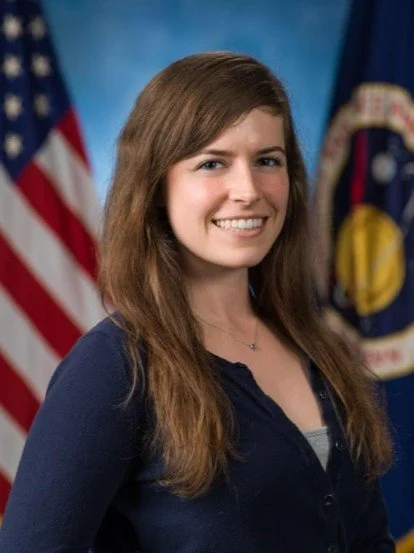
Emily Matula's job at NASA is to prepare astronauts for exactly that kind of uncertainty, which makes her the right person to open this argument here and to close Stage Separation, which follows. Ohio's own workforce faces a version of the same uncertainty, not from a failed valve, but from how fast the work itself is changing.
Not everyone stays, and pretending otherwise would undercut everything this piece has already argued about staging. Some of Ohio's own crew leaves anyway, not because Ohio failed to hold them, but because the mission they are flying now only exists somewhere else. The stage separation is a vital part of this story.
Stage Separation
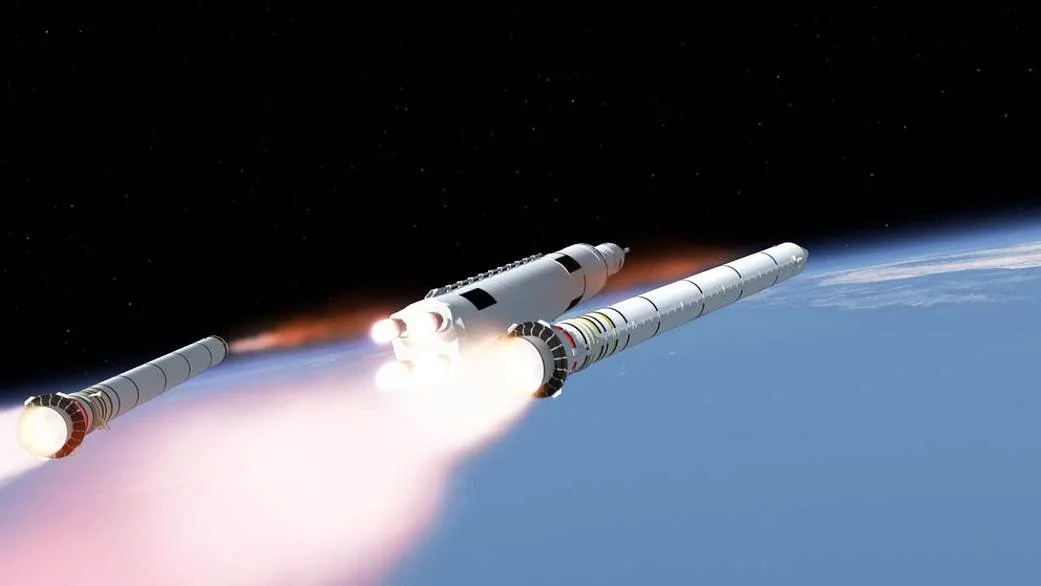
Space Launch System Booster Separation This artist concept shows boosters separating from NASA’s Space Launch System.
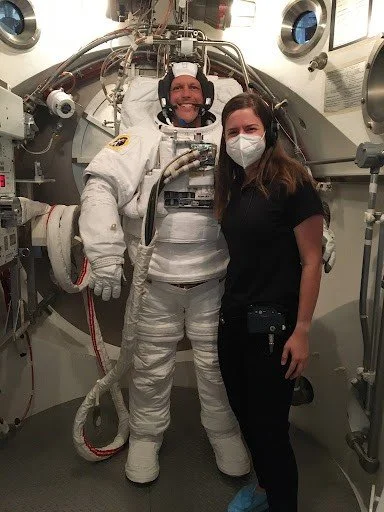
Emily Matula, PhD | NASA
Staging is the moment a section of the vehicle has done its job and separates cleanly, not because anything failed, but because carrying it further would cost more than letting it go.
What happens to the people who leave?
The two of us met by coincidence, not design, at a National Academy of Engineering meeting. I had just published this series' Roto installment, about an exhibition design company whose founders got their start designing exhibits at COSI, and I mentioned, in passing, that someone who walked through COSI's John Glenn Space exhibit in the early 2000s might have gotten the exact spark that put them on a trajectory toward working in space. Emily's response was immediate: "That happened to me." When she asked me, later, why I was taking this project on at all, my answer had an edge of honesty most polished mission statements do not. "So people like you do not move to Houston". She smiled. Her exit was complete, and she was detached from our orbit.
She agreed to contribute in a stream-of-consciousness format, and her answer runs against the five beats this pocket was built around: the spark, the breach, the tether, the return trajectory, and the open floor. Her spark starts in rural central Ohio, looking up at a clear night sky full of stars and feeling, in her words, the urge of needing to be up there. Ohio's own schools taught her the state was the birthplace of aeronautical and astronautical explorers who looked up at that same sky. COSI kept the pull alive outside the classroom. She remembers sitting in the Gemini simulator when the museum was still on Broad Street, watching fire flash past the window during the simulated launch and landing sequence, and knowing she needed to feel that for real. Granville's schools gave her the math and physics that made trajectories feel almost magical, predictable with a few equations, and she started a mechanical engineering undergrad on that Ohio foundation.
She left Ohio for the University of Michigan, earning her Mechanical Engineering degree and a Master's in Space Engineering there. Michigan, at the time, had no human spaceflight classes or research program of its own either, so she left again, for the University of Colorado, one of the country's premier programs in bioastronautics, the engineering of keeping a person alive in space. That is the breach, and it happened twice: not a rejection of Ohio specifically, a gap that an entire second state had too, until somebody went and built the missing piece.
She is careful not to oversimplify. She is deeply grateful for what CU gave her; it shaped her entire career. But she is just as direct that Ohio already had what a program like that would need: a network of prestigious universities, a faculty pool with real human spaceflight experience to draw on, direct access to NASA itself. What it did not have, when she needed it, was a program built to use those pieces together. That is the tether. Not sentiment. An acknowledgment that the raw material was already there.
Years later, she went back and built the missing piece herself, just not in Ohio. In 2022, Michigan asked her to teach a new seminar on human spaceflight engineering, the exact subject the school had no course for when she was a student there. She said yes. If the tether is proof that raw material can sit unused, this proves the other half: someone eventually has to build the program on top of it, and it does not have to be the state or the university that does it first. It can be one person who noticed the gap from the inside and came back to close it.
After graduation, the map for a human spaceflight career was small: Houston, Denver, Seattle. She landed at NASA's Johnson Space Center as an EVA flight controller and instructor, eventually becoming a subject-matter expert in the spacesuit itself and how it's used on a spacewalk. Her own words on the counterfactual are direct. If an equivalent role, with an equivalent level of institutional support for human spaceflight, existed in Ohio, she would have returned or simply never left. Typically, astronauts call Houston to make status updates; in this case, Houston called Ohio to announce the launch was successful.
What she says she would be leaving Houston for is not small either: Ohio's natural beauty, its ecological range, its community, its own actual legacy in space. The pull toward crewed spaceflight itself was just stronger. On the open floor, she says she is watching Ohio's nascent human spaceflight sector now for exactly that reason. Not nostalgia. A live chance to do the same job in a state she already loves. Staging is the physics that governs this pocket, and it is worth restating plainly. A person leaving Ohio for NASA, JAXA, or Houston is not evidence that Ohio failed. It is evidence the stage did its job. The honest question is not why she left. It is whether Ohio ever gets anything back from the separation, the way some rocket stages are recovered and flown again, or whether this one is expendable, gone for good the moment it falls away.
This series already made this exact argument once, before it had proof. The Roto installment opened with a hypothetical child at COSI, reaching toward a replica of John Glenn's Friendship 7, conceptualizing a dream that would eventually put them in orbit. Emily's own COSI memory predates that piece by more than a decade, from an earlier building on Broad Street rather than the current one, but it works the same way that piece argued it would. A spark small enough to fit inside a museum exhibit, releasing a career.
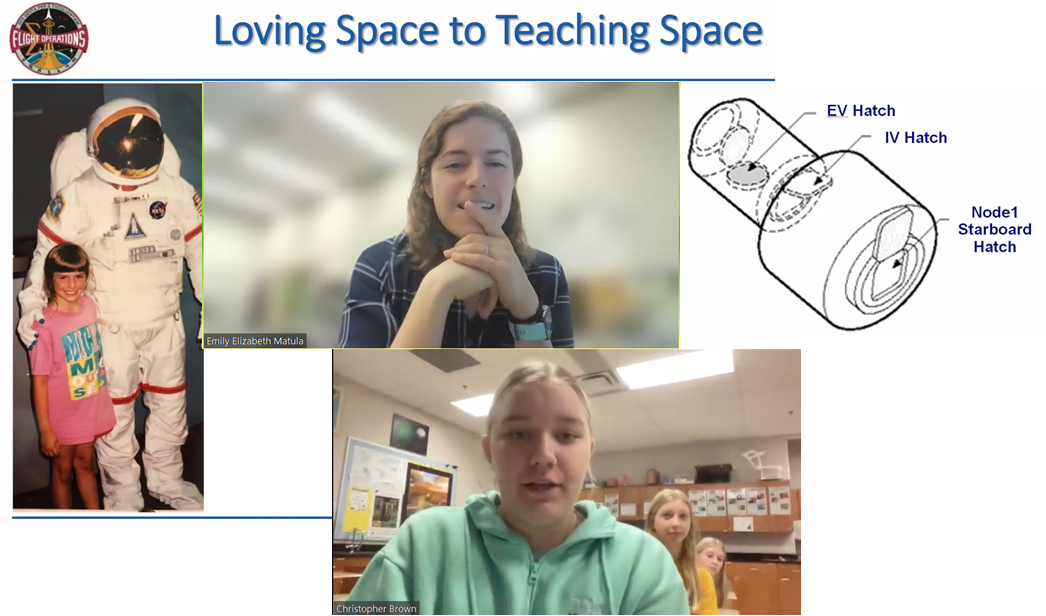
From that spark, she staged twice, Colorado first, then Houston, further from Granville each time, and each departure was staging working correctly, not failure. What never separated was Granville itself. Community, in this piece's terms, behaves like gravity. It does not stop a stage from separating. It can still pull two things back into contact long after the separation looked final. It pulled Emily into an NAE meeting room in Ohio, and out of that room came a newsletter subscription, a contribution to this piece, and a new way to keep advocating for the state she left, still working the problem from Houston.
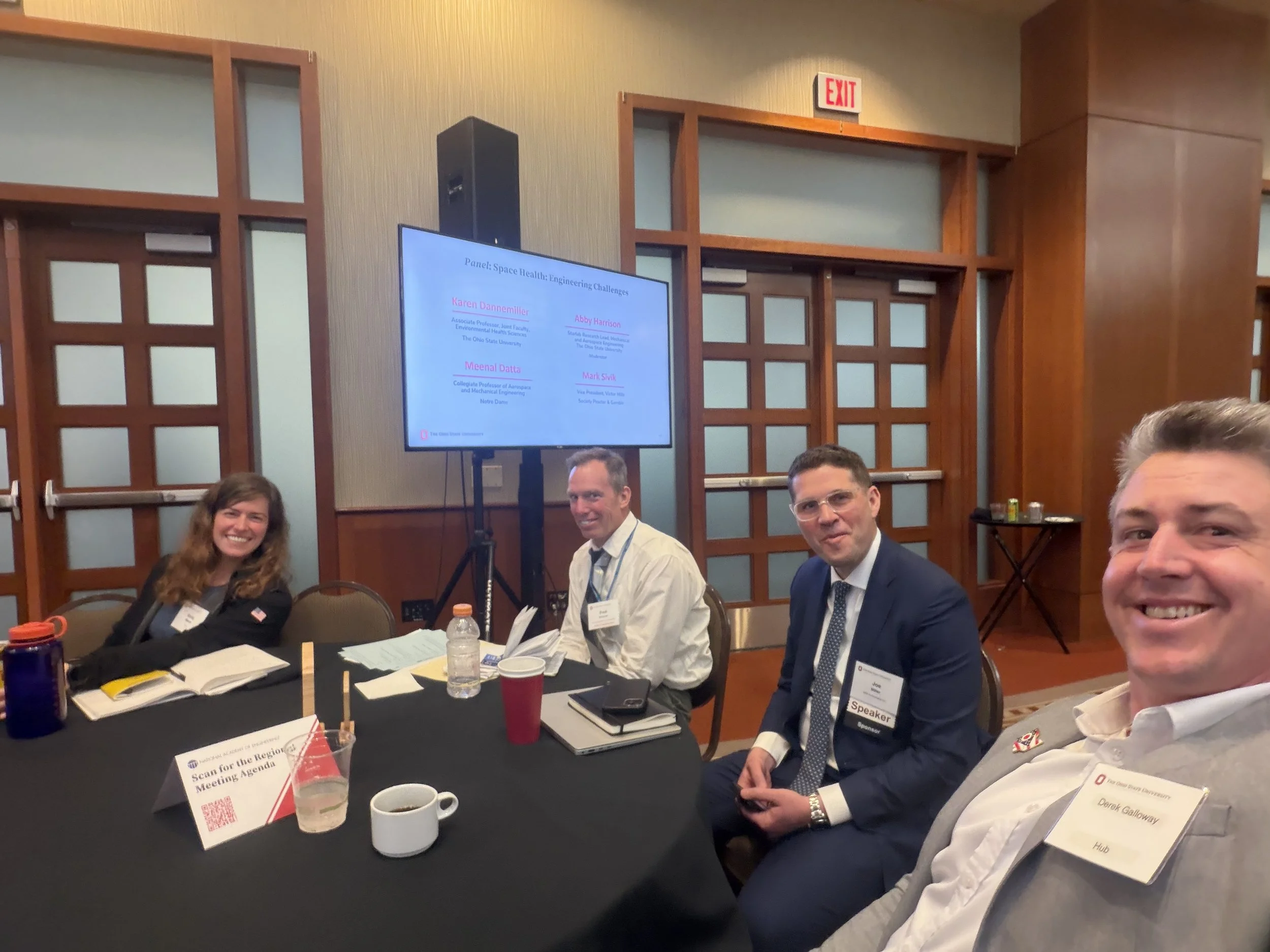
Meeting Emily at NAE
Docking and Coupling Mechanism
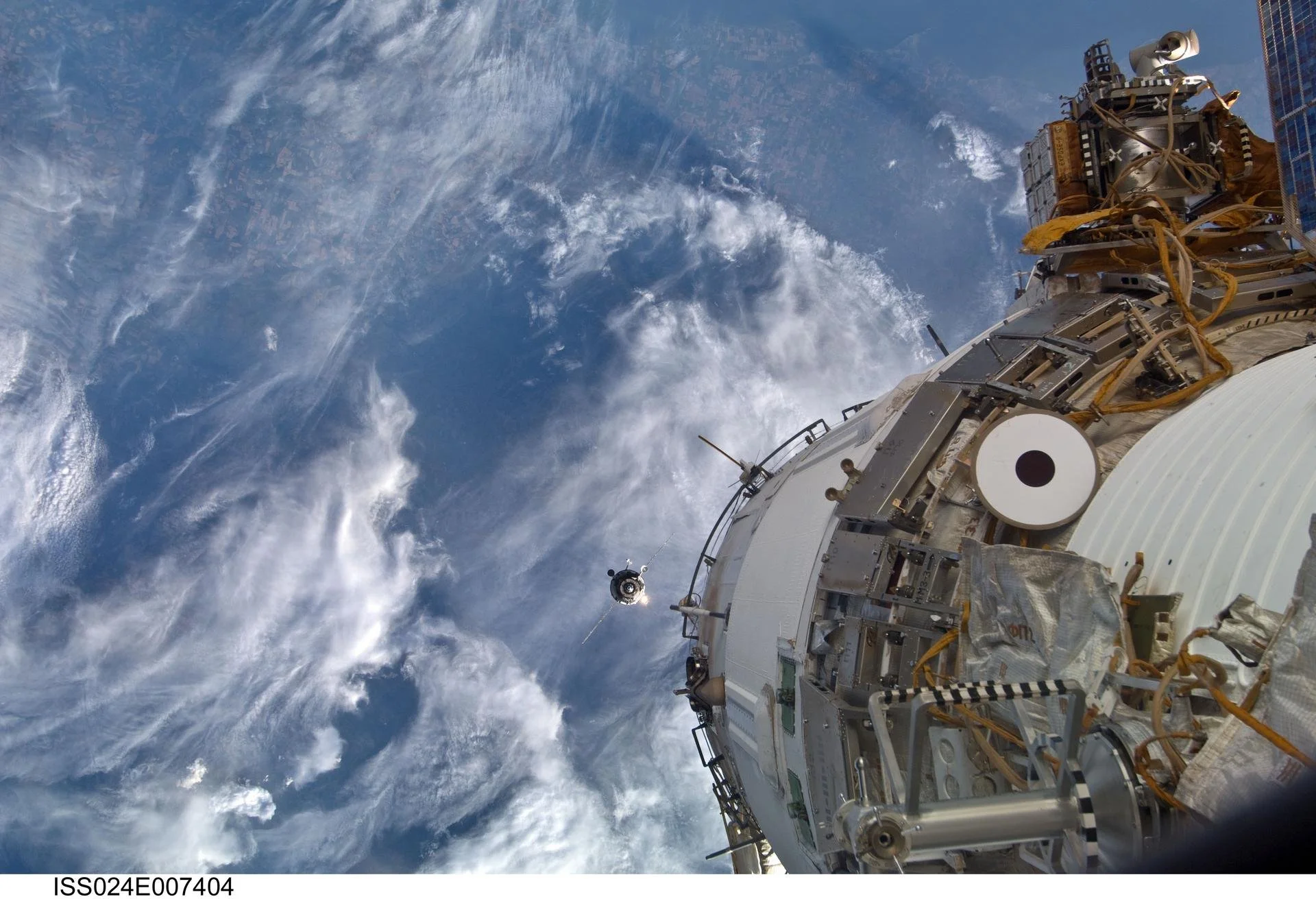
Docking Station - NASA.gov
Greg Salvato | Founder, ApplicantPrime; CEO, TouchPoint One
The docking mechanism is built specifically to join two systems that were not designed to connect, and worthless if it only works on one side.
Greg Salvato committed to this piece the moment I asked him to. Count me in, he said, as it turned out he had already been living the question for years. His July 2024 Forbes Technology Council column on workplace loneliness, citing the Surgeon General's report and its $ 154 billion annual cost figure, came out almost two years before ApplicantPrime existed. But the piece was not really about isolation in the abstract. It came out of his day job running TouchPoint One, which supports large contact center operations, environments where, in his words, people from the frontline agent to the executive can spend extended periods of their working lives surprisingly isolated.
The Forbes piece was his attempt to use the Surgeon General's report not just to name the problem but to suggest what organizations could actually do about it.
The line from that article to ApplicantPrime was not obvious to him at the time, he said, but it is clear in hindsight. ApplicantPrime addresses a different kind of isolation: what happens when someone suddenly finds themselves disconnected from an employer, a professional identity, a network, or simply a clear understanding of what to do next.
In his framing, the common denominator is agency through connection. People are remarkably resilient when they have information, tools, encouragement, and someone or something helping them see the next move. They are much more vulnerable when they feel like they are navigating uncertainty alone.
The company itself started on Easter Sunday and reached a soft launch a few weeks later. The backstory: his day job puts him inside contact center operations, which he calls ground zero for AI-induced labor disruption, and he had spent months informally posting jobs, making introductions, and encouraging people in his LinkedIn network as layoffs accelerated. What struck him was not the job seekers thanking him. It was the hiring managers thanking him too, for putting a human being back in front of an increasingly automated screening process. I wasn't getting people jobs, he said. I was doing something much simpler: helping put a person's name on somebody's radar.
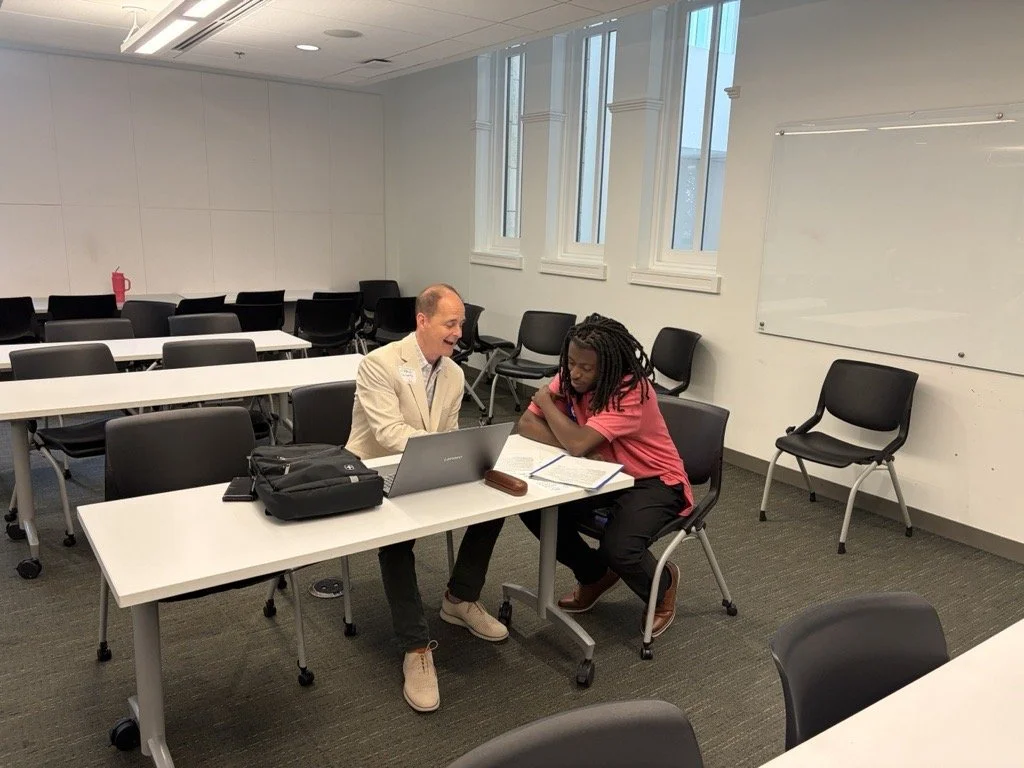
Greg Volunteering at the Columbus Metro Library to support job seekers during the annual jobs and resource fair
ApplicantPrime is free for job seekers, permanently, which he does not describe as a bet. If someone has just lost a job, he said, charging that person for the tools they need to get back on their feet strikes me as putting the economic burden in exactly the wrong place.
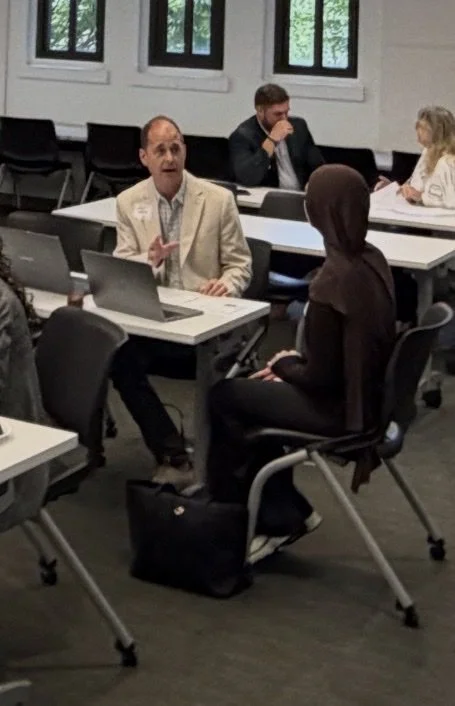
Greg Volunteering at the Columbus Metro Library to support job seekers during the annual jobs and resource fair
The business model sits instead with employers, universities, and workforce organizations, on the theory that career readiness is becoming workforce infrastructure, something people should practice continuously rather than discover only after a layoff. Asked what is actually on the other side of the gap he is trying to bridge, for a half-million-dollar executive and a content moderator alike, his answer treated them as more alike than different. Both can experience the same disorientation when a job disappears: who am I professionally now, where do I fit, what do I do Monday morning. That is the gap ApplicantPrime is built for. Not the job search itself, but the distance between career disruption and renewed agency.
His read on Ohio's own ecosystem carries a specific memory. An Ohio State graduate himself, he spent roughly a decade in financial services raising capital for early-stage companies in Columbus, back when the standing joke was: where do you go to raise money in Columbus? The airport. It was an exaggeration, he said, but like most good jokes, true enough to land. In those years, he first met fellow Ohio State alum Ratmir Timashev (OH.io Fund Creator), building his first software company out of a condo basement in Dublin, Ohio, long before Timashev's company Veeam sold for five billion dollars. Timashev has since put real resources back into Ohio State's Center for Software Innovation, which Salvato calls exactly the kind of ecosystem we used to wish existed here.
His closing point is the one this series has been circling from a different angle in Propellant Lines and Tanks. If Ohio is going to build the next Veeam, he said, it should be equally ambitious about building the infrastructure that helps the person whose job changes because of the next Veeam. Those are not competing ideas. They are two sides of the same innovation economy.
He closed his answers with a line that belongs at the end of this pocket rather than buried inside it. Ecosystems don't form only because somebody funds a company or builds a technology, he said. They also form because people connect the dots, document what's happening, and help a community see what's possible. No one can tell the story if no one writes it.
Docking and Coupling Mechanism asks a narrower question than the others. Not whether the connection exists, but whether anyone is actually staffed to build it on purpose.
The Synthesis
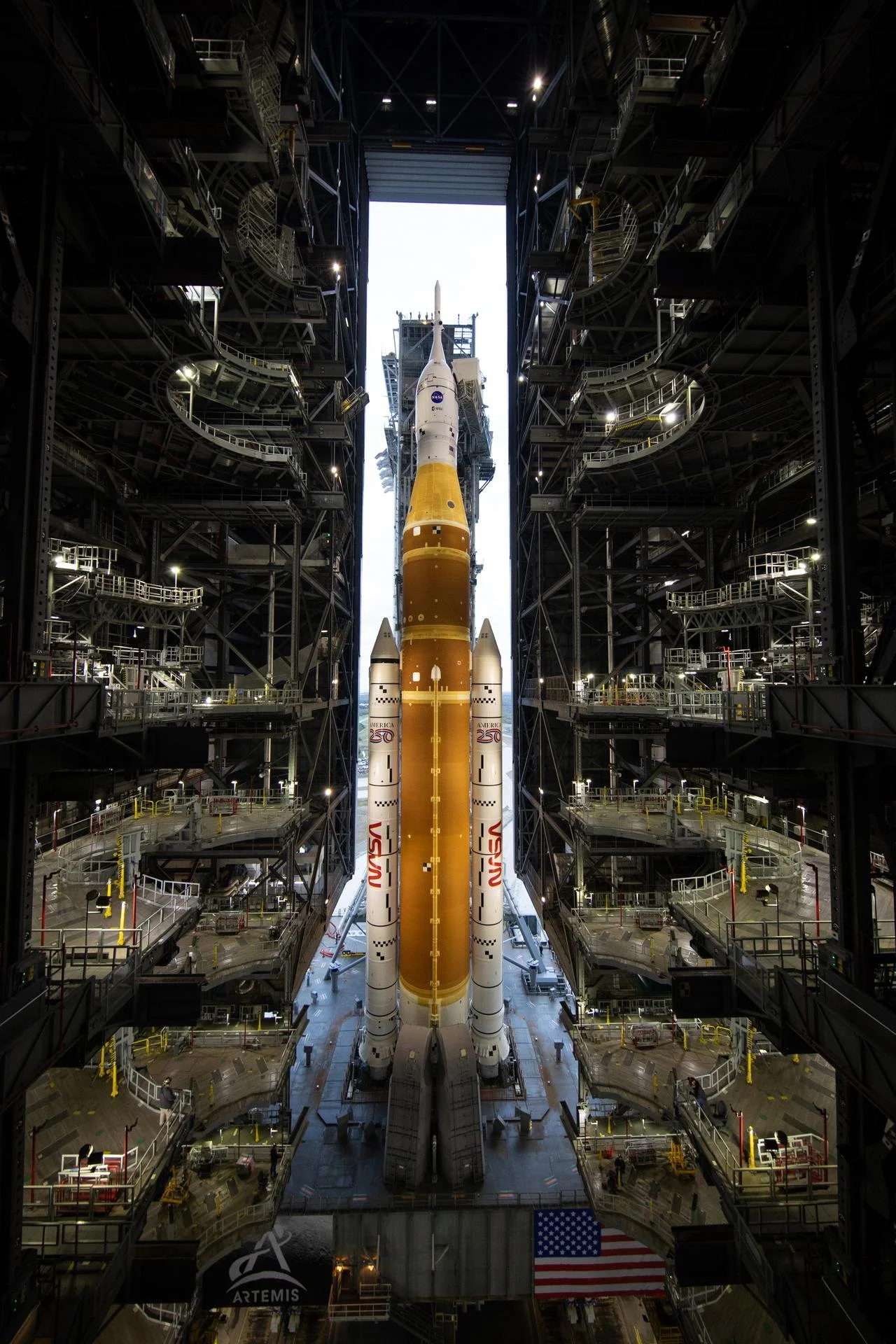
Artemis II Rollout NASA’s Space Launch System (SLS) rocket and Orion spacecraft, secured to the mobile launcher, is seen as it rolls out of the Vehicle Assembly Building to Launch Pad 39B, Saturday, Jan. 17, 2026 - https://www.nasa.gov
Heidi Coia, PhD | Founder, Model Life Sciences; former National Academy of Sciences researcher, Air Force Research Laboratory; leadership across biomanufacturing, biomaterials, and biomedical technology startups; co-founder, Cytible, a research and investor database and workspace; adjunct instructor, Wright State University
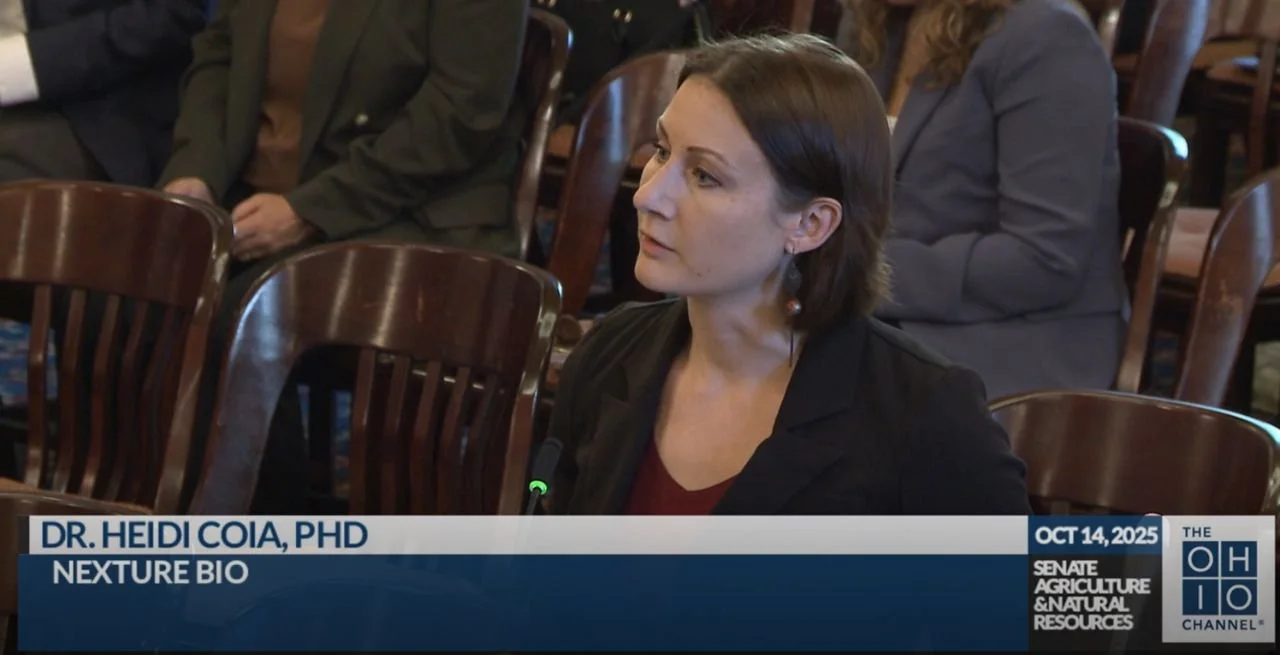
The Synthesis is the final testing protocol, integrating the individual parts into an operational vessel: the phase after every part above has already passed its own isolated exam; now we check the integrated system.
Heidi Coia inspired this installment. Her reaction to an early diagram is why.
When she first saw the flywheel diagram from an earlier installment in this series, she said she could immediately see and appreciate the analogy. What pulled her in further was not the diagram itself. It was what it represented: a force she wanted to see more of, and be part of. Watching the community this series is building, the collaboration it takes to generate that force, and the capital needed to give it a footprint made her want to stick around and work toward pulling capital toward the right places.
She lives in Dayton, close enough to Wright-Patterson Air Force Base that she can sometimes watch C-17s from her own couch. Big, slow-looking cargo planes that, she says, make her wonder how something that size stays in the air at all. That image becomes her answer to what this piece has been asking all along, in her own words, arrived at independently of the rocket framing this piece eventually landed on. A collection of individual parts does not make the plane fly. The assembled plane will not move on its own either. No one sees any of that in the hangar. The whole city sees it fly.
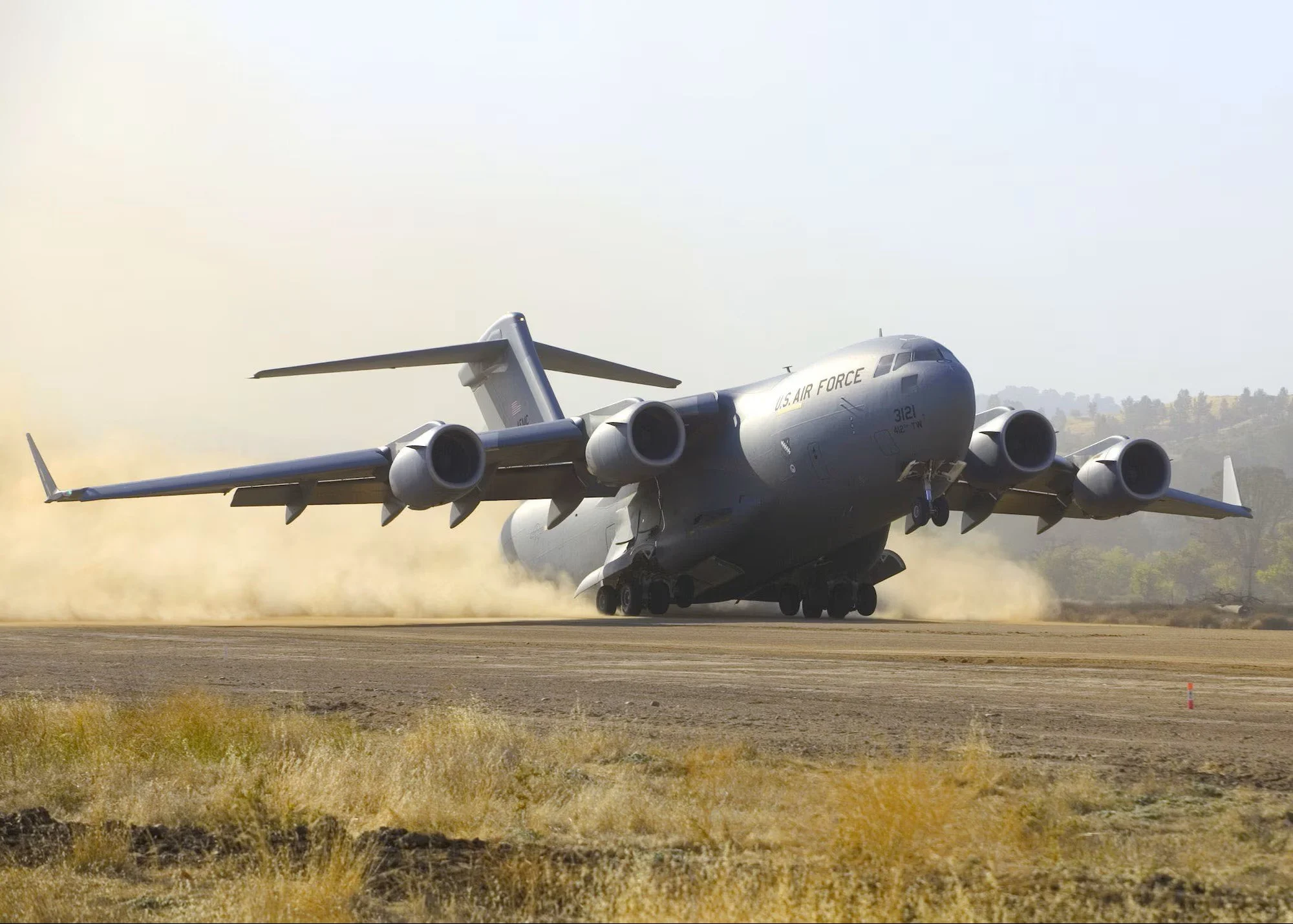
C-17 provides ‘maneuver’ for the joint force - WRIGHT-PATTERSON AFB, Ohio (AFLCMC)
In her account, the argument nobody heard starts in a shared lab space she once worked in, housing four startups across different research fields. Spaces like that exist across the country as foundries and hubs, and she says nothing beats watching scrappy, technically serious innovators bump into each other, since a problem solved in one industry often unlocks another.
Microfluidics moved from inkjet printing to lab-on-a-chip devices to semiconductor cooling, the same fluid dynamics problem solved three separate times in three separate industries because someone in a shared space happened to see all three.
Her frustration is with how the state's largest institutions talk about the people doing that work. When she has talked with larger organizations - JobsOhio, Ohio Life Sciences, Rev1, university leadership- she said she often gets the impression that startups are treated as the renegades of the industry, left to their own devices, without much recognition of how much a single new industry could mean for the state, even one that starts with only a handful of founders.
Her example is cultivated meat. Whatever anyone thinks of it politically, she points out that a fully developed industry means jobs, revenue, and a whole periphery of supporting work: bioreactors, GMP real estate, regulatory, marketing, distribution. Her point is not that Ohio should have picked that specific industry. It is that no state has to wait to be told an industry matters before deciding to be open to it.
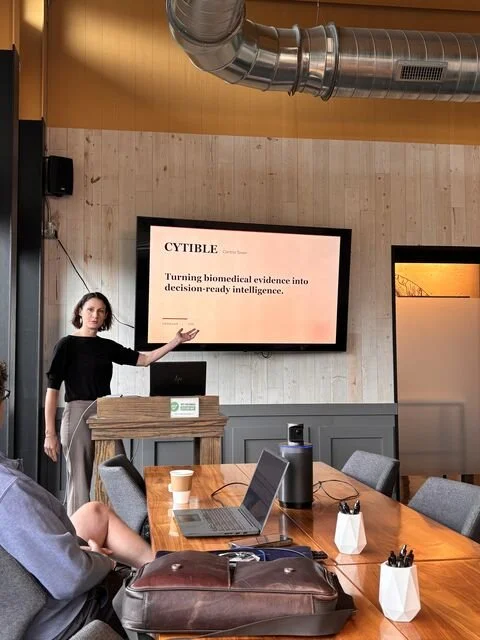
In her account, the gear that has seized is higher education's actual place in the growth strategy. She does not think a bachelor's, a master's, and a PhD are a small wheel, a medium wheel, and a big wheel bolted onto a system. She thinks they are parts of the machine itself, and treating them as anything less wastes what they could contribute. Having managed teams of engineers and scientists herself, she says the same discipline applies at the team level: give people autonomy, share decision-making, keep everyone close enough to the customer that nobody gets lost purely in the technical details.
She ties this to a pattern she has noticed in Ohio specifically, a long stretch without much influx of people from outside the state, which she thinks narrows the range of experience available to draw from, even with good intentions all around. Her comparison is almost domestic on purpose. Before global trade, she points out, entire populations went without ever tasting vanilla, not for lack of curiosity, but for lack of access. Ohio talks about the Wright Brothers enough, she said, that people here are almost tired of hearing about them. Given enough time, someone else would have opened up flight eventually. The state's real advantage was deciding it didn't have to wait for someone else to do it first.
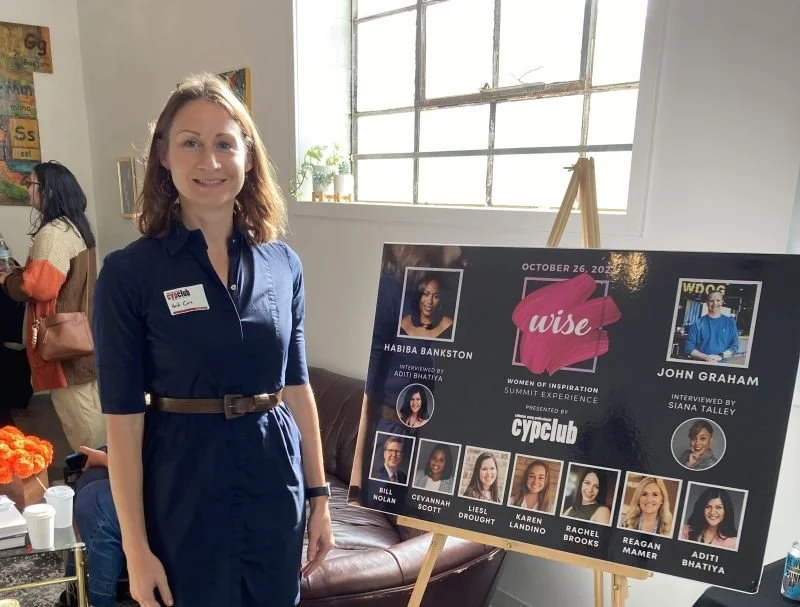
The oil top-off starts with a caution about the ranking itself. Number one for business, she said, can mean a lot of different things: better incentives, less red tape, more room to grow, and all of that is worth celebrating without mistaking it for the whole story. Her fix: more entrepreneurial support organizations, more tolerance for higher-risk investment, and metrics that count new industries instead of just counting jobs. We need the lubricant, she said, not just more gears.
She is direct about compensation specifically. From her own time on the job market, and from hearing the same from others, she says Ohio pay runs well below market rate once cost of living is actually accounted for, and that catching up matters if the state wants to attract people willing to relocate.
On the open floor, she asked for one thing specifically: more biotech education, from high school classrooms to everyday consumers. The industry has existed for decades on the coasts and in the Research Triangle, she said, and still gets treated here like a harder sell than it should be, even though it already touches everything from food and beer to cosmetics and pharmaceuticals.

Innovate Where You Are- https://lnkd.in/p/e-AiswVW
The investment case looks different when the science is unfamiliar, slower, riskier, and harder to underwrite. Every mode of travel that changed the world- car, plane, rocket- arrived carrying the same argument about risk before anyone trusted it. She closed her answer the way this piece is about to close its own.
Let's get off the ground.
Which brings the piece back to where it started. Ohio is not failing. Ohio passed its vacuum chamber test; the CNBC ranking is real. But a vacuum chamber test is not a flight.
Heidi Coia measured this system under something closer to actual flight conditions, from the inside, mid-exit, the way an engineer checks an interface from inside the vehicle rather than reading it off a spec sheet, and the system talked her out of leaving. That is not a headline. It is what a real integration check looks like when someone actually runs it instead of assuming the ground test was enough.
Isolation testing was never meant to be permanent. The only question this piece leaves open is whether Ohio has scheduled its integration and test phase, or is still betting that parts which pass alone will automatically pass together.
Payload
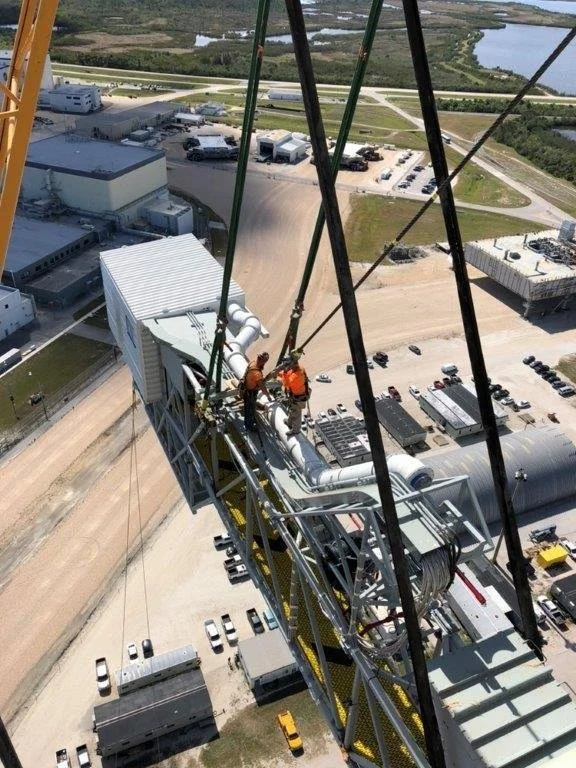
Crew Access Arm Installation onto Mobile Launcher
According to NASA, a payload is the full-scale rocket's fourth major component: the structural frame, the guidance system, the propulsion system, and the payload itself, which is defined entirely by the mission. Early payloads were fireworks. Then explosives. Then satellites. Then, starting in the 1960s, a human being, which NASA calls the most important payload a rocket carries. This pocket takes that literally. The jobs are the payload. The workforce is the alignment that gets them there and keeps them there.
The hard part has never been building a payload. It is getting it into orbit. A payload with no thrust behind it just sits on the pad. This series already told a version of this story in the O.H.I.O. Fund installment: a flywheel only keeps producing usable energy if something keeps doing work on it, and the same is true of a state's own investment cycle. JobsOhio and its regional partners, Team NEO among them, exist to be that work: incentive packages, site selection support, the unglamorous business of getting a company from interested to committed. That is the state's version of thrust. It is necessary. It has never been sufficient on its own.
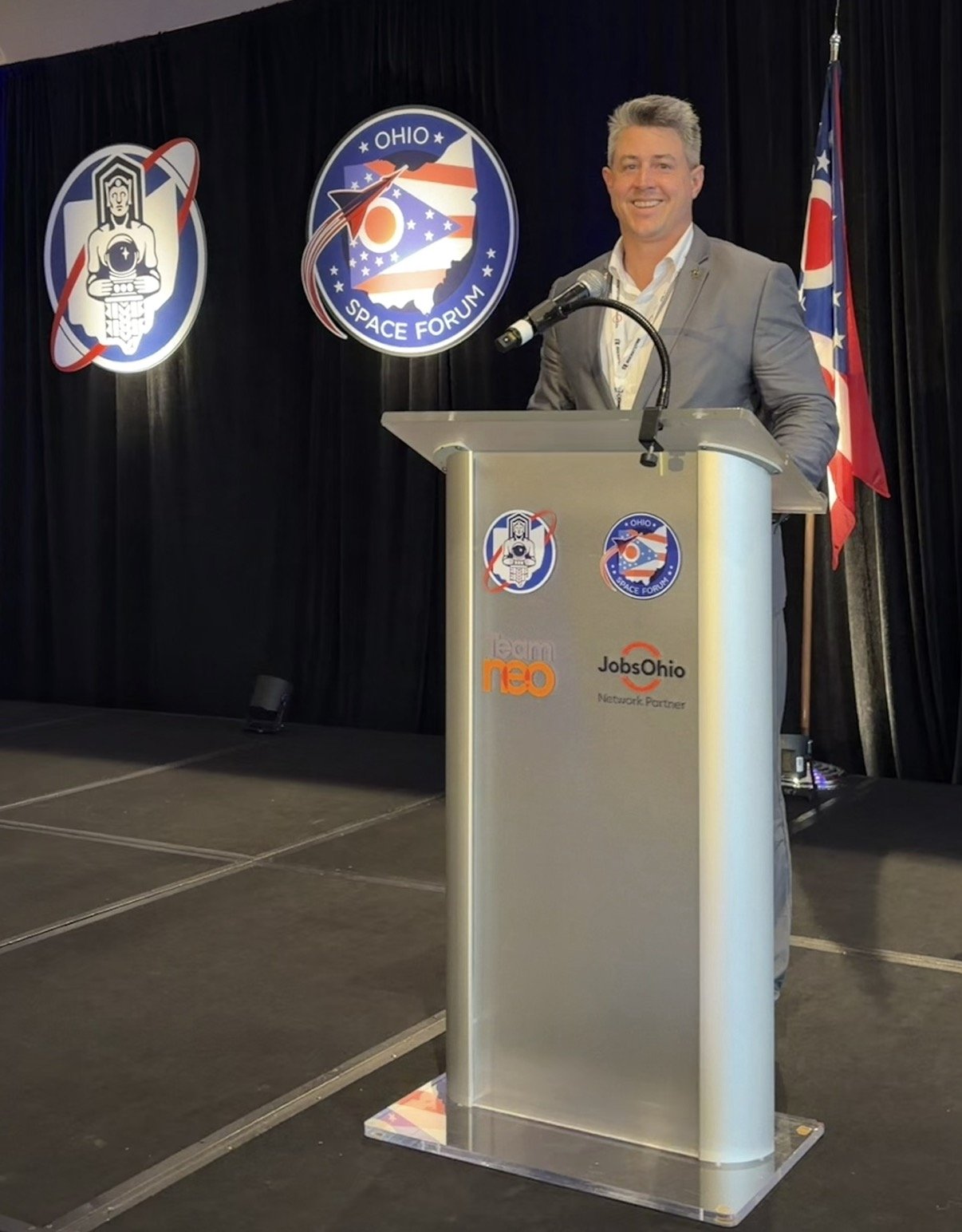
Space Forum 2026
The hard part right now, specifically, is getting Anduril, SNC, and Rocketdyne to invest here at the scale this piece has been describing. Not a facility announcement. A real, sustained orbit, the kind where a company's Ohio presence generates its own momentum instead of needing a fresh burn of incentives every few years.
The piece that is actually vital, though, is not the thrust. It is whether Ohio can land the payload once it arrives. A company can commit capital and still fail to get airborne here if the workforce underneath it cannot support what the mission actually requires. That is where this pocket's real argument lives.
Landing it means a specific list, not a general one: reskilling programs that move fast enough to keep pace with the work itself changing. Educational partnerships built with two-way communication back to the classroom, not just placement statistics flowing out of it. AI and advanced technology training that reaches across generations of the existing workforce, not just new graduates, so real-time adjustments in the field do not depend on waiting for the next cohort. Security clearance processing that does not become its own bottleneck.
Affordable housing, schooling, and infrastructure sized for a population that is actually growing, not the population Ohio had ten years ago. None of this is abstract. It is the difference between a payload that reaches orbit and one that reenters early.
Tax policy belongs in this conversation too. Ohio's existing tax treatment for aerospace and defense investment is a real lever, already partially built, and worth calling out plainly as one tool to widen this specific runway rather than something to rediscover later.
Capital: Anduril's question is whether supplier days translate into an actual workforce pipeline, training programs, education partnerships, and real-time skills adaptation, or whether they stay a one-day event. Ohio needs to know which one it is getting.
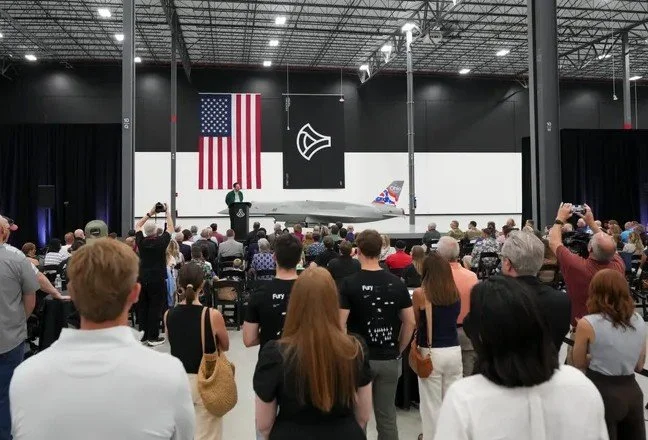
John Malone, Head of Production, Autonomous Airpower, speaks during an event at Anduril Industries commemorate the company's first YFQ-44A "Fury" unmanned combat drone off the assembly line inside the Arsenal-1 plant in the Rickenbacker Logistics
Community: SNC's question is whether STEM investment and community partnerships are scaling to meet the company's growth needs, and which bridges, supply chain associations, institutions, and regional partners still need to be built to keep that growth in Ohio rather than routing around it.
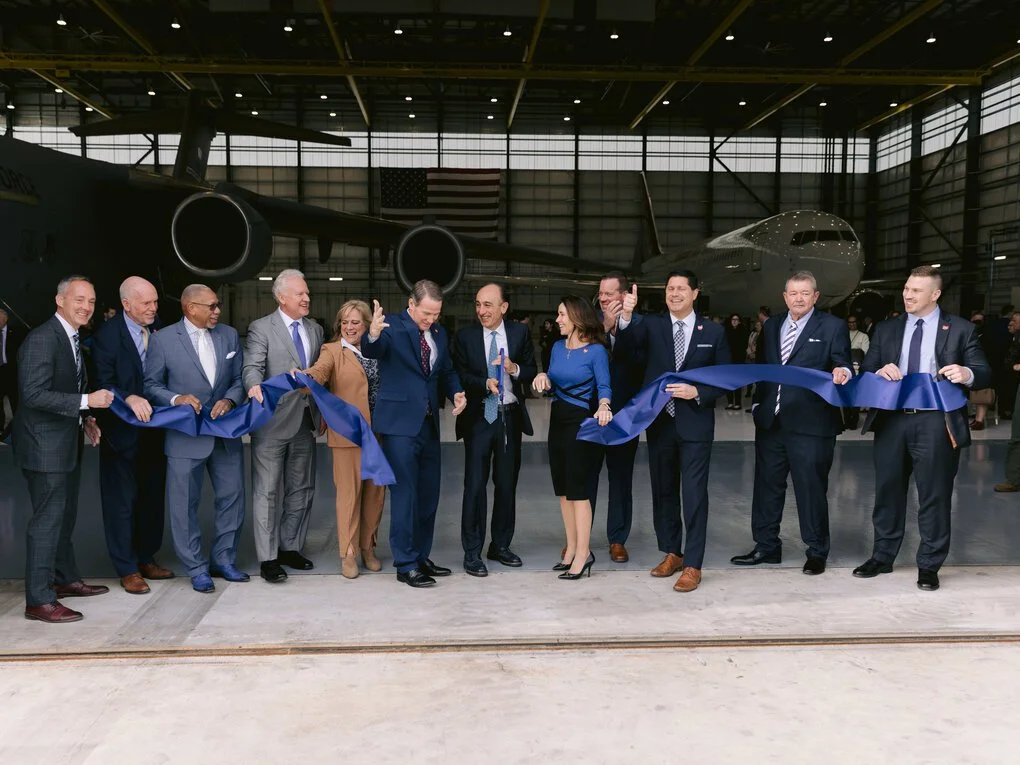
Sierra Nevada Corporation (SNC) established the SNC Aviation Innovation and Technology Center (AITC) at the Dayton International Airport.
Collaboration: Rocketdyne's own question follows directly from Kristin Houston's own words on an Ohio stage this year. She closed her remarks by saying the industry needs to keep working toward its next forty-one feet. The open question for Rocketdyne, specifically, is what Ohio's workforce pipeline would need to look like for that next forty-one feet to get built in Ohio.
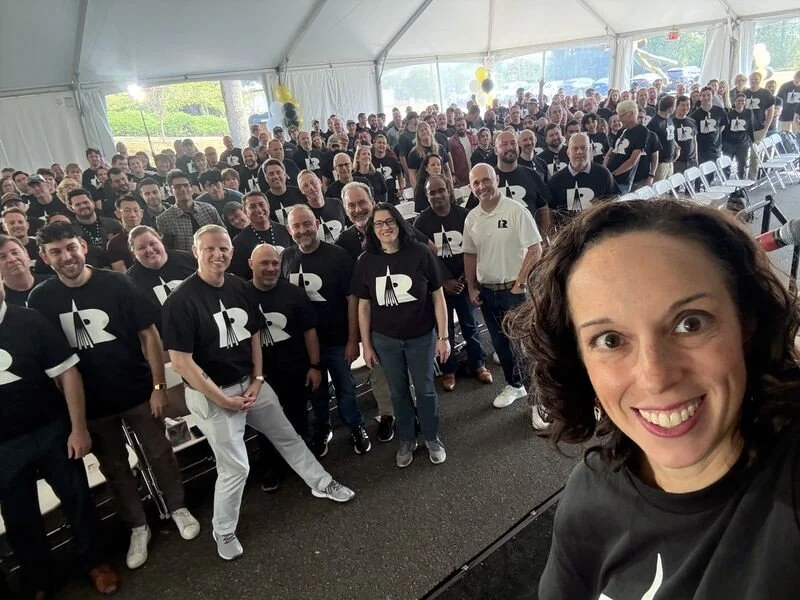
Kristin Houston and Rocketdyne
A version of this pocket is still to come. Voyager Technologies is a live thread, not yet delivered, and Tom Ubelhart at Joby has an open, specific question waiting on him about building a workforce pipeline from zero for a job category with no established training pipeline anywhere yet. Both belong in what comes next, not in what closes this piece.
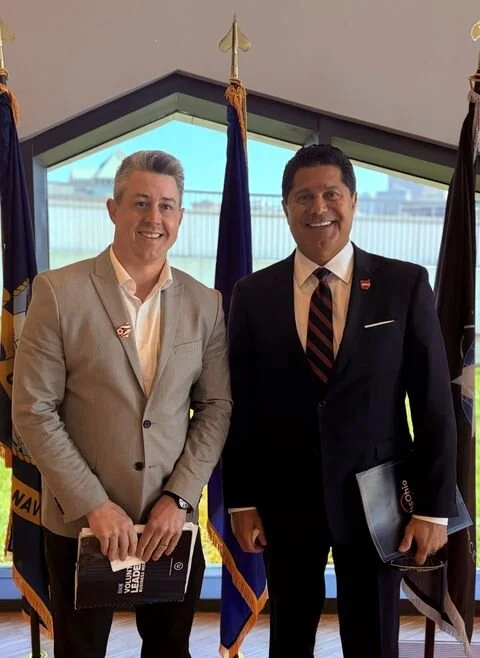
JP Nauseef - President and CEO, JobsOhio
This is the pocket where the abstraction of workforce pipeline becomes a literal hiring number. It is also, deliberately, the last one. Every other pocket in this piece asked a version of the same question about Ohio's own systems. This one asks it of the employers reading it directly: if the workforce is the alignment, what do you actually need from Ohio to keep the payload in orbit once it gets there?
Ohio is best when we choose to build.
Let's build together.